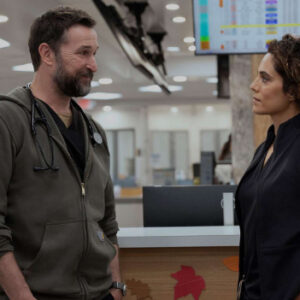
Creative license is normal in Hollywood. That does not obligate the people whose history was borrowed to stay quiet. As Paramount+’s Lioness opened its highly anticipated third season, several women connected to the real U.S. Marine Corps Team Lioness renewed a sharp complaint: the series kept their name, then turned a ground-level wartime experiment into a CIA spy thriller they barely recognize.
What the show is—and what the real team was
Sheridan’s Lioness, starring Zoe Saldaña and Nicole Kidman, follows a top-secret CIA task force that deploys female soldiers to befriend the wives and daughters of terrorists, working attacks from the inside. It is sleek, high-stakes, and built for mass streaming audiences.

The historical Team Lioness was formed by the U.S. Marine Corps during the Iraq War in 2003. It was not a CIA unit. Its members were often mechanics, engineers, and combat medics attached to male units—protecting translators, searching Iraqi women at checkpoints and in raids, and filling gaps created by culture and policy. At the time, Defense Department rules still barred women from many formal combat roles. In practice, Lionesses became among the first American women to take part in offensive ground combat operations in U.S. military history. Their work ranged from soft engagement—schools, soccer balls, local contact—to collecting intelligence in situations male Marines could not handle without violating local norms or escalating force.
That gap between “female engagement and search under fire” and “covert CIA infiltration of terrorist households” is the core of the veterans’ anger.
“They took the Team Lioness name and twisted it”
Ranie Ruthig, one of the original Lionesses, told The Telegraph in an interview published Sunday that the series makes her angry because it does not follow what they did. “They took the Team Lioness name and twisted it into a spy thing. I like Taylor Sheridan’s writing—I’ve watched his other shows—but he took our history and kind of corrupted it.”
Kate Guttormsen, a captain and the only female company commander in the 1st Engineer Battalion, described the real mission set in plainer terms: Lionesses “would do anything from going to schools and handing out soccer balls to finding intel.” The point was access and presence in a war zone constrained by gender rules—not a glamorized black-ops brand.
Daria Sommers, co-director of a documentary about the real team, spoke to the “complex feelings” the drama has created among veterans. “The term Lioness is now honorific,” she said. “The key thing is it has no basis in reality.” Her critique was aimed at the title and frame, not the leads: “I’m not critiquing Nicole Kidman or Zoe Saldaña—they should get all the kick-ass adventure roles they want. But if Taylor Sheridan had called the show something else, we wouldn’t be having this conversation.”
Michelle Dallocchio, who served with Team Lioness in 2004 and 2005, went further on the cultural cost. “It feels like appropriation. I see a really complicated women’s wartime history repackaged into something safer and sanitized for mass consumption—while erasing the actual women who lived it.”
In that view, the injury is double: the real work was already dangerous, bureaucratic, and often invisible; the hit show sells a cleaner myth under the same name.
Sheridan’s position: inspired by, not adapted from
Sheridan has not marketed Lioness as a beat-for-beat true story. He has described it as inspired by real dynamics and then fictionalized—sometimes ahead of the news cycle. On The Joe Rogan Experience in July, he said the “fun thing” about the show was not that it was “ripped from the headlines,” but that he tries to anticipate political developments and dramatize them. “The fact that I’ve managed to be right is pretty [expletive] wild.”
That defense matters legally and creatively. It does not fully answer the veterans’ moral claim: if the fiction is only loosely related, why keep a name that, for a small group of women, is not a brand but a unit designation earned under fire?
TheWrap sought comment from Paramount; none was included in the initial report.
Why the name is the whole argument
Strip the title away and Lioness is another Sheridan-verse thriller—female-led, operational, fluent in the language of task forces and tradeoffs. Keep the title and every episode invites a comparison the writers did not fully stage. Documentary filmmakers and veterans argue the word “Lioness” has become honorific precisely because the real program was a workaround in a force that officially sidelined women from combat. Turning that into CIA befriending plots, they say, sanded off the institutional friction: the exclusion policy, the improvised attachments, the unglamorous logistics of search and engagement.

Supporters of the series can reply that television always compresses and invents; that Saldaña and Kidman are not playing named real operators; and that attention to “Lioness” as a word may send curious viewers back to the documentary record. Critics counter that attention without accuracy still overwrites the first page of a Google search—and that “inspired by” is a thin shield when the inspiration is a living cohort that never consented to the remix.
A wider pattern in war entertainment
Hollywood has a long habit of borrowing unit names, operation nicknames, and after-action legends, then filing off the bureaucracy that made them necessary. Lioness sits in that tradition, with a modern twist: the real story was already about women forced into combat-adjacent roles before policy caught up. Sanitizing that into prestige spy craft, veterans argue, is not empowerment. It is substitution.
Season 3’s premiere only sharpens the timing. As new episodes push the fictional task force forward, the women who carried the original name are asking the audience to hold two files at once: the show they can stream, and the history they say was bent to fit it.
Whether Paramount or Sheridan ever rename, reframe, or formally engage those critics remains open. The charge on the table is already clear. For Ruthig, Dallocchio, Guttormsen, Sommers, and others, Lioness did not merely dramatize a war. It kept a title that meant something specific in Iraq—and, in their words, corrupted the history attached to it.