December 9, 1945. The sky over Germany was a dull, ashen gray—like the lingering dust of a war that had only just ended. The roads near Mannheim were eerily quiet. No gunfire, no explosions. And yet, that silence felt more unsettling than the chaos of battle.
A military Cadillac moved steadily along a narrow road, its tires crunching softly over a thin layer of ice. In the back seat sat George S. Patton—the general who had once struck fear into the German army. But today, his expression was different. The familiar fire in his eyes had dimmed, replaced by something deeper… as if he were contemplating a battlefield far beyond the one he had just left behind.
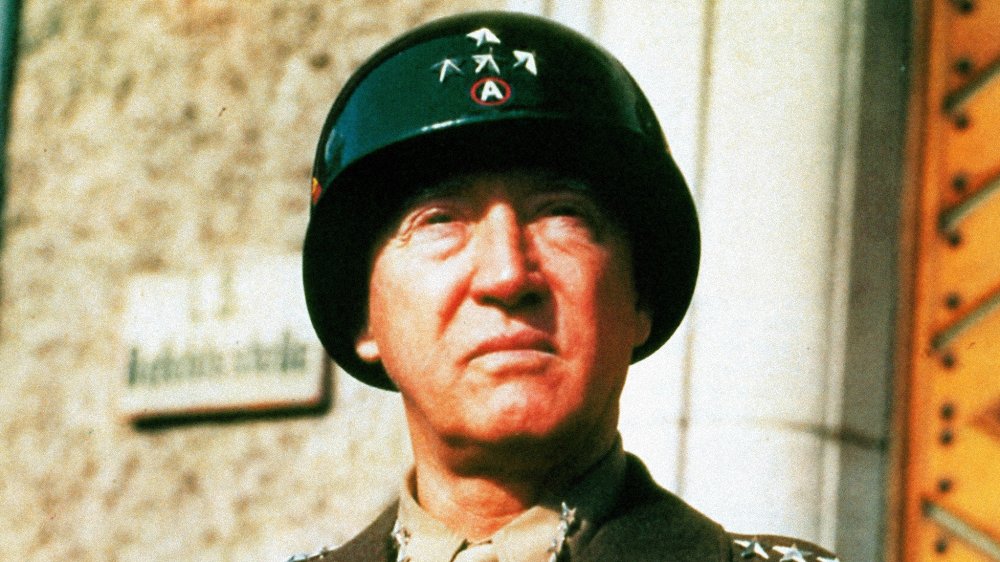
“The war is over,” he said, his voice low but firm. “But the real game… might just be beginning.”
Up front, the driver and a young officer exchanged uneasy glances. Neither dared to respond.
Patton had changed in recent weeks. He no longer spoke of tactics or victories. Instead, he voiced controversial thoughts about the future. He believed the Soviet Union would soon become the next enemy. He insisted that the United States had “stopped too soon” by not pushing further east. And most dangerously… he wasn’t afraid to say it out loud.
A man like Patton—blunt, fearless, uncontrollable—was always a double-edged sword.
The car continued forward. In the distance, a military truck appeared, moving slowly ahead. Nothing unusual… at least on the surface.
Then—
The truck suddenly slowed down.
The driver frowned. “What’s he doing?”
“Pass him,” the officer said.
The Cadillac shifted lanes, closing the gap.
And then—
The truck stopped abruptly.
“Watch out!” someone shouted.
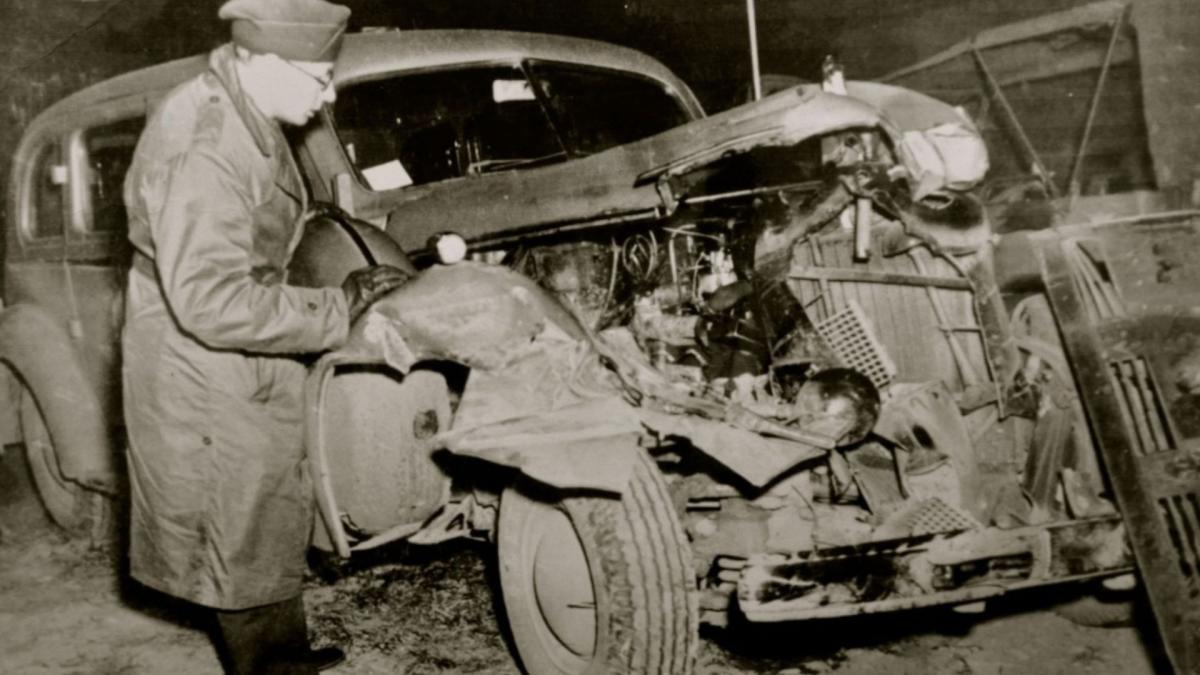
A sharp, dry crash shattered the silence.
It wasn’t a catastrophic accident. No vehicles flipped. No fire. No shattered glass flying everywhere.
Just… a minor collision.
Too minor.
But when everything came to a halt, Patton didn’t move.
They pulled him from the car. No visible wounds. No blood. But …..his body lay unnaturally still.
“He… can’t feel anything,” a medic whispered after examining him.
The diagnosis came quickly: spinal cord injury.
A light impact… had left a man who survived countless battles completely paralyzed.
News spread rapidly. The press called it a “tragic accident.” The military remained silent. The file was quietly closed.
But not everyone believed in coincidence.
Three days later, a man quietly entered the hospital where Patton lay. He wore no uniform. No insignia. No identity.
Only a cold stare—and a purpose.
“Is he awake?” the man asked softly.
“Sometimes,” a nurse replied. “But he can’t speak much.”
The man nodded. He stood outside the room for a moment, not entering immediately. As if weighing something… or waiting.
Inside, Patton lay motionless. But his eyes were open.
And the moment the door creaked open, his gaze locked onto the stranger.
No surprise. No confusion.
Only… recognition.
His lips barely moved.
“So… you finally came.”
The Truth Buried Beneath Silence
There are no official records of that meeting.
No nurse confirmed it. No doctor remembered it. And yet, fragments—lost notes, erased testimonies—suggest that Patton said far more than history admits.
He didn’t die immediately.
During his final days, Patton had brief moments of clarity. And in those moments, he spoke about things that made others uncomfortable.

He said he had been followed.
He said there were strange phone calls before the accident.
And he said—
“This was no accident.”
A young doctor who had been on duty that night later wrote in a journal that was never published:
“He gripped my hand, even though his body could barely move. His eyes… I’ve never seen anything like them. Not fear. Anger. He whispered: ‘They don’t want me to speak anymore.’”
But who were “they”?
In his final weeks, Patton received fewer visitors than expected. Some meetings were canceled without explanation. Others never showed up at all.
Meanwhile, documents related to him—reports, letters, recorded statements—began disappearing from official records.
An intelligence officer who had once worked near Patton later noted something unusual:
“There was an order from higher command to retrieve all materials related to his postwar political opinions.”
Why?
The answer may lie in what Patton had said—and what he was about to say.
Patton was more than a general. He was a powerful voice. If he publicly criticized postwar policy… if he openly called for confrontation with the Soviet Union… it could have triggered a political crisis.
A man like that—at such a sensitive moment—could become a liability.
And history has shown time and again: liabilities are not always allowed to exist.
On December 21, 1945, George S. Patton died.

Official cause: complications from his injuries.
The case was closed.
The story ended.
At least… that’s what the world was told.
Years later, partially declassified files emerged. There was no clear evidence of a conspiracy. No assassination order. No identified culprit.
But there were gaps.
Blacked-out lines.
Inconsistencies.
And most importantly… one question that has never been answered:
Why did such a minor accident end the life of one of history’s greatest generals?
Maybe it was just an accident.
Or maybe—
It was a perfectly staged collision.
Light enough to avoid suspicion.
Precise enough… to end everything.
And if that were true…
Then for George S. Patton, the war never truly ended.