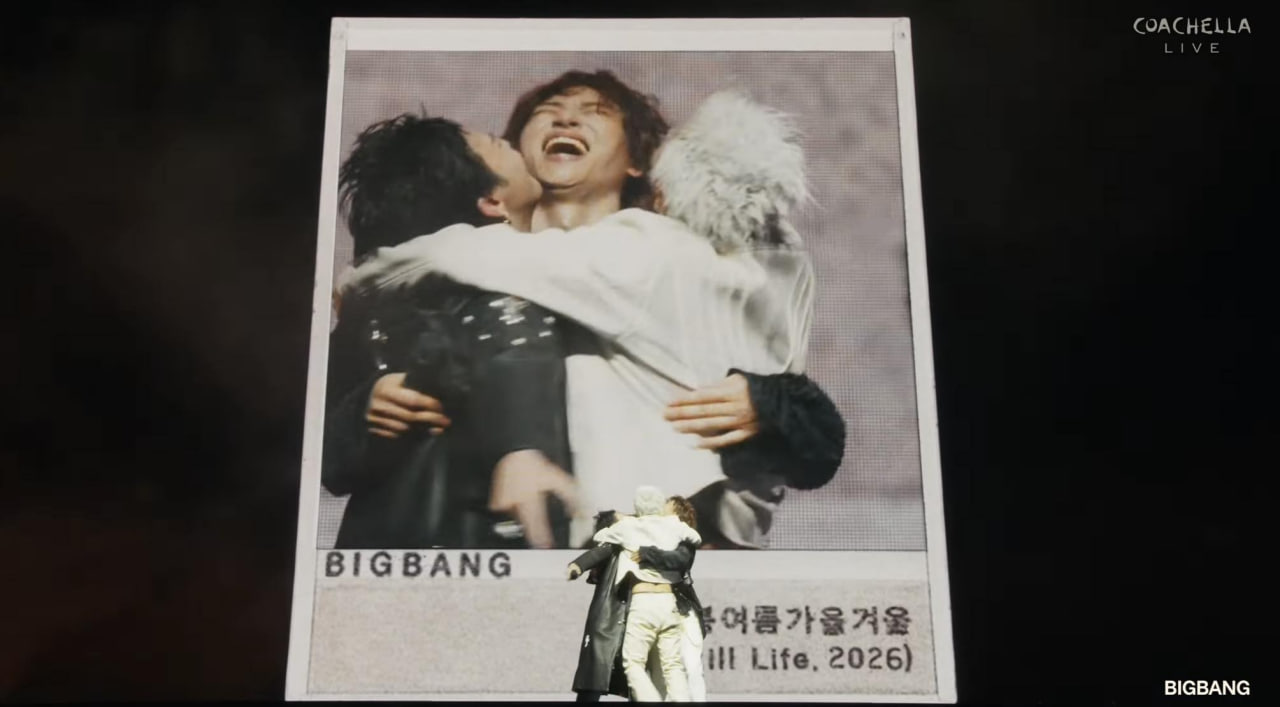
BIGBANG once again proved their unmatched stage power as they delivered a dynamic, genre-spanning performance at the Coachella Valley Music and Arts Festival, captivating tens of thousands of fans with both high-energy anthems and emotionally charged ballads.
Opening their set with a relentless streak of iconic hits, BIGBANG wasted no time in setting the tone. Signature tracks like “BANG BANG BANG,” “FANTASTIC BABY,” and “SOBER” erupted across the California desert, instantly igniting the atmosphere. The crowd responded in kind—jumping, chanting, and singing along as the group’s trademark explosive sound turned the Outdoor Theatre into one of the most electrifying spots of the night.
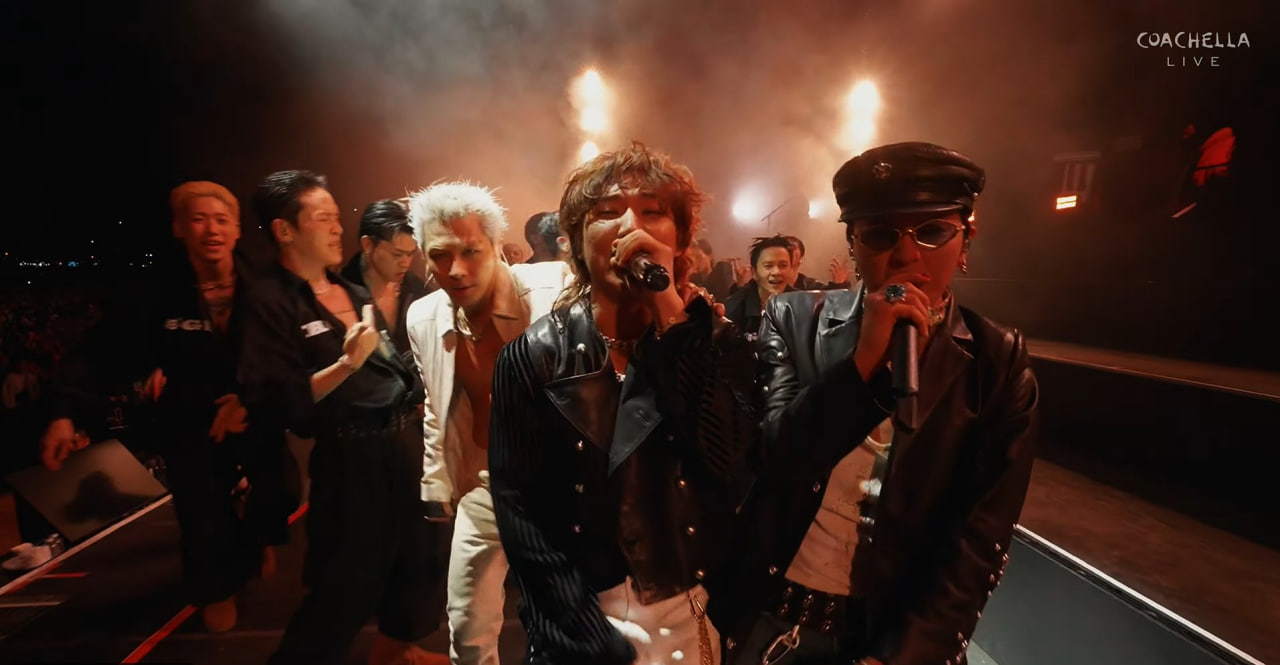
As the energy reached its peak, BIGBANG demonstrated their mastery of pacing by seamlessly shifting into a more emotional gear. The group transitioned into a series of beloved ballads, including “LOSER,” “Haru Haru,” “LIES,” and “A Fool of Tears.” Each song carried a wave of nostalgia, guiding the audience through a deeply sentimental journey that highlighted the group’s musical depth and legacy.
However, one of the most talked-about moments of the night came from Daesung, whose solo stage delivered a bold and unexpected twist.
Taking the Coachella stage with “Look At Me, Gwisun,” Daesung introduced the global audience to trot—a traditional Korean music genre known for its repetitive rhythms and folk-inspired melodies. Trot holds a unique place in Korean popular music.
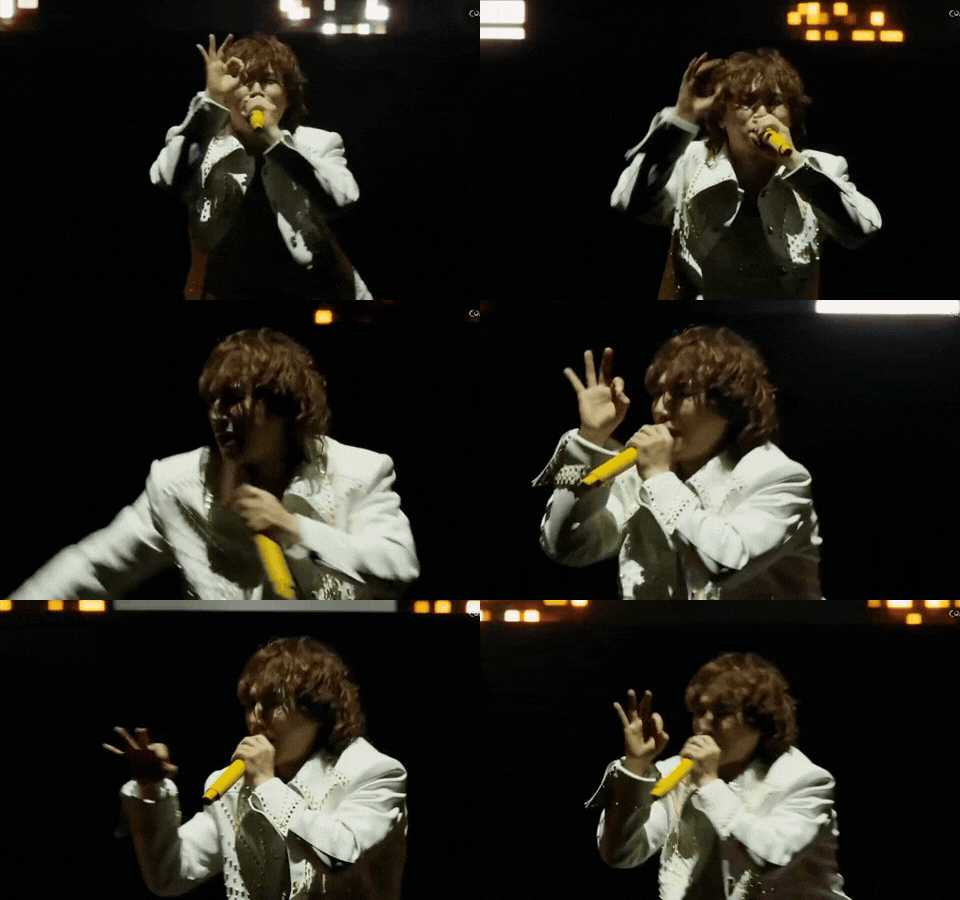
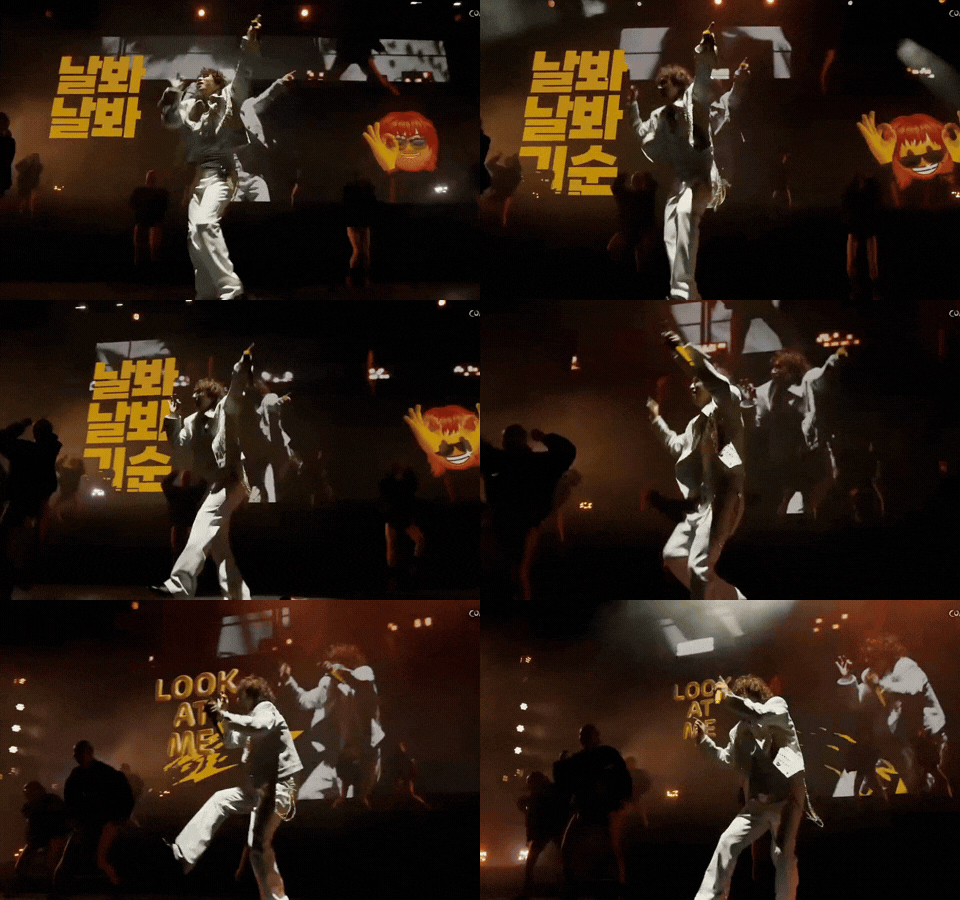
Rather than playing it safe, Daesung leaned fully into the genre’s playful and theatrical nature. The moment the song began, the atmosphere at the Outdoor Theatre shifted dramatically. What could have been a risky cultural crossover instead became one of the night’s most explosive highlights.
Western audiences, far from being confused, embraced the performance with overwhelming enthusiasm. The upbeat rhythm, combined with Daesung’s humorous and charismatic stage presence, broke down any language barriers. Fans danced, cheered, and fed off the infectious energy, turning the performance into a shared global moment.
The stage not only showcased Daesung’s individuality as an artist but also served as a clever and effective introduction of Korean traditional pop elements to an international audience. It was a reminder that BIGBANG’s influence goes beyond music charts—they are cultural ambassadors capable of redefining what global stages can look like.
By blending nostalgia, innovation, and cultural storytelling, BIGBANG didn’t just perform at Coachella—they transformed it.