BTS’s Jungkook is once again at the center of an unexpected online debate, but this time the controversy has nothing to do with a new song, performance or public appearance. Instead, attention has turned to his tattoos after another tattoo artist shared a client’s work featuring designs that appeared strikingly similar to Jungkook’s famous sleeve. What might initially have looked like a simple example of fan inspiration quickly escalated when PolyC, the tattoo artist known for working on and reworking several of Jungkook’s tattoos, publicly expressed discomfort with the apparent copying. The reaction that followed divided fans and raised a larger question about where admiration ends and imitation crosses a personal boundary.
Jungkook’s tattoo collection has been an important part of his public image for years. Unlike a celebrity who occasionally adds a small piece of body art, the BTS star has gradually developed an extensive collection that carries personal meaning and has evolved significantly over time. He began publicly revealing tattoos in 2019, initially with smaller designs before adding more artwork, symbols, phrases and references connected to BTS, ARMY and different parts of his own life. Eventually, the collection expanded across almost his entire right arm, creating the full-sleeve appearance that fans now instantly associate with him.
Because of that history, fans have generally viewed Jungkook’s tattoos as more than decoration. Some designs have been interpreted as tributes to BTS, while others have personal or symbolic meanings. The sleeve itself has also changed over the years, with certain tattoos being altered, covered or reworked. That makes the recent controversy particularly sensitive because the discussion is not simply about whether someone copied an attractive tattoo design. Fans are arguing over whether reproducing a large collection of highly personal artwork is fundamentally different from taking inspiration from a celebrity’s style.
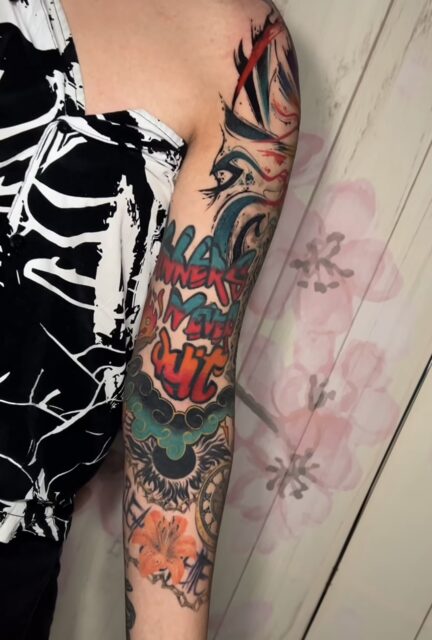
The controversy began after a tattoo artist posted a video showing work completed on a client. According to Koreaboo, several of the designs looked almost identical to tattoos found on Jungkook’s arm. The resemblance was significant enough to attract attention from fans, who quickly began comparing the two sleeves online. What might otherwise have remained a niche tattoo discussion became much larger once PolyC entered the conversation.

PolyC has worked on multiple tattoos associated with Jungkook, including reworking parts of the singer’s sleeve. Seeing another person’s tattoo collection replicate designs so closely apparently did not sit well with the artist. PolyC commented on the post and described the situation as disrespectful, turning what had been a conversation among fans into a direct disagreement involving professionals connected to the original artwork.
The artist behind the client’s tattoo then offered an explanation. Rather than arguing that the similarities were accidental, they reportedly said the client had been deeply impacted by Jungkook and that this emotional connection influenced the decision to get the tattoos. They also suggested that they viewed the situation from a different perspective. That response did little to end the debate. Instead, it pushed the discussion into a much more complicated territory: if a fan genuinely believes that a celebrity changed or even “saved” their life, does that emotional connection justify recreating the celebrity’s personal tattoos?
For some fans, the answer is clearly no.
Critics argued that admiration for Jungkook does not automatically give someone a reason to reproduce artwork that was created specifically for him. They pointed out that there is an important difference between getting a tattoo inspired by a celebrity and recreating an entire collection of distinctive designs. One popular criticism circulating online focused on the idea that the phrase “saved my life” can become an excuse used to justify increasingly extreme forms of celebrity imitation.
That criticism reveals just how emotionally charged the subject has become. Jungkook has one of the largest and most dedicated fanbases in the world, and his influence extends far beyond music. Fans regularly draw inspiration from his clothing, hairstyles, fitness routines, artwork and personal interests. In many cases, that kind of imitation is considered harmless fandom. Someone might buy a similar jacket, recreate a hairstyle or get a small tattoo inspired by a favorite artist. But reproducing numerous designs that belong to a celebrity’s highly recognizable personal collection can feel fundamentally different.
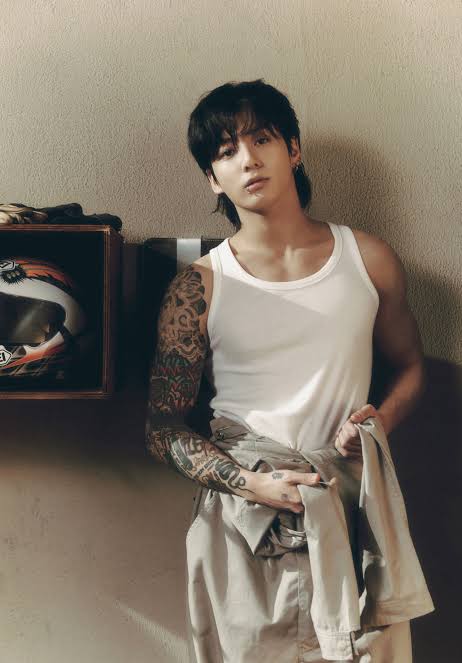
The issue also raises an uncomfortable question about celebrity boundaries. Public figures often accept that aspects of their appearance will be copied. Their fashion choices become trends, their hairstyles are recreated and their artistic aesthetics influence entire communities. Tattoos, however, can occupy a more personal space. Unlike clothing, a tattoo permanently becomes part of someone’s body. When the artwork has been developed over years and altered to reflect personal experiences, copying it almost piece by piece can be interpreted as taking something deeply individual and turning it into a replica.
At the same time, there is another side to the debate that should not be ignored. Fans often connect intensely with artists because of the emotional support they receive from their music. Jungkook and BTS have repeatedly been associated with messages of comfort, resilience and personal growth. For some people, getting a tattoo inspired by an artist can genuinely represent an important period in their lives. From that perspective, the client’s explanation may have been sincere rather than manipulative. The fact that the tattoos were inspired by Jungkook does not automatically prove that the intention was malicious.
That distinction is important because the debate has largely become about intent versus impact.
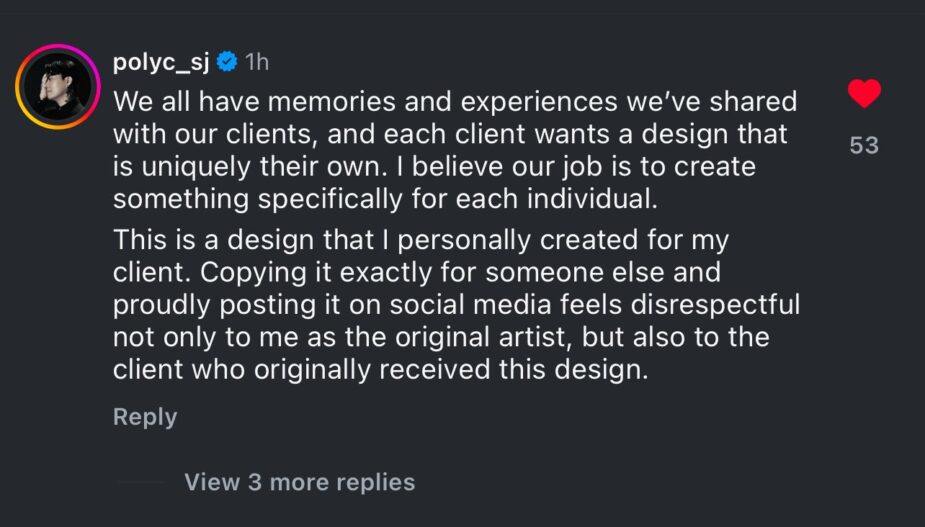
The client may have viewed the tattoos as an expression of gratitude and admiration. The tattoo artist may have viewed the work as a tribute to someone who had profoundly influenced the client. Meanwhile, PolyC and many fans interpreted the result as disrespectful because the artwork was so closely associated with Jungkook himself. All three perspectives can exist simultaneously. Someone can sincerely admire Jungkook while still crossing a boundary that others consider inappropriate.
Another factor making the controversy more complicated is Jungkook’s long history with his tattoos. His collection did not appear overnight. He started with relatively small pieces and gradually built the sleeve over several years. The designs have changed as his life and career have changed. That progression makes the sleeve feel more like a visual record of his personal journey than a fixed piece of fashion. Copying the final appearance therefore potentially removes the context that made the original meaningful in the first place.
Fans have also noted that Jungkook’s tattoos are not simply isolated images. Their arrangement, placement and combination contribute to the overall identity of the sleeve. A person could independently choose a similar symbol without controversy, but recreating multiple elements together creates a much stronger association. This is why the current backlash has focused less on one particular tattoo and more on the apparent scale of the imitation.
The involvement of PolyC has also given the controversy additional weight. Because the artist has been connected to Jungkook’s tattoo work, their criticism was not viewed by fans as merely another random social-media opinion. Their professional relationship with the artwork gave the objection greater significance. When someone who helped create or modify the original tattoos describes a near-copy as disrespectful, fans are naturally more inclined to consider the artistic perspective behind that criticism.
Still, the controversy does not appear to have a simple resolution. There is no universal rule preventing people from getting similar tattoos, and artistic inspiration has always existed. Tattoo culture itself is filled with repeated imagery, traditional designs and references that belong to broader visual traditions rather than individual celebrities. The real disagreement here is about degree. At what point does inspiration become imitation? And when does admiration become an attempt to reproduce another person’s identity?
Those questions become even harder to answer when the person being copied is one of the world’s most famous entertainers. Jungkook’s tattoos are widely photographed, discussed and analyzed by millions of fans. Even without anyone intentionally trying to imitate him, similar tattoo combinations could eventually appear elsewhere. But the current case attracted attention because the resemblance was reportedly extensive enough that fans immediately recognized the connection.
The backlash also demonstrates the unusual dynamics of modern fandom. Fans can become fiercely protective of an artist’s personal choices, sometimes treating aspects of the celebrity’s identity as almost sacred. That protectiveness can create intense reactions when someone appears to cross a line. In Jungkook’s case, the tattoos have long been treated as an especially personal part of his image, so seeing them replicated naturally triggered stronger emotions than copying a hairstyle or outfit might have.
However, there is also a danger in allowing online outrage to escalate too far. A disagreement over tattoo ethics can quickly become harassment of the client or artist involved. Whatever viewers think about the decision, criticism of the work should not become an excuse for personal attacks. The central issue is whether copying such personal artwork is respectful, not whether an individual deserves to be publicly humiliated.
For Jungkook himself, perhaps the most notable part of the story is that he has not publicly made the controversy about himself. The discussion has largely been driven by fans, tattoo artists and online commentators. That means claims about what Jungkook personally thinks should be treated cautiously. His tattoos remain his personal artwork and expression, but there is currently no basis for assuming that he has endorsed or condemned the client’s decision.
What the controversy does reveal is how deeply recognizable Jungkook’s tattoo sleeve has become. Years ago, tattoos were simply another aspect of his changing image. Today, the collection is distinctive enough that an imitation can immediately trigger debate across the BTS fandom. His sleeve has become almost as recognizable as other elements of his visual identity, which explains why even a tattoo-related story can generate significant attention.
Ultimately, the argument is unlikely to disappear simply because the original post fades from social media. The debate touches on a much broader issue that exists across celebrity culture: How much of a public figure can fans reproduce before admiration starts looking like imitation? There is nothing inherently wrong with being inspired by an artist, and there is nothing unusual about a fan choosing a tattoo that carries personal meaning. But when numerous designs are reproduced so closely that they recreate another person’s highly individual tattoo identity, it is understandable that questions of originality, boundaries and respect emerge.
Jungkook’s tattoos have always represented more than ink on his skin. They have evolved alongside his career, relationships with BTS and ARMY, and personal journey. That is precisely why this latest controversy has resonated so strongly. The debate is not really about whether a fan is allowed to love Jungkook enough to get a tattoo. It is about whether honoring someone requires copying the parts of them that were never meant to belong to anyone else.