When Netflix announced a new adaptation of Little House on the Prairie, many viewers immediately assumed it would simply recreate the beloved television series that aired throughout the 1970s and early 1980s. After all, the original show starring Michael Landon remains one of the most iconic family dramas in television history, making any attempt to revisit it an enormous challenge.
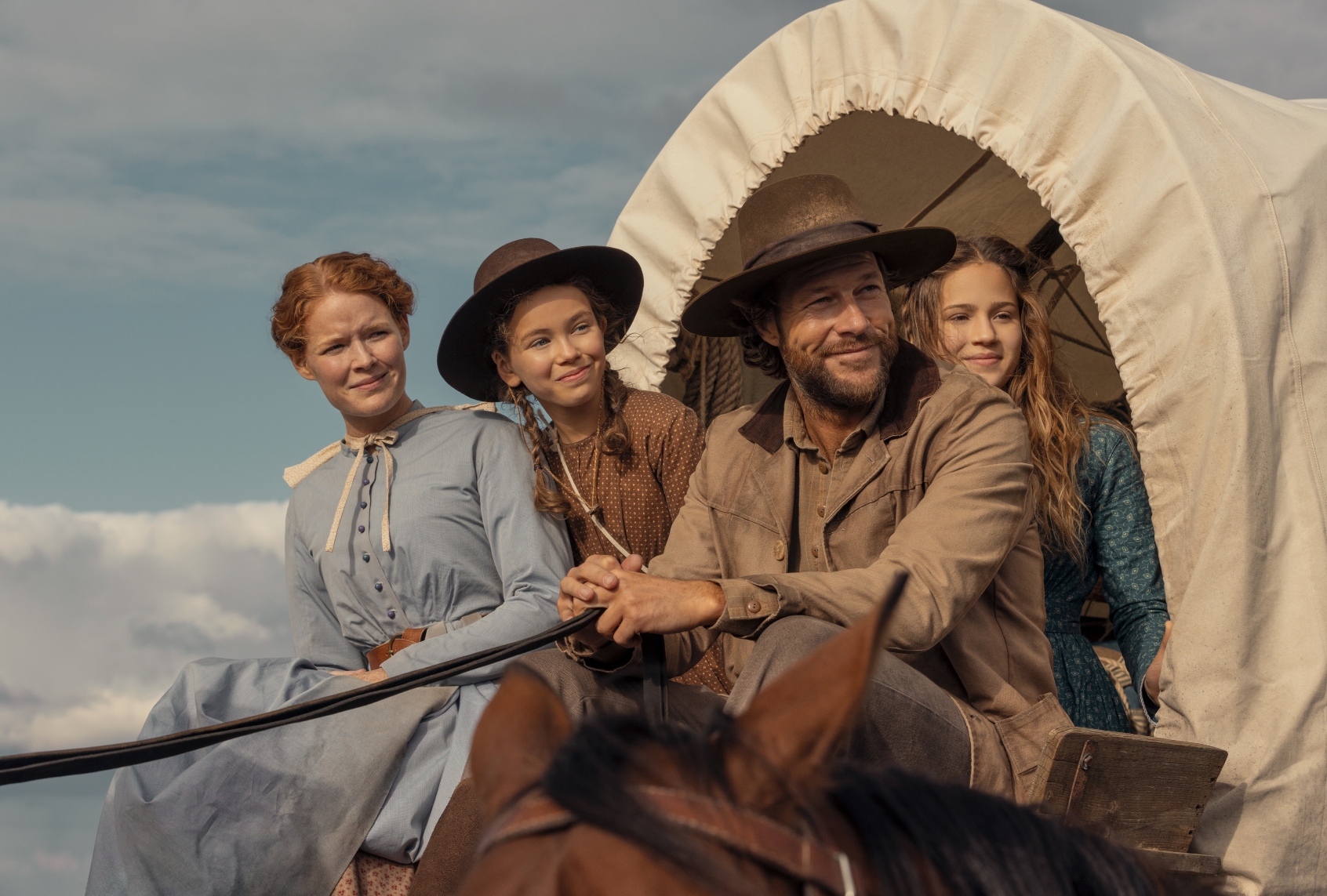
However, once the new series premiered, it quickly became clear that Netflix had no intention of producing a scene-by-scene remake of the classic show.
Instead, the creative team deliberately chose a different direction—one that they believe is actually closer to the original books written by Laura Ingalls Wilder.
Rebecca Sonnenshine, the show’s writer, executive producer, and showrunner, recently explained that the goal was never to recreate the 1970s television adaptation. While she acknowledged the enormous influence of the original series, she emphasized that Netflix wanted to capture the spirit of Wilder’s novels rather than imitate the version audiences have watched for decades.
According to Sonnenshine, the books became the project’s true foundation.

Rather than asking how to modernize the television series, the writers asked how to faithfully adapt the emotional experience of reading Laura Ingalls Wilder’s stories while making them resonate with today’s viewers.
That creative philosophy explains why the new version feels both familiar and surprisingly different.
The biggest difference isn’t simply the updated cinematography, younger cast, or faster pacing.
Instead, one seemingly small creative decision has fundamentally changed the tone of the entire series.
Unlike the 1970s adaptation, which often presented the American frontier through a relatively narrow perspective, Netflix expands the world surrounding the Ingalls family by giving much greater attention to people who were historically present but rarely explored in earlier versions.
The new series introduces an Osage family as close friends of the Ingalls, features Black professionals who play meaningful roles within the community, and includes supporting characters from a wider range of cultural backgrounds. These additions aren’t treated as brief appearances—they become part of the everyday world Laura grows up in.

For the creative team, this wasn’t simply about adding diversity.
It was about presenting a broader picture of frontier life that reflects historical realities while remaining consistent with the emotional themes of the novels.
Perhaps the clearest example of this new approach is Laura herself.
Rather than simply observing the people around her, Laura forms genuine friendships across cultural boundaries, allowing the audience to experience the frontier through a wider lens than previous adaptations ever attempted.
This creative choice has become one of the most talked-about aspects of the series.
Supporters argue that it enriches the story without changing its emotional core, making Laura’s world feel larger, more authentic, and more relevant for modern audiences.
Others remain more skeptical, believing the new interpretation moves too far away from the version they grew up watching.
The conversation extends beyond the supporting characters.
Netflix also presents a slightly different interpretation of the Ingalls family itself.
The relationships between family members are often more emotionally layered, with greater attention given to difficult conversations, personal struggles, and the realities of pioneer life. While the warmth and optimism that defined the original story remain intact, the new adaptation isn’t afraid to explore more complicated emotional moments.
Even smaller details illustrate the production’s willingness to chart its own course.
For example, Jack—the Ingalls family’s loyal dog—is portrayed as a border collie rather than the bulldog many fans associate with earlier adaptations. Although seemingly minor, the change symbolizes the broader philosophy behind the remake: respecting the source material while not feeling obligated to recreate every familiar television image from the past.
Rebecca Sonnenshine has repeatedly stressed that the series was never intended to replace the classic television show.
Instead, she views it as a new interpretation for a different generation—one that stands alongside the original rather than competing with it.
That approach appears to be resonating with many viewers.
Following its July 9 premiere, Little House on the Prairie quickly became one of Netflix’s most-watched television series, debuting with 6.4 million views in just four days and earning an early renewal for a second season.
The strong audience response has also reignited discussion about the differences between the two adaptations.
Many longtime fans have begun revisiting the 1970s series while comparing it with Netflix’s version, discovering that the new show isn’t trying to erase the past but instead offers another way of telling Laura Ingalls Wilder’s timeless story.
Whether viewers ultimately prefer the warmth and nostalgia of the original television series or the broader historical perspective of Netflix’s adaptation will remain a matter of personal taste.
What has become increasingly clear, however, is that Little House on the Prairie (2026) was never designed to be a simple remake.
Instead, it represents a thoughtful reimagining that stays rooted in Laura Ingalls Wilder’s enduring themes of family, perseverance, hope, and community while introducing a fresh perspective for audiences discovering the prairie for the very first time.