In April 1945, as the war in Europe entered its final phase, many believed what remained was little more than a march through a collapsing nation. After crossing the Rhine—the last great natural barrier protecting Nazi Germany—the Allied advance surged deep into German territory with astonishing speed. Under the command of George S. Patton, the U.S. Third Army did not move cautiously; it drove forward like an unstoppable force, crushing what was left of organized German resistance.

On maps, the situation looked simple. The German front was disintegrating. Units of the Wehrmacht were retreating in disorder, and in many places collapsing before they could even mount a defense. But the reality on the ground was far more dangerous. What American forces encountered was no longer a clearly defined battlefield, but a blurred, shifting environment where war and surrender existed side by side.
Armored columns rolled into small German towns where white flags appeared almost immediately. They hung from windows, balconies, even improvised from bedsheets and tablecloths. Civilians stood in the streets with raised hands, their faces a mix of fear and relief. Local officials stepped forward, declaring that their towns had surrendered, that no German forces remained to fight. For a brief moment, it seemed as though the war, at least in these places, was already over.
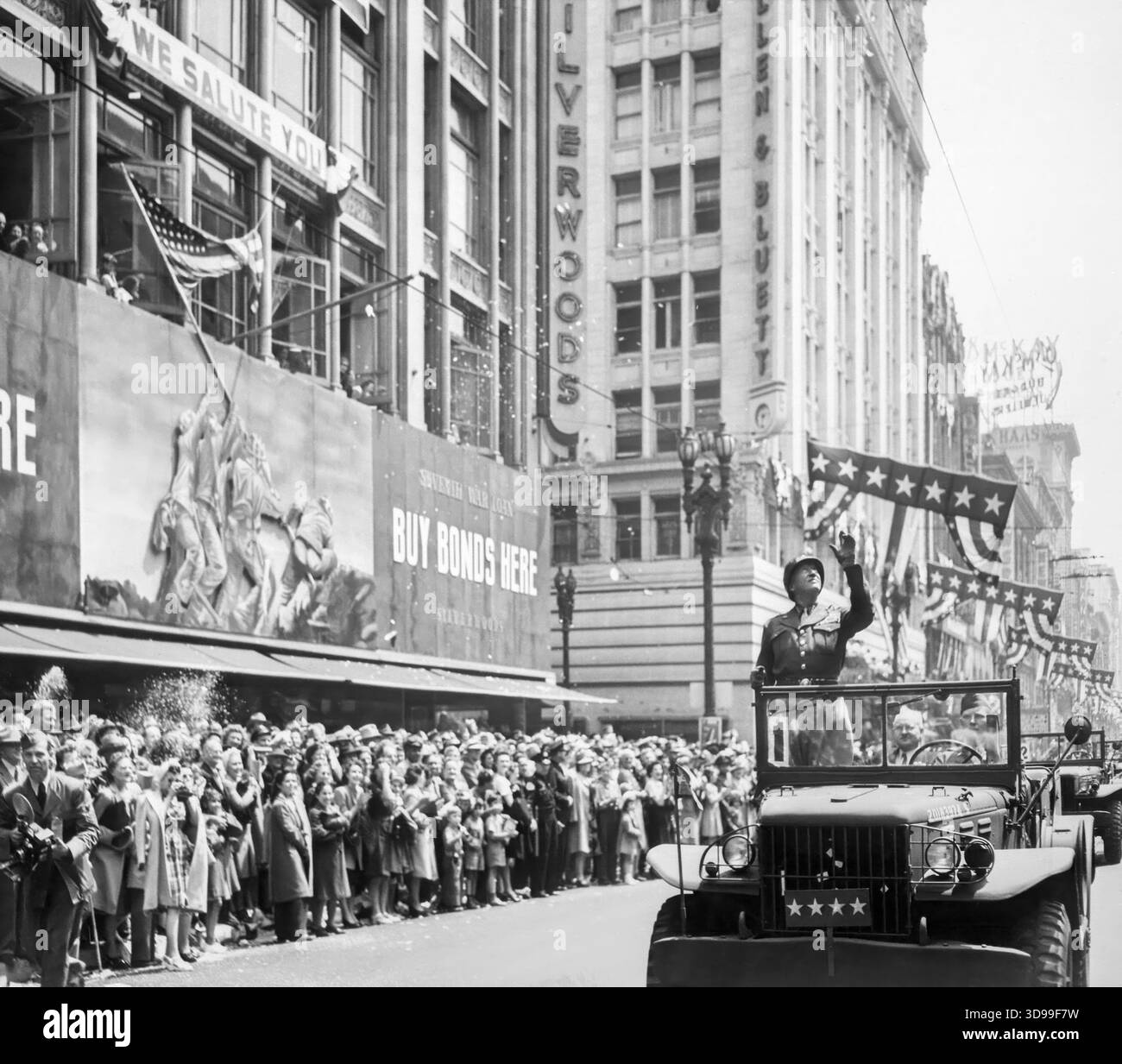
And that moment… was often the most dangerous one.
In one such town, an American armored unit entered under those exact conditions. No gunfire. No visible resistance. An officer climbed out of his tank, unfolding a map to determine their next move. Infantrymen behind him began to relax their posture, some lowering their weapons, others allowing themselves a rare breath of relief after months of relentless combat.
Then came the first shot.
Sharp. Sudden. Precise.
A bullet fired from an upper-story window cut through the still air and struck an American soldier, dropping him instantly. Before anyone could fully react, a second shot rang out—this time from behind a white flag hanging in a window. What moments before had symbolized surrender now concealed a hidden rifle.
Within seconds, everything changed.
Shouts erupted as soldiers scrambled for cover. Machine guns roared in response. A Panzerfaust launched from a basement slammed into an armored vehicle, exploding in a blast that shattered the illusion of safety. Figures appeared and vanished through doorways, rooftops, and shattered windows. Not all wore clear uniforms. Some were German soldiers left behind. Some may have been SS. Others… no one could be certain until they opened fire.

This was no longer a conventional engagement. It was an ambush built on trust—on the assumption that surrender still meant something.
As reports like these began to flow into headquarters, George S. Patton quickly recognized that this was not a series of isolated incidents. A pattern was forming, and it was deeply dangerous. Across central Germany, towns appeared to surrender—only for sniper fire, hidden anti-tank weapons, and sudden attacks to erupt moments later. The enemy was no longer standing in formation, no longer identifiable by uniform or position.
On the German side, in those final desperate weeks, Adolf Hitler and his regime had called for a new kind of resistance—Werwolf units. These were not conventional forces, but small, irregular groups meant to operate behind Allied lines, blending in with civilians, striking unexpectedly, and disappearing without a trace. Whether fully organized or not, even fragments of that idea were enough to transform the battlefield into something far more unpredictable.
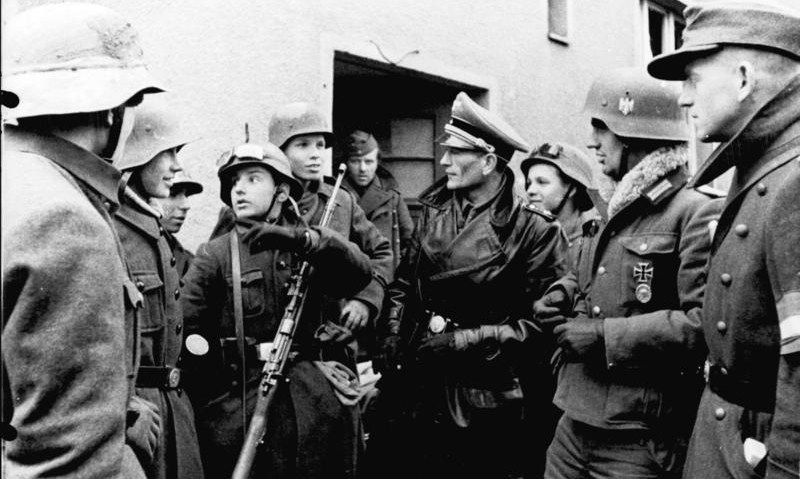
For Patton, this created an entirely new problem. Speed had always been his greatest weapon, but now it carried risk. The faster his forces advanced, the more frequently they entered towns where control was uncertain. A mayor might declare surrender in the morning… and by afternoon, a sniper could fire from that same building. A quiet street could turn into a kill zone in seconds.
Patton’s response was not to slow down. He understood that losing momentum meant losing advantage. Instead, he adapted.
New orders were issued—clear, immediate, and uncompromising. Every town, whether flying white flags or not, was to be treated as potentially hostile until fully secured. No premature lowering of weapons. No blind trust in declarations of surrender. Infantry units were to clear buildings methodically—room by room, basement to attic. Armor was to remain ready to fire at all times. And most importantly, every soldier was to understand one thing: the war was not over just because someone claimed it was.
These orders transformed the way the advance unfolded. Every movement became tense, deliberate, uncertain. Soldiers learned to question everything. An open window could be a firing position. A white flag could be a trap. A harmless face could hide lethal intent.
In this environment, the nature of war itself seemed to change. It was no longer defined by large-scale battles or clear front lines. Instead, it became a series of brief, violent moments where life and death were decided in seconds. There was no true rear area, no safe zone. Every street, every building, every shadow held potential danger.
As the Third Army pushed deeper into Germany, they were no longer fighting just the remnants of the Wehrmacht. They were confronting something else entirely—a form of warfare without rules, where the enemy could hide behind anything, even the universal symbol of surrender.
In the final days of the war, as the world began to speak of Germany’s collapse, the soldiers under George S. Patton experienced a very different reality. For them, it was not a clean advance through a defeated land. It was a passage through a landscape of uncertainty, where every step carried risk, and where trust itself could be fatal.
And in that moment, Patton understood a truth that history would repeat again and again: when an army collapses, war does not disappear. It changes form. It becomes more chaotic, more unpredictable… and sometimes, more dangerous than ever before.