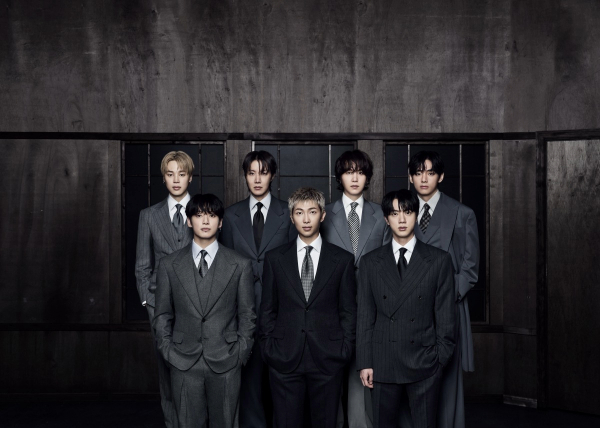
BTS—consisting of RM, Jin, Suga, J-Hope, Jimin, V, and Jungkook—recently appeared on the May cover of Rolling Stone, where they reflected on their global success, future ambitions, and personal growth following military service. At a time when they are arguably at the peak of their career—with chart-topping releases, a global tour spanning dozens of countries, and massive cultural influence—the group showed a mix of ambition, introspection, and humility in their interview.
![BTS, who was worried about soup, got hit."The behind-the-scenes Billboard interview on the birth of Bang Si-hyuk's "ARIRANG." [K-EYES] | STARNEWS](https://image.starnewskorea.com/cdn-cgi/image/f=auto,w=1200,h=802,fit=cover,q=high,sharpen=2/21/2026/04/2026040918420137545_1.jpg)
One of the most notable topics discussed was the possibility of performing at the Super Bowl halftime show, widely regarded as one of the most prestigious stages in global entertainment. With an audience of over 100 million viewers annually, the event represents a dream opportunity for many artists. The discussion was sparked in part by recent performances from non-English-speaking artists, which have begun to challenge traditional expectations of the show. BTS acknowledged this shift as a meaningful sign that the industry is evolving.
RM approached the idea with cautious optimism. He expressed that while such an opportunity may not come immediately, it could become possible as global perspectives continue to change. He pointed out how Korean culture has gained international recognition, referencing works like Parasite as examples of how audiences worldwide are becoming more open to different languages and cultural expressions. For him, performing at the Super Bowl someday would be a meaningful milestone if the opportunity arose.
Jimin offered a more grounded perspective, noting simply that such a performance would only happen if they were invited. Jin, on the other hand, admitted that he has already imagined what a BTS halftime show might look like, hinting at the group’s creative aspirations. J-Hope brought a different angle to the conversation, emphasizing that their journey as a group—especially reuniting after time apart and continuing to create music together—feels more significant than any specific achievement like the Super Bowl stage. His comment reflected a shift in priorities, suggesting that their bond and longevity now hold greater value than external validation.
The conversation also touched on how BTS is perceived in relation to other global superstars such as Taylor Swift and Bruno Mars. When asked about being seen as competitors alongside such artists, RM responded with notable humility. He described them as far greater artists and referred to BTS as “just a boy band from Korea.” His statement surprised many, considering BTS’s immense achievements, including multiple No. 1 rankings on the Billboard Hot 100 and record-breaking global tours. Even the interviewer questioned whether that modest characterization truly reflected their impact.
Despite their global success, the members acknowledged that their mindset has evolved over time. Suga, in particular, reflected on how he used to feel highly competitive and driven to achieve specific goals. However, he admitted that this mindset often came at the expense of his physical and emotional well-being. Now, after years of experience and growth, he feels more comfortable taking breaks and enjoying the process. He emphasized that as the members have grown older, they are learning to find joy in their work rather than constantly chasing results.
RM also spoke candidly about the group’s identity in the present moment. He revealed that he once believed his time in the military would help him gain clarity about what BTS represents, but instead, he still feels uncertain. Rather than seeing this as a negative, he suggested that their latest body of work offers a possible answer. He described their recent music as a reflection of who they are now, capturing both their evolution and the questions they continue to explore as artists.
Throughout the interview, BTS demonstrated a balance between confidence in their achievements and humility about their place in the global music industry. They acknowledged the growing influence of Korean culture worldwide while remaining grounded in their identity. As they continue their journey, their reflections suggest that their focus is shifting from competition and recognition toward authenticity, connection, and longevity.