The Times Square sequence in I Will Find You stands out as one of the most visually striking and thematically important moments in the series, yet it was almost left on the cutting room floor. What eventually became a defining scene for the protagonist David Burroughs was, at one point, a major logistical concern for the production team. According to author Harlan Coben, the scene’s inclusion was far from guaranteed, not because of narrative uncertainty, but because of the sheer difficulty of filming in one of the busiest public spaces in the world.
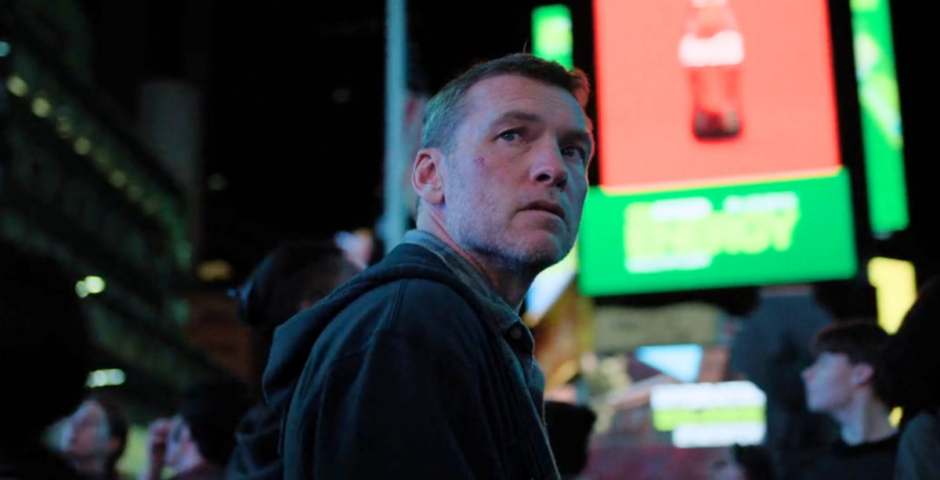
The series, which has been performing strongly on Netflix, was shot largely on location in New York City to preserve its grounded, immersive tone. The production team aimed to use real environments rather than constructed sets wherever possible, but Times Square presented a unique challenge that went beyond typical on-location filming. The creative intention behind the sequence was clear: place David in a space defined by overwhelming sensory input, constant motion, and human density, reinforcing his emotional and psychological state. However, translating that idea into a workable shoot proved complicated.
Coben recalled arriving on set late at night with the expectation that the location would be partially cleared or controlled for filming. Instead, he was confronted with the reality that Times Square remained densely packed even during the midnight hours. Tourists, locals, and night visitors continued to move through the area, creating a level of unpredictability that made conventional filming approaches nearly impossible. At one point, he questioned how the crew could possibly proceed under such conditions, given the lack of separation between the production and the public.
The production faced an immediate decision: attempt to clear the area and use controlled extras, or embrace the existing crowd and integrate them into the scene. Surprisingly, the latter approach became the solution. Rather than waiting for the square to empty or trying to simulate its energy with hired background performers, the crew ended up filming directly within the real crowd. This choice added authenticity but also introduced a constant challenge of managing continuity, camera placement, and safety while working in a live environment.
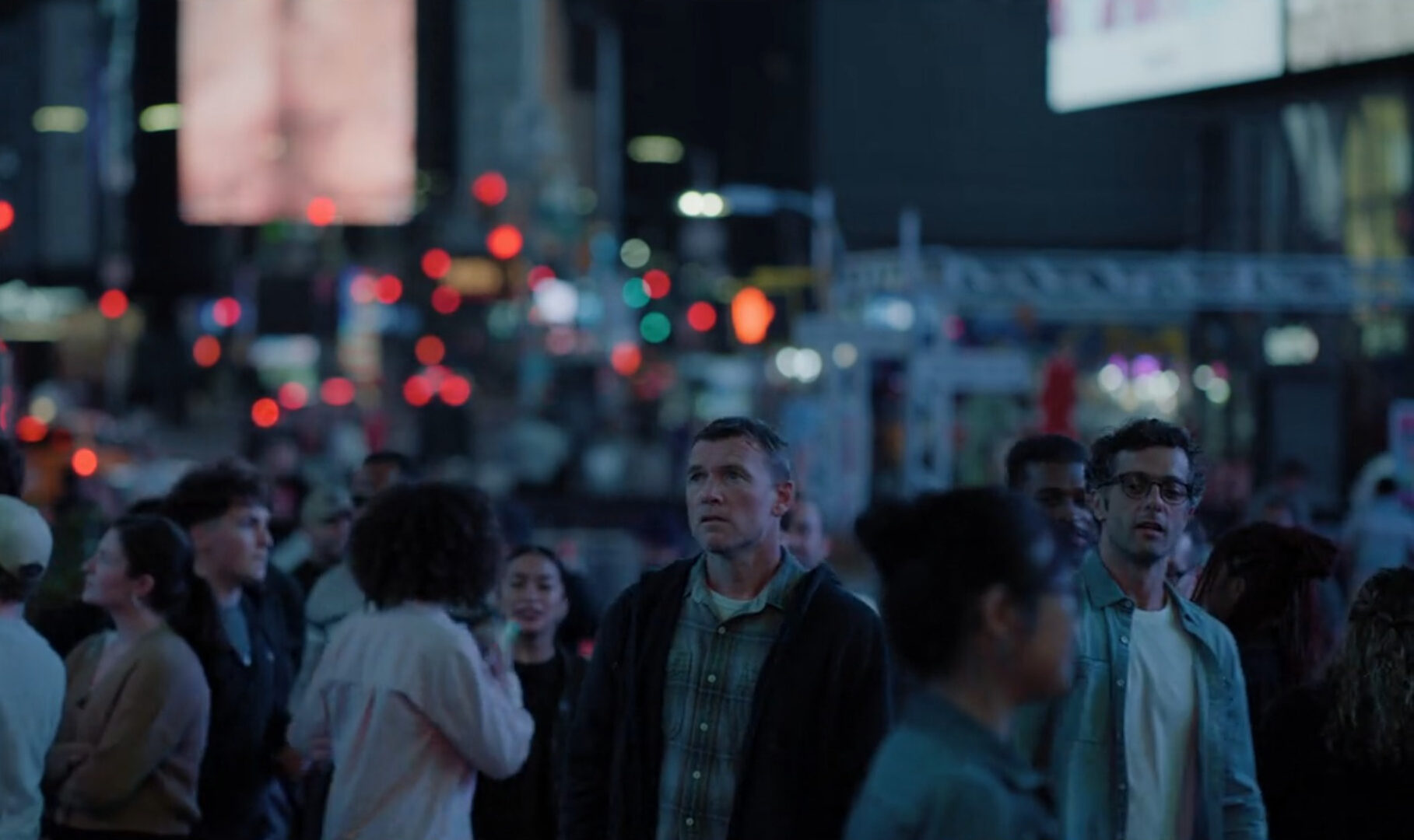
An additional complication came from Times Square’s iconic “Midnight Moment,” a daily occurrence when all of the area’s digital billboards synchronize to display a unified piece of artwork at exactly midnight. This brief but highly structured event effectively imposed a strict timing constraint on the production. The crew had to wait for this coordinated display to finish before they could properly begin filming, which further reduced their already limited window for shooting in a controlled manner. The combination of the event’s timing and the ongoing pedestrian traffic meant that patience and improvisation became essential tools for the team.
Despite these obstacles, the production ultimately succeeded in capturing the scene, and its final execution became a testament to both logistical coordination and creative adaptability. The decision to incorporate the real-life chaos of Times Square ended up reinforcing the narrative purpose of the sequence. Rather than constructing an artificial sense of overwhelm, the filmmakers allowed the environment itself to shape the emotional tone.
For the character of David Burroughs, portrayed by Sam Worthington, the experience of standing in Times Square was not just a narrative moment but also a performance challenge that aligned closely with his character’s psychological state. Worthington described the location as inherently overwhelming even for someone familiar with New York City. The constant noise, movement, and visual stimulation of the area can feel intense under normal circumstances, but for a character who has experienced prolonged isolation, the effect becomes exponentially more disorienting.

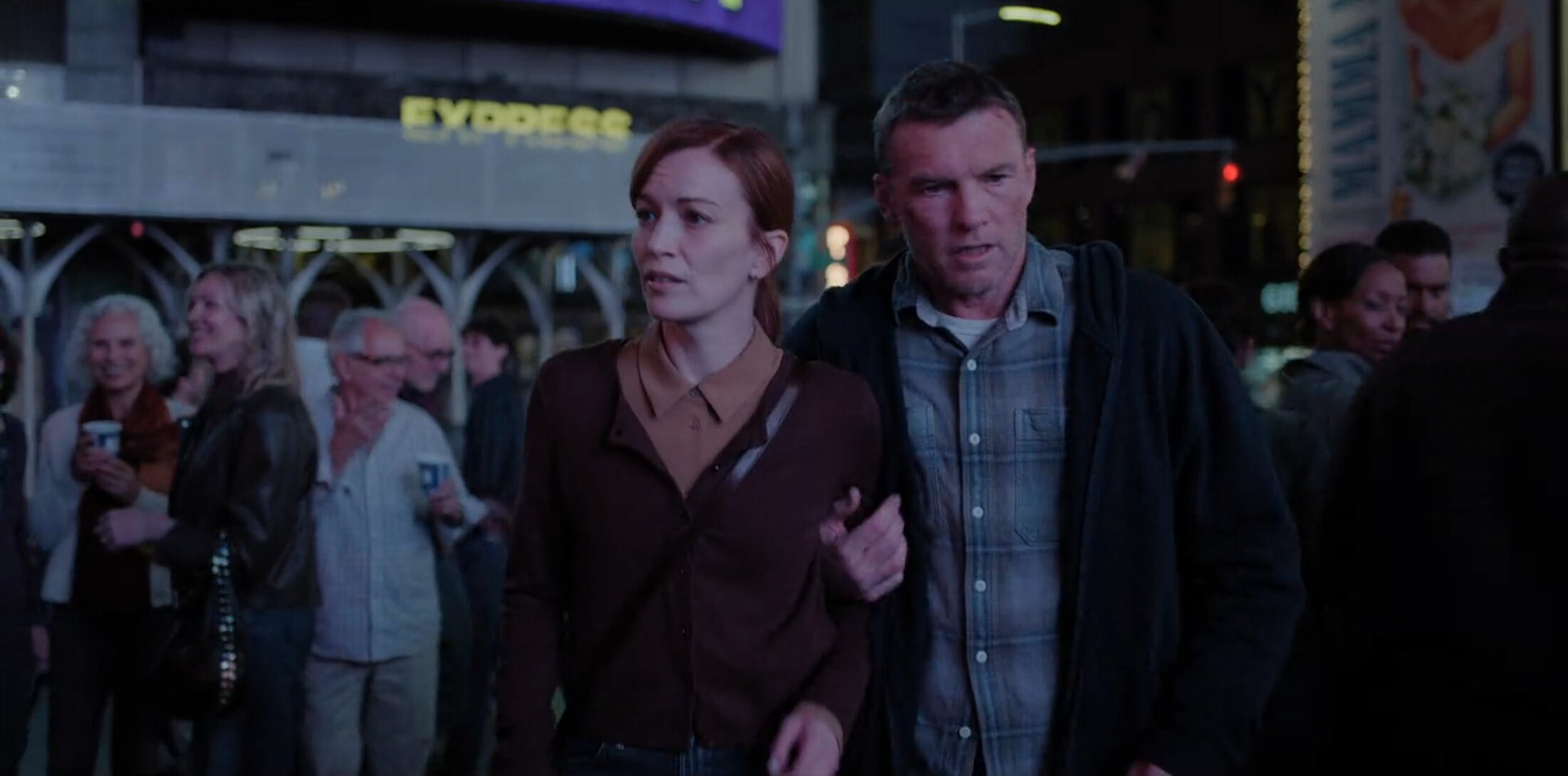
This sensory overload was central to the creative reasoning behind the scene. David’s journey in the story involves a transition from confinement and deprivation into a world that is not only unfamiliar but aggressively stimulating. The contrast between isolation and the chaotic openness of Times Square helps externalize his internal condition. Worthington noted that his character’s reaction in the scene reflects not heroism in the traditional sense but vulnerability, as he is forced to rely heavily on Rachel, the other central character, to navigate the environment and continue his journey.
Rachel, played by Britt Lower, provides a counterbalance to David’s disorientation. Her character operates with greater control and awareness in the environment, effectively guiding him through the chaos. Lower later reflected on the night shoot with a more personal, lighter memory, recalling how the long hours and crowded setting made simple comforts feel out of reach. Amid the intensity of filming, even something as ordinary as finding food became a humorous fixation, highlighting the contrast between the production’s cinematic ambition and the human reality of the actors on set.
Showrunner Robert Hull also emphasized that the decision to film in real conditions ultimately strengthened the sequence. While the challenges were significant, the authenticity of the environment contributed to the emotional weight of the scene. Instead of relying on staged background action, the production captured an organic version of Times Square that could not have been easily replicated on a controlled set. The unpredictability of the crowd, the ambient noise, and the visual density of the billboards all combined to reinforce the sense of disorientation that defines David’s experience.
Looking back, what nearly became a cut scene turned into one of the most important visual moments in the series. Its success depended on a combination of patience, improvisation, and a willingness to abandon controlled filmmaking conventions in favor of real-world complexity. The result not only elevated the narrative impact of David and Rachel’s journey but also demonstrated how location itself can become an active storytelling element when embraced fully.