Is Lisa being turned into a global entertainment “joke” by the American industry, or is she simply paying the price for stepping into the brutal world of Western stardom? That’s the question being fiercely debated after her high-profile appearance performing the track “Goals” at the opening ceremony of the FIFA World Cup 2026 at SoFi Stadium, an event that instantly etched her name into the record books as the first solo K-pop artist to ever take that stage.

On paper, it all looks like a dream run. Since signing with RCA Records and launching her own label LLOUD, Lisa has been handed a string of what many would call “gold-plated opportunities” in Hollywood. From strutting into global pop culture moments like the Victoria’s Secret Fashion Show, to landing a role buzz in major screen productions such as The White Lotus season 3 and being linked to blockbuster projects like Extraction 3, her profile in the United States has exploded at a speed few K-pop idols ever experience.
But behind the glitter, a louder and more uncomfortable conversation is taking shape online. Some fans and critics are now asking whether this rapid-fire exposure is actually elevating Lisa into a global icon — or simply placing her in high-visibility situations where she is set up to be endlessly judged, clipped, and criticised, turning her into what harsh voices are calling a “media spectacle” rather than a respected mainstream performer.
To understand this tension, you have to look at the cold mechanics of Hollywood. The American entertainment machine does not operate on loyalty, fandom protection, or idol worship. It runs on numbers, attention metrics, engagement spikes, and global reach. Lisa, with her enormous Southeast Asian and international fanbase, is an extremely valuable asset in that ecosystem. Her presence alone guarantees clicks, streams, and social media traffic for any major event or brand she is attached to.
But that deal comes with a flip side that is far less glamorous. Once the spotlight is on, there is no protective bubble. Unlike the tightly managed environment of K-pop, where visuals, concepts, and narratives are carefully curated and controlled, the Western stage strips all of that away. What remains is raw performance, exposed entirely to a global audience that is notoriously unforgiving when it comes to live vocals, stage control, and authenticity.
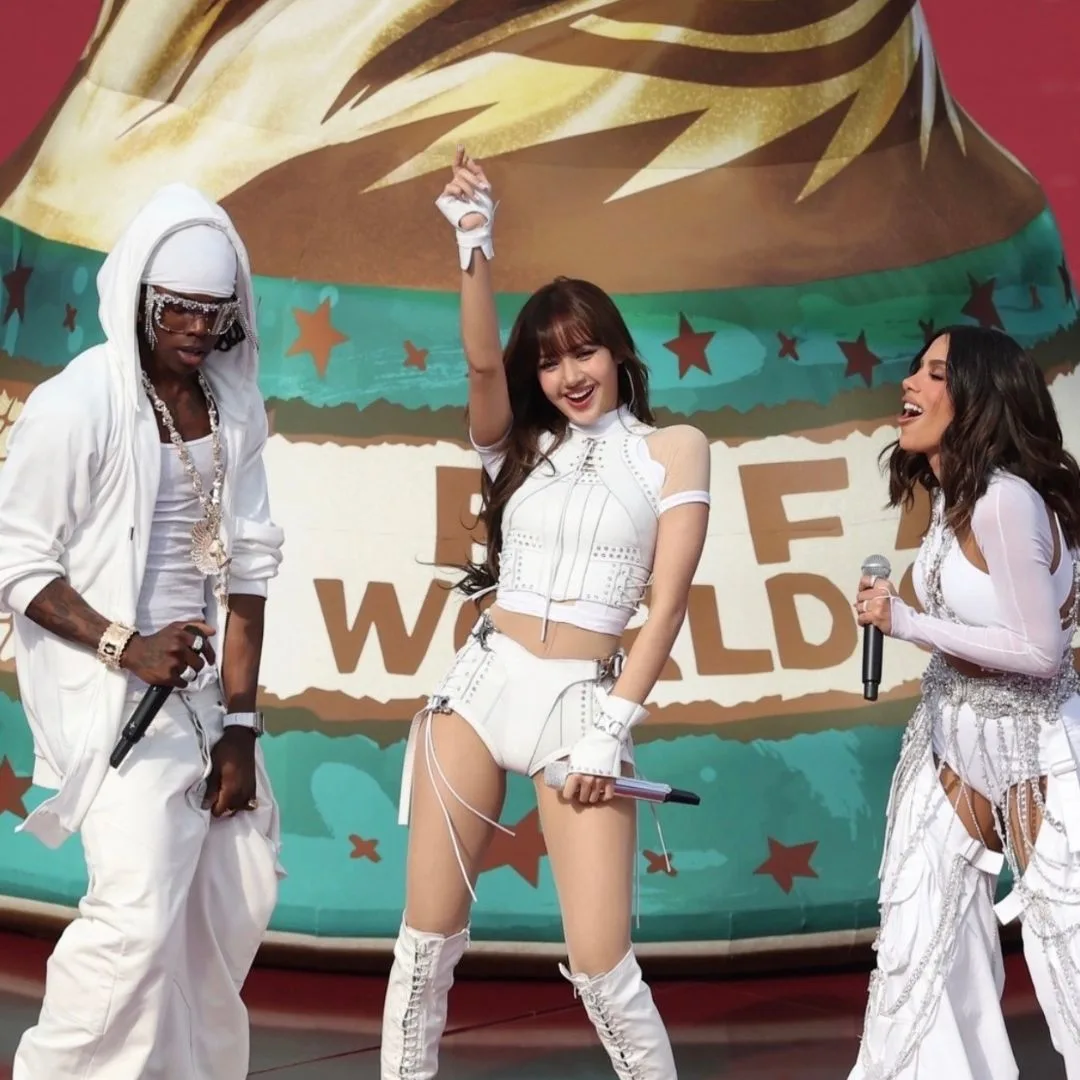
That became particularly evident in the reaction to her World Cup performance. While some praised her visual presence, athletic energy, and commanding stage aura alongside collaborators like Anitta and Rema, others were far more critical. Across social platforms and sports forums, a portion of neutral viewers questioned whether the performance relied heavily on backing tracks or lip-syncing, something that is often tolerated in K-pop but treated as a major flaw in Western stadium-level shows.
In that environment, even minor imperfections are magnified. Critics argued that Lisa’s vocal delivery appeared restrained compared to the powerhouse standards expected at a global sporting event of this scale. Some even suggested that her performance style, heavily rooted in sharp choreography and polished sensual pop aesthetics, did not fully match the raw, explosive, almost aggressive energy traditionally associated with iconic World Cup musical moments.
Comparisons quickly surfaced with past World Cup performers, particularly artists like Shakira, who became symbolic of global tournament entertainment thanks to their ability to merge strong vocal identity with mass crowd engagement. Against that benchmark, detractors claimed Lisa’s set felt more like a carefully choreographed branding moment than an emotionally commanding live performance.
This is where the criticism becomes harsher. In some corners of the internet, the narrative has shifted from artistic critique to something more biting — the suggestion that Lisa is being used as a high-profile “content tool” for large-scale events, deployed to boost global engagement rather than to deliver a defining musical moment. In other words, she is being watched more as a social media magnet than as a live performer judged purely on artistry.
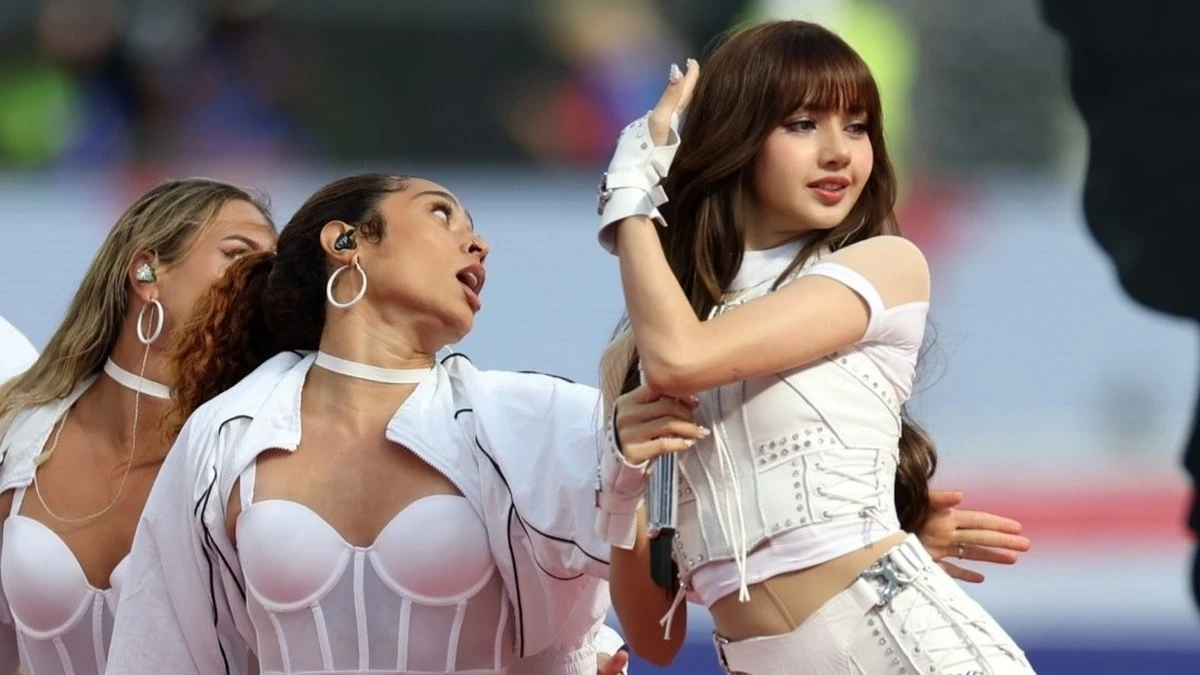
However, framing this as Lisa being turned into a “joke” by the US entertainment industry may be an oversimplification. The reality is far more transactional and, arguably, more brutal. Hollywood does not “protect” international stars from criticism, nor does it lower its standards to accommodate them. Instead, it places them directly into the mainstream arena and lets public opinion decide their value in real time.
By that measure, Lisa is not being undermined — she is being tested. Every appearance, whether at fashion events, TV productions, or global sporting ceremonies, is part of a wider branding strategy aimed at embedding her name into Western popular culture. The trade-off is clear: massive exposure in exchange for equally massive scrutiny.
And despite the backlash surrounding certain performances and chart positions of her solo releases, the visibility effect is undeniable. Her name now circulates far beyond K-pop circles. Audiences who have never followed BLACKPINK, or even listened to a K-pop track, now recognise Lisa as a global pop figure, a fashion presence, and a recurring face in international entertainment conversations.
The truth is that in the American system, there is no “soft landing.” You either deliver at the highest level or you get dissected publicly. That applies to everyone from debuting pop acts to established superstars. For Lisa, this means every stage becomes both an opportunity and an examination hall.

So is she a victim of being turned into a “media joke,” or simply a rising global star paying the entry fee into Hollywood’s elite circle? The answer likely sits somewhere in between. What looks like chaos to outsiders is, in reality, a calculated expansion strategy — one that accepts criticism as part of the price of admission.
What happens next will depend entirely on evolution. If Lisa manages to strengthen her live performance reputation and refine her musical identity to match Western expectations, these moments of controversy may later be seen as early growing pains. But if not, the narrative risk remains: that she becomes more famous for the spectacle around her than the artistry within it.