The biggest change awaiting The Pitt in Season 3 may not be a new medical emergency or another personal crisis. It may be something much simpler: the hospital has learned how to function without Robby.
That creates a fascinating problem.
For much of the series, Dr. Robby has occupied the emotional and professional center of the emergency department. But Season 3 will arrive after a period in which he has been away for several months, while Dr. Al-Hashimi has been “steering the ship.”
At the same time, another familiar doctor is moving in the opposite direction.
Dr. Frank Langdon is back.

According to Patrick Ball in an interview with TV Insider, Langdon has returned to “the pit” after Season 2 forced him to confront just how much confidence he had lost. That means Season 3 is bringing together three potentially important developments: Robby returning after an extended absence, Al-Hashimi having established herself under different leadership conditions, and Langdon rebuilding the version of himself that once thrived inside trauma rooms.
The ED Robby left behind may therefore not be exactly the ED waiting for him when he returns.
Langdon Had to Lose His Confidence Before He Could Rebuild It
Season 1 introduced Langdon as confident, fast and comfortable in chaos.
Trauma rooms were essentially his natural habitat.
Ball explains that he spent most of Season 1 inside fast-paced, “high-octane” situations. Langdon feels most comfortable when everything is moving quickly.
“Where Langdon feels at home is moving fast,” Ball said.
Season 2 deliberately disrupted that identity.
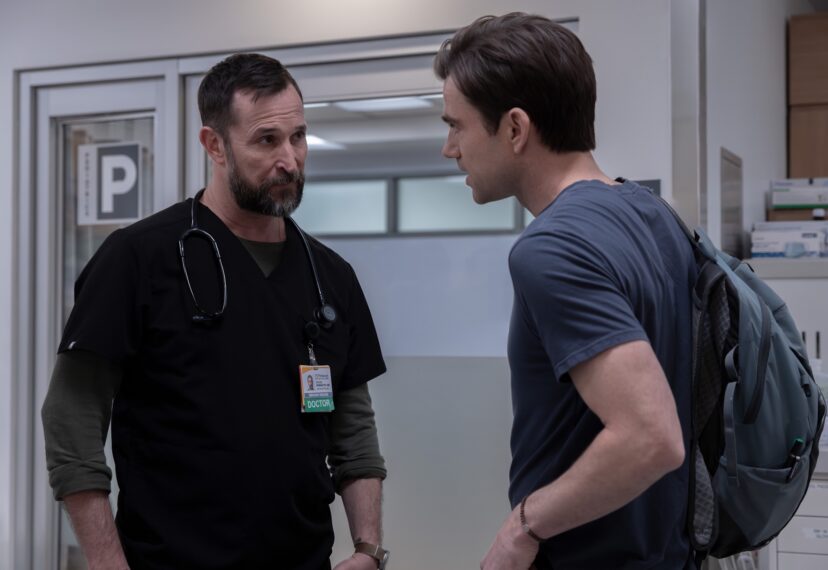
After rehab and approximately 10 months away, Langdon returned without the confidence audiences associated with him. Instead of immediately returning to major trauma cases, he spent considerable time in triage. He was “benched,” working at a different tempo and even showing hesitation about returning to trauma rooms.
That loss of confidence was not incidental.
Ball believes Langdon needed that experience before Season 3 could credibly put him back where he belonged. Even without rehab, taking an ordinary person away from work for 10 months and then throwing them directly into repeated life-and-death situations would naturally create hesitation.
For Langdon, the psychological barrier was even greater because his belief in himself had been “really eroded” during the rehab process.
Season 2 became his shift of reflection.
By its conclusion, however, there were signs that something had changed.
Langdon successfully performed a closed reduction that relatively few people have done. He also finally had conversations he needed to have with Robby and Santos, even though those conversations did not necessarily go well.
Most importantly, he survived his first shift after rehab and was prepared to come back for another.
Season 3 now gets to explore what happens next.
Langdon Is Back Where He Belongs
Ball confirmed that Langdon is no longer hovering cautiously around the edges of the action.
“I’m now back in the pit,” he said.
He has found his feet again, and according to Ball, he is back doing “the fun stuff.”
That potentially brings some of the Season 1 Langdon energy back into the series, but it would be a mistake to assume the character has simply reset.
This is a man returning to the same high-pressure environment after having his confidence dismantled and slowly reconstructed.
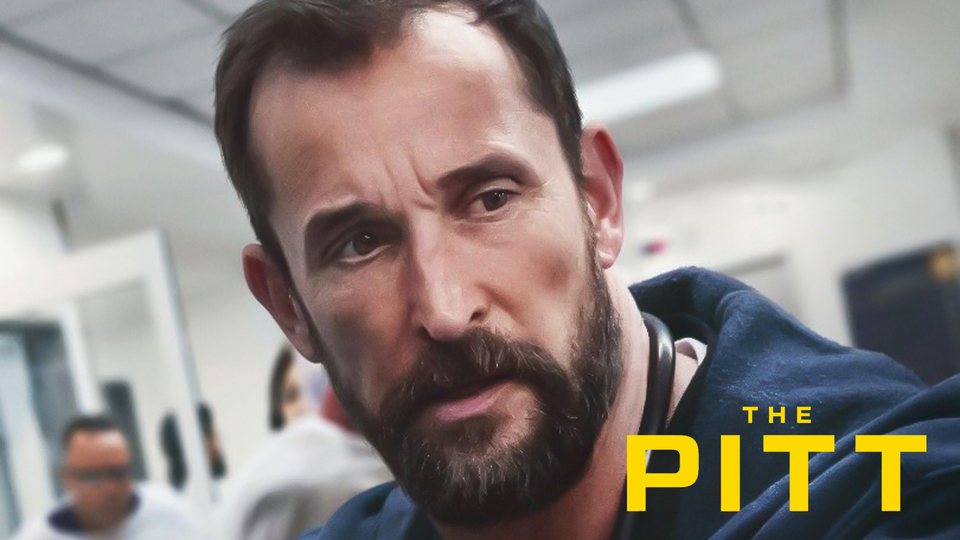
And the relationships waiting for him are more complicated than ever.
Ball describes the dynamic between Langdon and Robby as “incredibly rich,” adding that there is “a lot more to unpack there, which we are getting into.”
But Robby is only one piece of it.
Langdon also has evolving relationships with Dana, Mel, Santos, Whitaker and Al-Hashimi. Ball describes these dynamics as increasingly “multidirectional,” with tension running through each of them.
Then there is McKay.
McKay May Understand Langdon in a Way Others Cannot
Ball is particularly interested in seeing Langdon spend more time with McKay.
The reason goes deeper than workplace chemistry.
McKay is also in recovery, but she is further along that road than Langdon. That gives the two characters a shared experience that could allow McKay to offer him something different from the people around him.
Ball believes she “has a lot to offer Langdon.”
Season 2 already provided small moments in which McKay unexpectedly opened up to him, seemingly catching Langdon off guard.
If expanded, that relationship could become particularly important now that Langdon is rebuilding his professional confidence while continuing to live with the consequences of what happened before rehab.
But another relationship may carry much greater implications for the hospital itself.
The Pitt Has Been Living Under New Leadership
Ball revealed that while Robby has been away, Al-Hashimi has been “steering the ship for the last few months.”
His question is telling:
“What does this place feel like under different leadership?”
That may become one of Season 3’s most consequential issues.
Several months is enough time for routines to change. Relationships can evolve. Employees can adjust to a different authority structure.
The interview does not reveal how Robby responds when he returns, nor whether Al-Hashimi’s leadership creates a direct conflict. But the situation itself establishes a new dynamic: Robby is coming back to a workplace that has continued moving without him.
There is also unfinished business between Langdon and Al-Hashimi.
Season 2 did not deeply explore the fallout after she overheard the conversation between Langdon and Santos. Asked whether that issue would now be addressed, Ball carefully avoided answering.
“We’ll just have to tune in and find out.”
Season 3 Is Already Moving
Production itself appears to be progressing confidently.
At the time of the interview, Ball said they were preparing to begin Episode 5 of the planned 15-episode season. He praised the scripts and said the production had found “a really good flow,” predicting audiences would be happy with the result.
He also confirmed new medical students are coming into the story and spoke enthusiastically about them.
And Langdon apparently has another surprise waiting.
Season 2 unexpectedly revealed his interest in historical reenactments. Ball confirmed Season 3 will provide another “fun new nugget” about the character, although he refused to reveal what it is.
When asked whether Season 3 Langdon resembles his confident Season 1 incarnation or his more vulnerable Season 2 version, Ball gave the safest answer possible:
“He’s right after Season 2, right before Season 4.”
It is a joke, but it inadvertently captures what makes Langdon interesting now.
He cannot simply become the old Langdon again.
Season 1 showed a man comfortable in chaos. Season 2 showed what happened when that confidence disappeared. Season 3 can now explore someone trying to reclaim his strengths without pretending his collapse never happened.
And he will be doing it inside an ED that has experienced its own transformation.
Robby has been gone. Al-Hashimi has been leading. Langdon has found his feet again. New medical students are entering the system, while old relationships remain unresolved.
The most interesting question, then, may not be whether everyone can return to normal.
It is whether there is any “normal” left for them to return to.