When a returning television series loses nearly half of its opening audience, the immediate assumption is often that something has gone wrong. For many streaming shows, a steep decline between the first and second seasons can quickly spark speculation about cancellation. That is exactly the conversation surrounding Ransom Canyon after its sophomore premiere on Netflix.
However, the numbers alone do not necessarily tell the complete story. According to a report from Deadline, Ransom Canyon Season 2 opened with 4.1 million views during its first week, a significant 43% decline from the 7.2 million views recorded by Season 1 during the same period. On paper, it appears to be a disappointing return for a romantic drama led by well-known stars Minka Kelly and Josh Duhamel.

Yet when viewed alongside Netflix’s broader performance trends, the picture becomes much more complicated.
The decline certainly attracts attention because Ransom Canyon is not a small experimental production. It is one of Netflix’s higher-profile romantic dramas, featuring recognizable leads and receiving enough confidence from the platform to earn a second season after an uncertain renewal process.
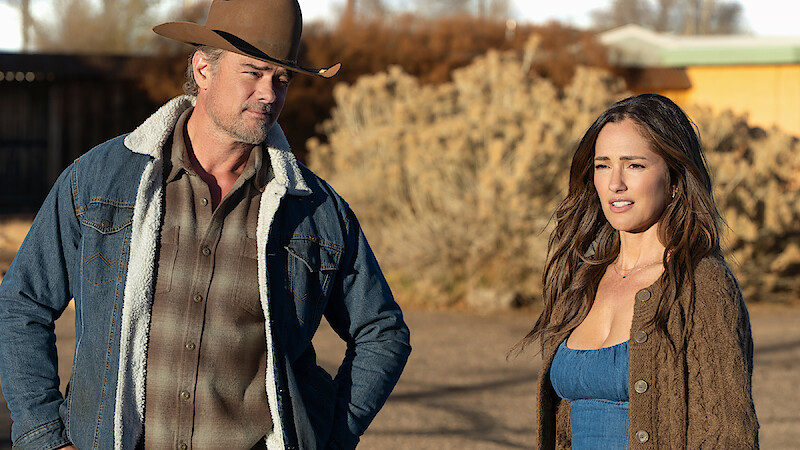
Even so, its 43% drop is far from the worst example Netflix has seen this year.
Several other sophomore series have experienced even steeper opening-week declines. Running Point also dropped 43%, matching Ransom Canyon’s performance. The Four Seasons fell by 63%, Avatar: The Last Airbender declined by 59%, Beef lost nearly 60% of its opening audience, and A Good Girl’s Guide to Murder suffered a decline of more than 76%.
Despite those dramatic numbers, some of these shows have still secured renewals for additional seasons.

That context immediately changes the discussion. Rather than asking whether a 43% decline automatically signals failure, the more relevant question becomes whether Netflix now evaluates success using different standards than viewers expect.
The history of Ransom Canyon itself reinforces that uncertainty.
Following its first season, the Texas-set drama was reportedly considered to be “on the bubble.” Renewal was never guaranteed. Eventually, Netflix ordered a second season, but with notable adjustments. The episode count was reduced from 10 episodes in Season 1 to 8 episodes for Season 2, while the storyline and supporting cast also underwent changes.
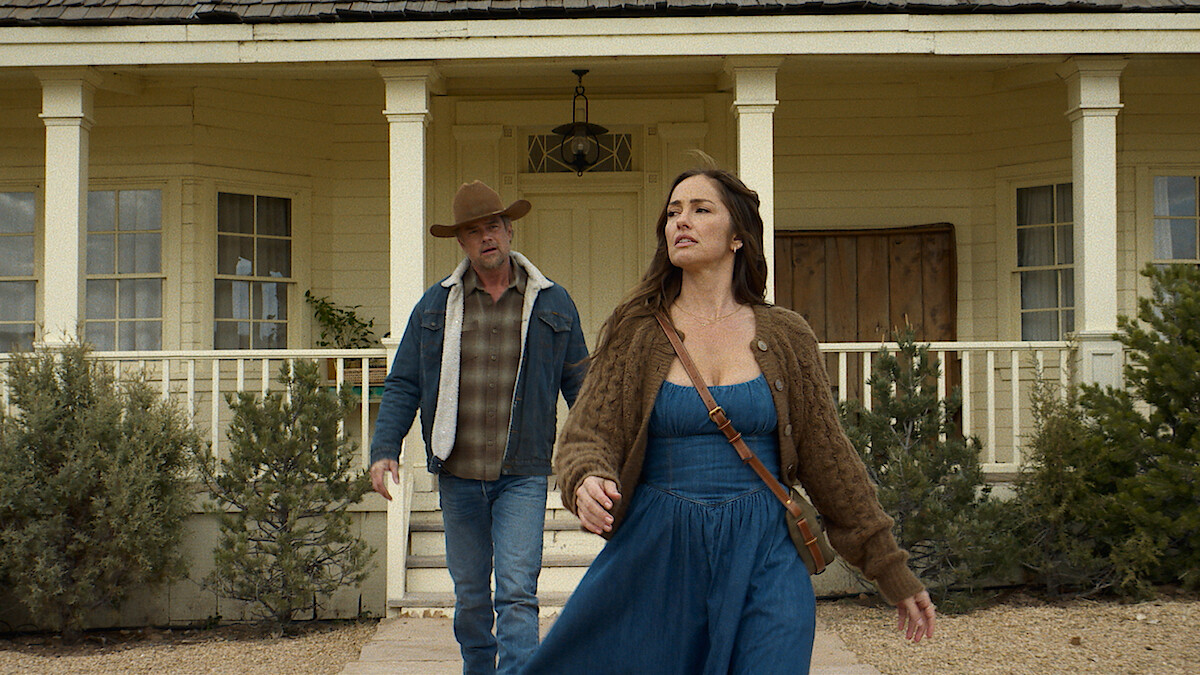
Those decisions suggested that Netflix was already taking a more measured approach to the series before the latest viewership figures arrived.
As a result, Season 2’s opening performance may become another important factor in determining whether the story continues beyond its current run.
For now, however, Netflix is not publicly expressing concern.
During the company’s earnings call earlier this month, co-CEO Ted Sarandos directly addressed criticism surrounding weaker second-season debuts across the platform.
“We are not seeing any material change in our second season viewing compared to season ones, our second seasons are performing well within our bands of expectation,” he said. “Very often we see drop off from season one to season two. It’s very common in the industry, but it’s even more so with us because we launch our shows so big.”
His comments suggest that Netflix has anticipated this pattern for some time. Massive first-season launches naturally create exceptionally high benchmarks, making it difficult for follow-up seasons to maintain identical momentum.
Sarandos expanded on that argument by emphasizing long-term trends rather than isolated examples.
“When we look across the entire portfolio, across all the regions, all the content categories, our season two fall off is actually slightly improved this year relative to last year. Now, of course, you can pick any five data points to tell any story you want, but I’m going to repeat this: our season two fall off is actually slightly improved this year relative to last year.”
That statement is particularly important because it reframes what many viewers consider disappointing numbers.
Instead of focusing on one individual series, Netflix evaluates performance across its global catalog. From that perspective, the company argues that second-season declines remain within expected ranges and, in fact, have shown slight improvement compared with previous years.
Whether audiences agree with that interpretation is another matter.
For fans of Ransom Canyon, the uncertainty surrounding a potential third season remains very real. The series already experienced a difficult renewal process once before, and its latest opening numbers are unlikely to eliminate questions about its future.
At the same time, recent history demonstrates that steep viewership drops do not automatically end a show’s run. Other Netflix productions have returned despite losing an even larger percentage of their audiences.
That leaves Ransom Canyon in an unusual position.
Its 43% decline is undeniably significant, yet it also fits into a broader trend that Netflix insists is both expected and manageable. The company appears to be measuring success through a much wider lens than weekly headlines or opening-week comparisons alone.
Meanwhile, the creative team has continued looking ahead. The show’s creator has already discussed major developments from Season 2—including deception, romantic triangles, a surprise pregnancy, and an ending described as “launch of next story” for a possible Season 3—indicating that the narrative has been designed with continuation in mind if another renewal arrives.
Ultimately, the future of Ransom Canyon may depend less on one headline statistic than on how Netflix balances viewership data with its long-term strategy. A 43% decline certainly captures attention, but in today’s streaming landscape, it no longer serves as definitive proof that a series has reached the end of the road.