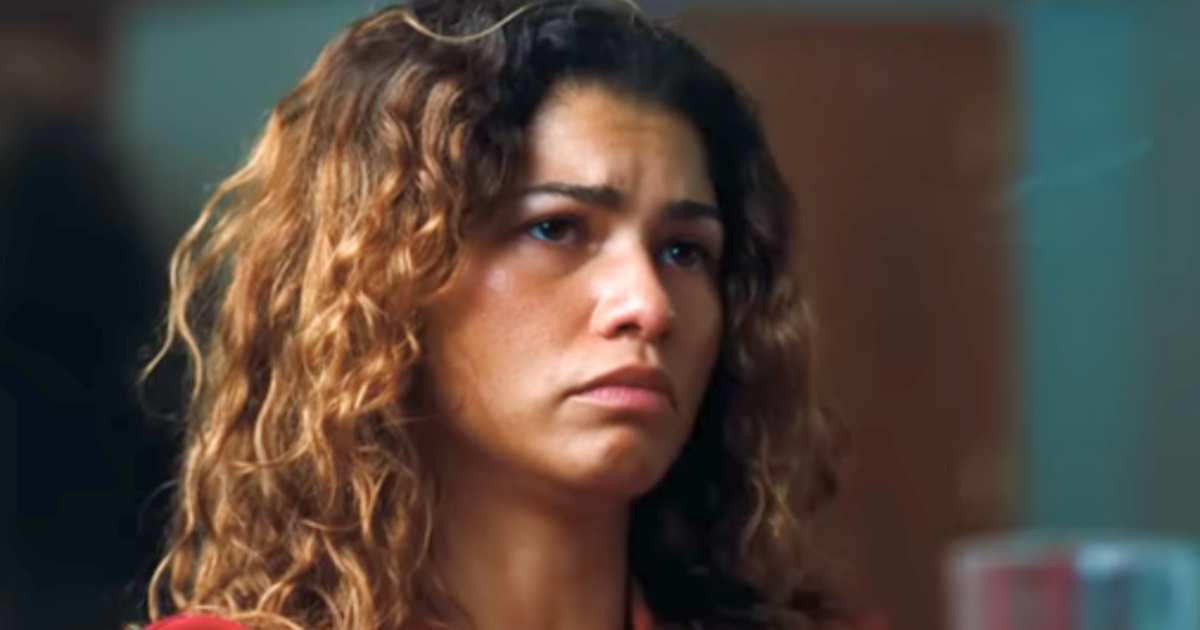
The episode follows Rue Bennett (Zendaya), who has taken a job at the Silver Slipper strip club as a way to distance herself from her dangerous role as a drug mule. Kitty arrives as a newcomer to the club, stepping in after the previous dancer Angel mysteriously disappears following her time in rehab. What begins as a private dance for a group of men quickly escalates into a deeply disturbing encounter. As Rue watches helplessly on the club’s security monitors, the men take turns having sex with Kitty. In one particularly shocking moment, one client finishes a bottle of champagne and then appears to use the empty bottle in a violent and degrading manner.

The sequence left a strong impression on audiences, with many taking to social media to express their discomfort. One Reddit user described the scene as “terribly disturbing and sad,” highlighting the emotional weight of witnessing such exploitation. Others echoed similar sentiments, with comments like “It made me feel sick” and “I had to fast forward through it, too hard to watch” circulating widely after the episode aired on Sunday, May 3.

This reaction fits into a broader pattern for Season 3, which has repeatedly sparked controversy through its unflinching portrayal of dark themes. The show has never shied away from raw depictions of trauma, addiction, and abuse, but many fans feel this particular sequence crossed a line even for Euphoria standards. The combination of group sexual violence and the use of an object in such a manner has prompted discussions about whether the graphic nature serves the story or simply aims for shock value.
:max_bytes(150000):strip_icc():focal(999x518:1001x520)/anna-van-patten-euphoria-050426-031bba45deea4832b5a36ba4a8b3c55f.jpg)
Not all viewers condemned the scene outright. Some defended its inclusion, arguing that it realistically illustrates the hidden dangers and exploitation that can occur behind closed doors in such environments. One fan on Reddit suggested it functions as a “necessary narrative device for the wider story,” helping to underscore the risks faced by vulnerable young women and advancing Rue’s emotional journey as she confronts the harsh realities around her.
After the traumatic event, Rue approaches Kitty to check on her well-being, asking if she is being forced to work at the club. A visibly shaken Kitty responds with the now-memorable line: “I like to dance.” This brief exchange adds layers to her character, hinting at complex themes of agency, denial, and survival in difficult circumstances.
Anna Van Patten, who plays Kitty, spoke candidly about the challenging filming process in an interview with The Hollywood Reporter. Although she has never personally experienced a similar situation, she acknowledged the emotional and physical difficulty of the role. “It’s sad and it’s dark, but it serves a purpose in the greater story,” she explained. Van Patten praised the support she received on set, particularly from the intimacy coordinator and the rest of the cast and crew, who created a safe environment for her to explore the character’s darker experiences. After filming, she described taking a shower to symbolically “wash it off.”
The actress comes from a notable showbusiness family. She is the daughter of Emmy-winning director and producer Timothy Van Patten, known for his work on The Sopranos and Game of Thrones. Her sister, Grace Van Patten, has gained recognition for roles in Tell Me Lies and other projects. This background has given Anna valuable insight into the industry, yet she approached the demanding Euphoria scene with dedication and professionalism.
Season 3 of Euphoria has already introduced several new elements, shifting the timeline forward so that the characters are now in their early twenties. This evolution has allowed the series to explore adult challenges while retaining its signature visual style and emotional intensity. However, the increased focus on darker, more explicit content has divided opinions, with some praising the bold storytelling and others questioning whether the shock tactics overshadow character development.
The scene involving Kitty also ties into larger themes that have defined the show since its debut. Euphoria has consistently examined power imbalances, consent, trauma, and the consequences of poor choices among young people. By placing Rue in the position of a powerless observer, the episode forces both the character and the audience to confront uncomfortable truths about exploitation in the adult entertainment world.
As the season progresses, it remains to be seen how Kitty’s storyline will develop and whether her experiences will influence Rue’s path. The introduction of new characters like Kitty, alongside figures such as Alamo (played by Adewale Akinnuoye-Agbaje), adds fresh tension to the club environment and the criminal undercurrents of the narrative.
Fan reactions highlight the ongoing conversation about the limits of television content. While Euphoria has built its reputation on provocative material, moments like this one test the balance between artistic expression and viewer well-being. Some appreciate the unflinching approach as a reflection of real-world issues, while others feel certain depictions go too far and become difficult to watch.
Despite the controversy, the series continues to draw strong viewership numbers. The blend of compelling performances, striking cinematography, and topical themes keeps audiences engaged, even when individual scenes prove challenging. Zendaya’s nuanced portrayal of Rue remains a central anchor, guiding viewers through the chaos.
Euphoria airs on HBO and Max on Sunday evenings. As Season 3 unfolds, it will be interesting to observe whether future episodes build on the impact of Kitty’s introduction or shift focus to other storylines. For now, the disturbing sequence has once again placed the show at the centre of cultural discussion, demonstrating its power to provoke strong emotional responses from its dedicated fanbase.
In many ways, this latest controversy reinforces Euphoria’s status as one of television’s most polarising yet influential dramas. Whether viewers choose to watch intently or look away, the series refuses to let its audience remain comfortable — a hallmark of Sam Levinson’s bold creative vision.