When it comes to depicting an interstellar mission that pairs a lone astronaut with an alien ally to save multiple worlds, the challenges of filmmaking are as immense as the story itself. Project Hail Mary, Amazon MGM Studios’ latest sci-fi blockbuster, dazzles audiences with Ryan Gosling as Ryland Grace, yet the spectacle on screen belies the intricate and painstaking work required behind the camera. Directors Phil Lord and Chris Miller, renowned for their ability to make the impossible appear effortless, recently revealed which moment pushed their team to the brink: the film’s awe-inspiring astrophage sequence.
Fans may remember the breathtaking visual of Grace performing a spacewalk while being illuminated by the red glow of the astrophage, microscopic algae-like organisms consuming the sun. This image became a defining marketing moment for the film, but bringing it to life proved far more complicated than any visual effect or alien puppetry. During a recent episode of The Big Picture podcast, Lord and Miller explained that, despite the story’s many scientific hurdles, it was this single scene that demanded the most innovation.
The challenge was twofold: translating an invisible, infrared phenomenon into a cinematic spectacle and ensuring it remained understandable to audiences. “We get a moment to visualize what an [infrared] camera would be seeing and what’s actually all around him,” Miller said, describing the process of conceptualizing the scene. Unlike traditional visual effects that rely purely on CGI, this moment required a hybrid approach blending practical and digital techniques.
To simulate the red glow of the astrophage, the team removed an infrared filter from the camera, creating a pinkish-red light that would reveal the invisible threat. Gosling acted within a carefully constructed rig: a cage of chicken wire filled with blinking infrared lights. Meanwhile, cinematographer Greig Fraser built an aquarium-like contraption with double glass panes and flowing water, which was poured in front of the handheld camera to produce a dripping, ethereal effect. While these elements were invisible to the naked eye, they became strikingly vivid on monitors, creating a magical, otherworldly environment for the actor to navigate.
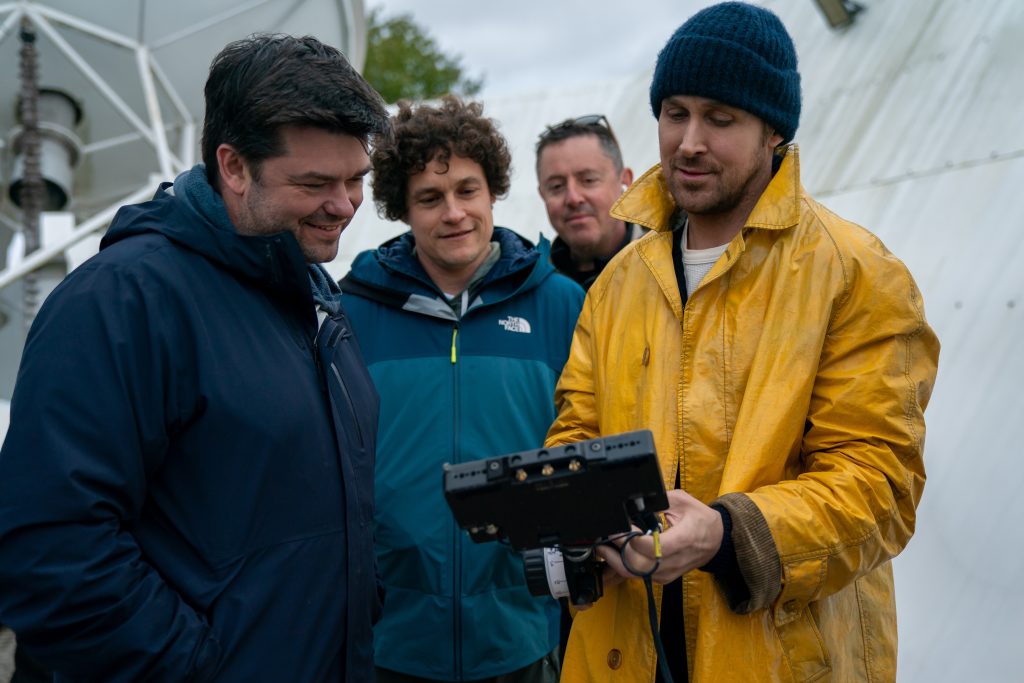
Lord elaborated on the ingenuity required: medium-wide shots combined fewer practical lights with significant digital augmentation, while wide shots were entirely rendered by ILM to maintain visual consistency across the sequence. The process required meticulous coordination between on-set action and post-production, highlighting the intricate craftsmanship behind what audiences perceive as effortless spectacle.
The astrophage sequence not only underscored the technical mastery of the filmmakers but also served as a visual embodiment of the movie’s larger themes. The sun’s slow destruction by these microorganisms offers a clear, relatable threat for viewers, even amid the complex astrophysics underpinning the story. Lord and Miller’s careful balance of scientific authenticity and cinematic clarity ensured that the stakes felt both immediate and emotionally resonant.

Beyond the screen, the directors embraced social media to bring audiences closer to the filmmaking process. Miller shared behind-the-scenes footage on X (formerly Twitter), revealing the meticulous setup of water tubes, IR lights, and camera rigs, allowing fans to appreciate the combination of practical effects and digital wizardry that made the scene possible. Such transparency deepened engagement, offering a glimpse of the inventive problem-solving that defines modern blockbuster filmmaking.
While Project Hail Mary dazzles with interstellar travel, alien collaboration, and high-stakes survival, it’s moments like the astrophage sequence that reveal the dedication, creativity, and technical prowess driving the film. The positive reception, especially in IMAX screenings, underscores how successful the team was in translating complex science into a cinematic spectacle that’s both visually stunning and narratively compelling.

In the end, the hardest scene to shoot became one of the most iconic, demonstrating that true filmmaking magic lies in transforming abstract scientific concepts into unforgettable visual storytelling. Project Hail Mary continues to captivate audiences, proving that with ingenuity, imagination, and meticulous craft, even the universe’s most invisible threats can shine on the big screen.