From its dazzling visuals to its emotionally charged story, Project Hail Mary has captured audiences with a mix of scientific intrigue and heartfelt storytelling. Yet beneath its polished surface lies a narrative packed with puzzling details and unanswered questions that can leave even attentive viewers scratching their heads. As the film unfolds across timelines and galaxies, several key moments demand a closer look.
At the center of the story is Ryland Grace, a lone astronaut who awakens aboard a spacecraft with no memory of how he got there—only to discover he may be humanity’s last hope. But as the film jumps between past and present, weaving scientific theory with alien encounters, crucial explanations can feel easy to miss.

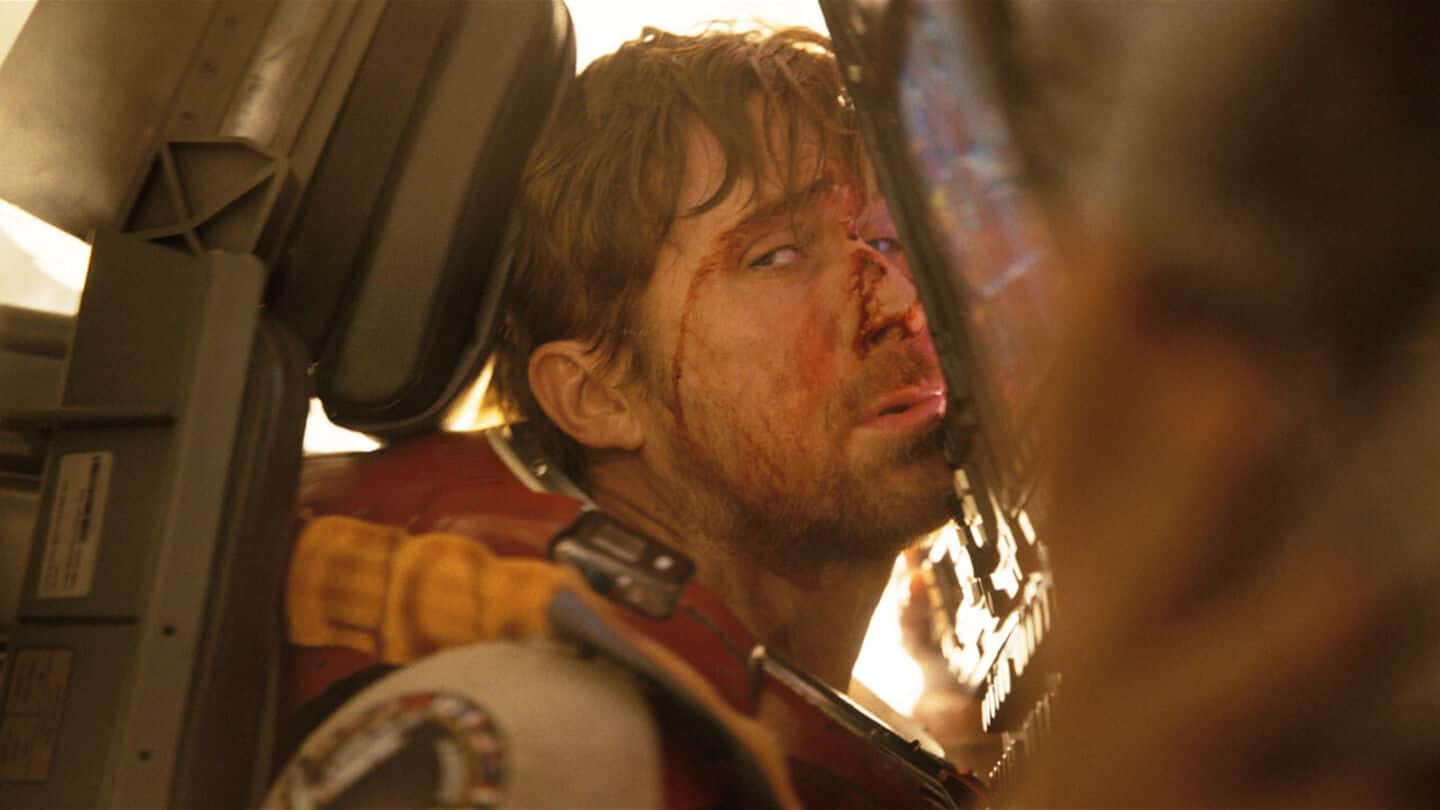
One of the earliest mysteries appears immediately: why are Grace’s fellow astronauts dead when he regains consciousness? The film briefly acknowledges their deaths, but the deeper explanation lies in the risky medical procedure that allowed the crew to survive the long journey. The astronauts were placed into induced comas to endure years in space, a process only viable for individuals with rare genetic traits. Even then, survival was far from guaranteed. Although all three crew members possessed the required markers, Grace alone endured the journey, leaving him isolated millions of miles from Earth.
Another lingering question revolves around Rocky, the alien engineer Grace encounters near the Tau Ceti system. While their friendship becomes the emotional backbone of the film, the timeline of Rocky’s presence is easy to overlook. By the time Grace arrives, Rocky has already been stranded in the system for 46 years. Thanks to his species’ extended lifespan, he survives the ordeal—but the sheer length of his isolation adds a poignant layer to their eventual bond.
Rocky’s solitude becomes even more tragic when considering the fate of his original crew. Unlike Grace, who lost two companions, Rocky began his mission alongside more than twenty fellow Eridians. Their deaths are attributed to prolonged radiation exposure in space. Unlike their home planet—naturally shielded from harmful radiation—the vacuum of space proved lethal. Rocky’s survival was largely accidental; his position near astrophage fuel tanks provided enough protection to keep him alive while the rest of his crew succumbed.
The film also introduces viewers to the strange biology of Rocky’s species, which can be both fascinating and bewildering. His eating habits, for instance, are unlike anything human audiences are accustomed to. Rather than consuming food through a mouth with teeth, Rocky uses a single opening for both ingestion and waste. The process is methodical and alien, underscoring just how different his physiology is from human norms.
Equally unusual is Rocky’s approach to sleep. Unlike humans, his species enters a state of complete paralysis during rest, rendering them unable to wake themselves. This vulnerability explains his insistence on companionship while sleeping. What might initially seem like an odd quirk reveals itself as a deeply ingrained survival instinct—one that likely shaped the social evolution of his species.
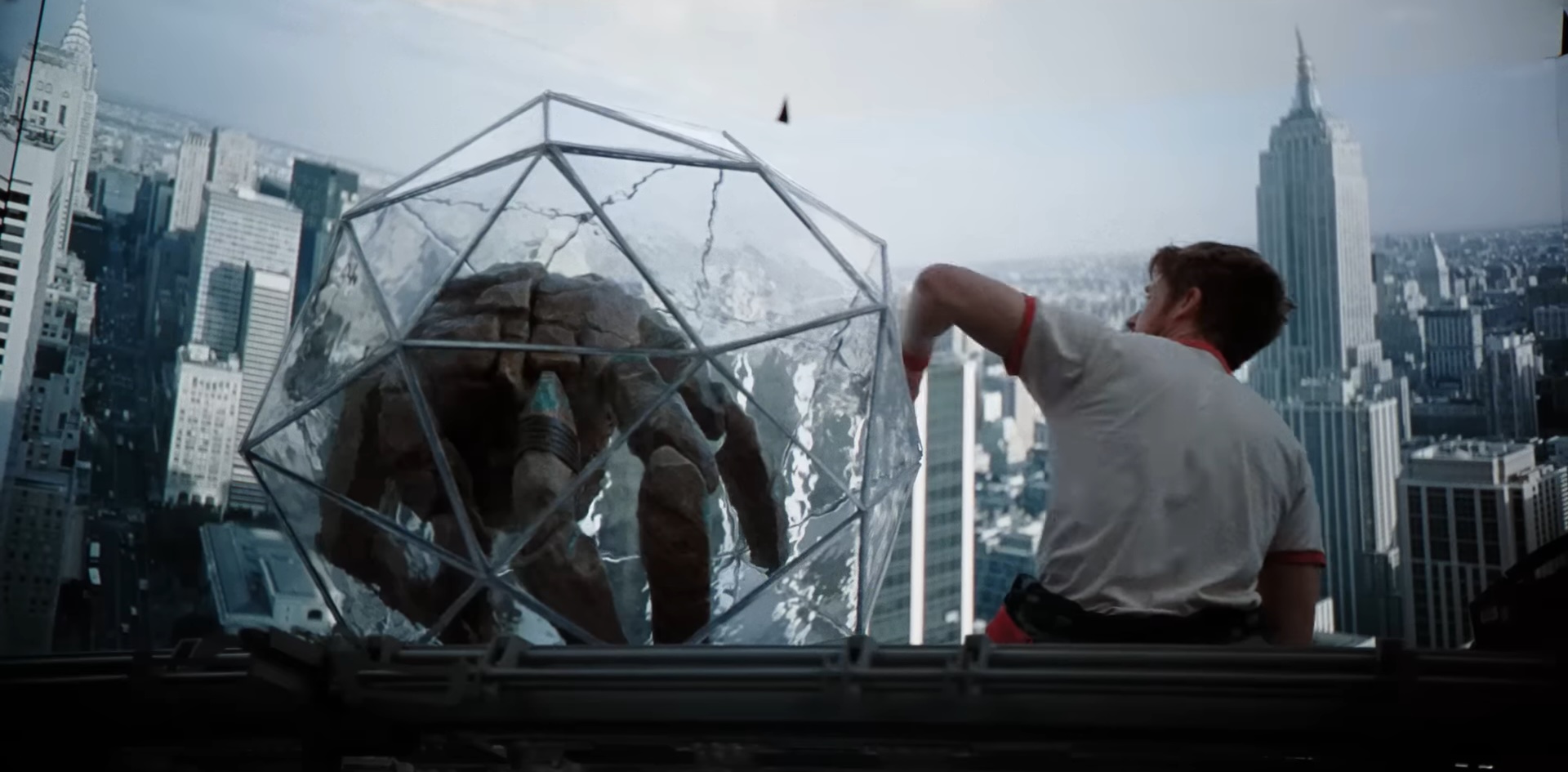
Some of the film’s most chaotic moments come during high-stakes action sequences, particularly when Grace and Rocky attempt to retrieve a solution to the astrophage crisis. During one such scene, a malfunction aboard the ship nearly proves fatal. Grace loses consciousness as the vessel spins out of control, and Rocky—despite being unsuited to human conditions—ventures into an oxygen-rich environment to save him. The act is both heroic and dangerous, nearly costing Rocky his life and highlighting the mutual trust between the two unlikely allies.
As the story progresses, attention shifts to the small but crucial probes known as “beetles.” Named after members of The Beatles, these miniature crafts play a vital role in the mission’s success. Their primary function is to transport samples of a microorganism capable of destroying astrophage back to Earth. While the film presents them briefly, their importance cannot be overstated—they carry the key to saving humanity.
However, the very organism meant to save both civilizations introduces a new complication. The taumoeba, a predator of astrophage, evolves in unexpected ways. It gains the ability to infiltrate xenonite, the material used in Rocky’s ship, allowing it to consume the vessel’s fuel supply. This development leaves Rocky stranded and in grave danger, forcing Grace to make a critical decision: return home or save his friend.

Grace’s choice ultimately defines the emotional core of the story. Despite finally having a chance to go back to Earth, he turns around to rescue Rocky. In doing so, he sacrifices his long-awaited return home, choosing instead a life on Rocky’s planet.
The film’s conclusion raises further questions, particularly regarding Grace’s fate. While he is given the option to return to Earth, he remains on the alien world, adapting to a new existence. The final scenes reveal him living inside a specially constructed habitat designed to mimic Earth-like conditions, where he takes on the role of a teacher for young Eridians. It’s a quiet yet profound ending—one that reflects both loss and renewal.
Meanwhile, back on Earth, another storyline lingers in the background: the fate of Eva Stratt, the determined leader who orchestrated the mission. Hints suggest she faced severe consequences for her controversial decisions, including possible imprisonment, reinforcing the theme that saving humanity often comes at a personal cost.
In the end, Project Hail Mary is more than a tale of science and survival—it is a story about sacrifice, connection, and the unexpected bonds that can form across the vast emptiness of space. And while its complexities may leave viewers with questions, perhaps that is precisely the point: in a universe this vast, not everything is meant to be simple—but the choices that define us always are.