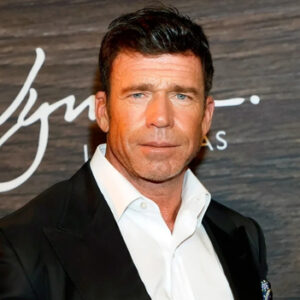
Taylor Sheridan, the creative force behind Yellowstone, is facing a serious new legal challenge after television writer and entertainment journalist Lauren J. Salkin filed a copyright infringement lawsuit alleging that elements of her television project were used without permission in Sheridan’s blockbuster Western franchise. The lawsuit, filed on August 21 in the U.S. District Court for the Central District of California, names Sheridan, his management company Elevate Entertainment, Paramount, NBCUniversal and other parties as defendants. Salkin claims she spent more than a decade developing an original series called Sovereign Nation before submitting a pilot script, show bible and pitch deck to representatives connected to Sheridan in late 2016 and early 2017. According to the complaint, Sheridan’s representatives rejected the project in February 2017, only for Yellowstone to be greenlit within months and eventually premiere in June 2018.
The allegations are significant because Salkin is not claiming that Yellowstone merely resembles another Western drama in broad terms. Her complaint reportedly argues that there are substantial similarities between Sovereign Nation and Yellowstone, including story mechanisms, character functions and central thematic elements. She describes her project as a dramatic series focused on tribal governance, casino-driven economic power, land disputes and development conflicts, while arguing that those elements later appeared in Sheridan’s enormously successful franchise. She also alleges that some of the casting recommendations she developed for Sovereign Nation were subsequently reflected in Yellowstone. These claims remain allegations at this stage, and the filing itself does not establish that Sheridan or any other defendant committed copyright infringement.
The timeline is what makes the lawsuit particularly intriguing. Salkin says her completed materials were submitted to Sheridan’s representatives around the end of 2016 and beginning of 2017, meaning the alleged access to her work occurred before Yellowstone was publicly established as the television phenomenon audiences know today. She claims that on February 1, 2017, she received a message informing her that Sheridan had declined the project, reportedly stating that he was unavailable for television projects. According to her complaint, Yellowstone was then greenlit only months later. The legal significance of that sequence will depend on what evidence can establish about who saw Salkin’s materials, what they contained, how Sheridan developed Yellowstone, and whether the similarities rise above general ideas that copyright law does not protect.
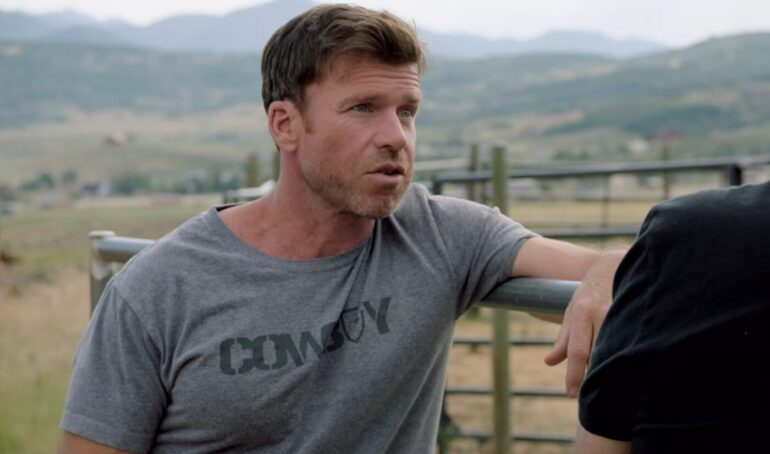
One of the more striking allegations involves an HBO executive who had previously reviewed Salkin’s creative materials. According to the lawsuit, the executive later encountered Sheridan’s proposed Yellowstone concept in 2017 and immediately recognized what Salkin describes as significant similarities. Salkin claims the executive subsequently terminated Sheridan’s project at HBO because of those similarities. If independently supported by documentary evidence or testimony, that allegation could become an important part of Salkin’s argument because it would provide a potential witness who allegedly encountered both projects at different stages. However, it is crucial to emphasize that this account currently comes from the plaintiff’s complaint, and neither HBO nor Sheridan and the other defendants had publicly responded to PEOPLE’s requests for comment at the time of its report.
The case also arrives at a particularly consequential moment in Sheridan’s career. Yellowstone has evolved from what initially appeared to be a relatively unconventional modern Western into one of the most commercially powerful television franchises of the past decade. The original series ran from 2018 through 2024 and generated multiple spinoffs and related projects, including 1883, 1923, Marshals and Dutton Ranch. Sheridan has consequently transformed the Dutton family story into a much larger entertainment universe, making any credible dispute over the origins of the franchise potentially far more consequential than a disagreement involving a relatively small television production. Salkin’s complaint reportedly argues that the broader franchise has generated billions of dollars for the defendants, while she received nothing from what she alleges was the unauthorized use of her material.
That financial dimension explains why the lawsuit could become closely watched even if the underlying creative similarities ultimately prove difficult to establish legally. Salkin is seeking damages and profits associated with the alleged infringement, along with an injunction that would prevent continued use of the allegedly copyrighted material. No specific dollar amount was identified in the complaint, but the potential financial stakes are obviously substantial because Yellowstone is no longer simply a single television show. It has become a franchise with multiple productions, streaming value, merchandising opportunities and a recognizable global brand. Any legal finding that the central creative material was improperly derived from another writer’s copyrighted work could therefore have implications far beyond the original series itself.
At the same time, the case illustrates the complicated distinction between an idea and a copyright-protected expression. Writers routinely develop stories involving familiar concepts such as land disputes, wealthy families, political influence, Indigenous communities, business conflicts and struggles over property. Those broad concepts are generally not enough by themselves to establish copyright infringement. The more important question is whether protected elements of Salkin’s actual written materials were allegedly copied or substantially reproduced in Sheridan’s work. That means the contents of the Sovereign Nation pilot, show bible and pitch deck could become central evidence if the case proceeds, particularly if Salkin can demonstrate similarities in specific characters, sequences, dialogue, plot structures or distinctive creative elements rather than simply shared themes.

The casting allegation could also become an interesting area of scrutiny. Salkin reportedly claims that Yellowstone used some of her proposed casting suggestions for key roles in her project. A casting choice by itself would not necessarily prove that a protected creative work was copied, particularly if an actor was independently considered or was already an obvious choice within the industry. However, if multiple unusual casting recommendations allegedly appeared in both projects alongside distinctive similarities in characters and narrative structure, Salkin could argue that the combination is more significant than any single overlap. Ultimately, the strength of that argument would depend on evidence showing when the recommendations were created, who had access to them and whether the similarities could reasonably be explained by independent development.
There is also a broader irony surrounding the lawsuit because Sheridan has built much of his professional identity around authenticity and his willingness to challenge conventional Hollywood storytelling. His work has increasingly focused on ranching, land, oil, crime, family power and the modern American frontier, themes that have helped distinguish his television empire from many mainstream prestige dramas. Recent reporting has also highlighted his deepening commitment to real-world ranching, including his purchase of the historic Four Sixes Ranch for approximately $330 million. Sheridan has said he eventually abandoned plans for a fictional 6666 spinoff because he did not want to invent dramatic storylines around a real ranch and the families who work there.
That context makes the allegations particularly sensitive from a reputational standpoint, even though a lawsuit should never be treated as proof of wrongdoing. Sheridan has cultivated an image as a creator who developed a distinctive voice outside traditional Hollywood structures, and his career is frequently presented as an example of an outsider building an enormous entertainment empire. Recent profiles have emphasized both his independence and his demanding creative approach, while also noting that his working relationships with some performers have generated controversy. A copyright lawsuit alleging that one of his most successful creations originated from someone else’s previously submitted material therefore challenges not only a specific project but potentially part of the mythology surrounding how Sheridan built his career.

Still, the timing should not automatically be interpreted as evidence that the allegations are true. The entertainment industry has seen numerous disputes over supposedly stolen ideas, particularly when a successful project resembles an earlier unpublished concept. Similarity can arise because writers are responding to the same cultural trends, genres and real-world events. The fact that Sovereign Nation reportedly involved tribal governance, land disputes and casino economics does not by itself establish that Yellowstone was derived from it. The legal process will have to distinguish between common ideas and protectable expression, and that distinction could ultimately determine whether Salkin’s case advances or collapses.
For Sheridan, the immediate issue is therefore not simply whether Yellowstone looks similar to Sovereign Nation. It is whether Salkin can prove access, substantial similarity and a legally recognizable connection between her protected material and Sheridan’s work. The alleged rejection letter could become important because it potentially establishes a paper trail showing that her proposal reached Sheridan’s professional orbit before Yellowstone was greenlit. The alleged HBO executive’s reaction could also become relevant if that individual is willing and able to testify about what was seen and when. But until evidence is tested in court, the responsible conclusion is that Sheridan and the other defendants have been accused, not proven responsible.

The lawsuit nevertheless raises a fascinating question about the origins of one of television’s defining modern Westerns. Yellowstone became a phenomenon by combining family warfare, land ownership, political power, ranching culture and conflicts over development, eventually expanding into an entire franchise. Now, years after the original series became a hit, a writer is claiming that some of the creative architecture behind that success existed in her own work before Sheridan’s series was developed. If the allegations cannot be substantiated, the case may become another example of the difficult boundary between coincidence and inspiration in Hollywood. If Salkin can produce compelling evidence demonstrating that protected elements of Sovereign Nation were actually used, however, the legal and reputational consequences could be much more serious.
For now, the most important thing is to watch the evidence rather than the headlines. Sheridan’s reputation, the commercial success of Yellowstone and the size of its franchise make the allegations sensational, but none of those factors determine the legal merits of the complaint. The case will ultimately turn on documents, timelines, creative materials, witnesses and the precise similarities between the two projects. What makes this story so explosive is not simply that Taylor Sheridan has been accused of stealing an idea—it is that the accusation targets the creative foundation of the franchise that transformed him into one of television’s most powerful storytellers.