The Netflix adaptation of Shelby Van Pelt’s bestselling novel Remarkably Bright Creatures has captivated audiences with its tender blend of grief, connection, and quiet wonder. At the heart of the film is Marcellus, a Giant Pacific Octopus whose sharp intelligence, dry wit, and emotional depth make him far more than a supporting character. Director Olivia Newman, in a revealing interview, shared the extensive creative and technical journey required to turn this cephalopod into a fully realised protagonist — one whose CGI performance feels remarkably alive and grounded in reality.
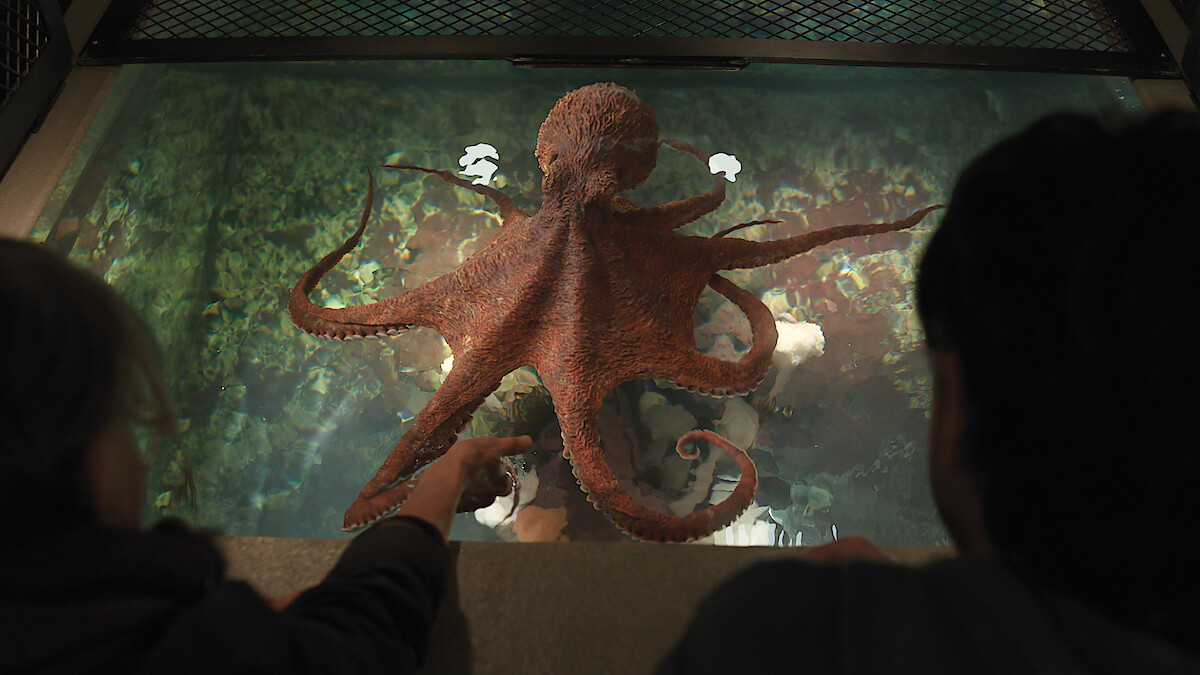
Newman approached the project with a clear vision: Marcellus had to feel authentic rather than cartoonish. From the opening sequence showing him in his natural ocean habitat to his later captivity in the aquarium, the octopus serves as both narrator and emotional anchor. “He really is, in many ways, a protagonist,” Newman explained. “He wants so badly to go home… and then in having empathy for one of them [Tova] and helping her, she actually recognises what he needs as well.” This mutual journey of healing between a lonely widow and a captive creature lies at the story’s core.
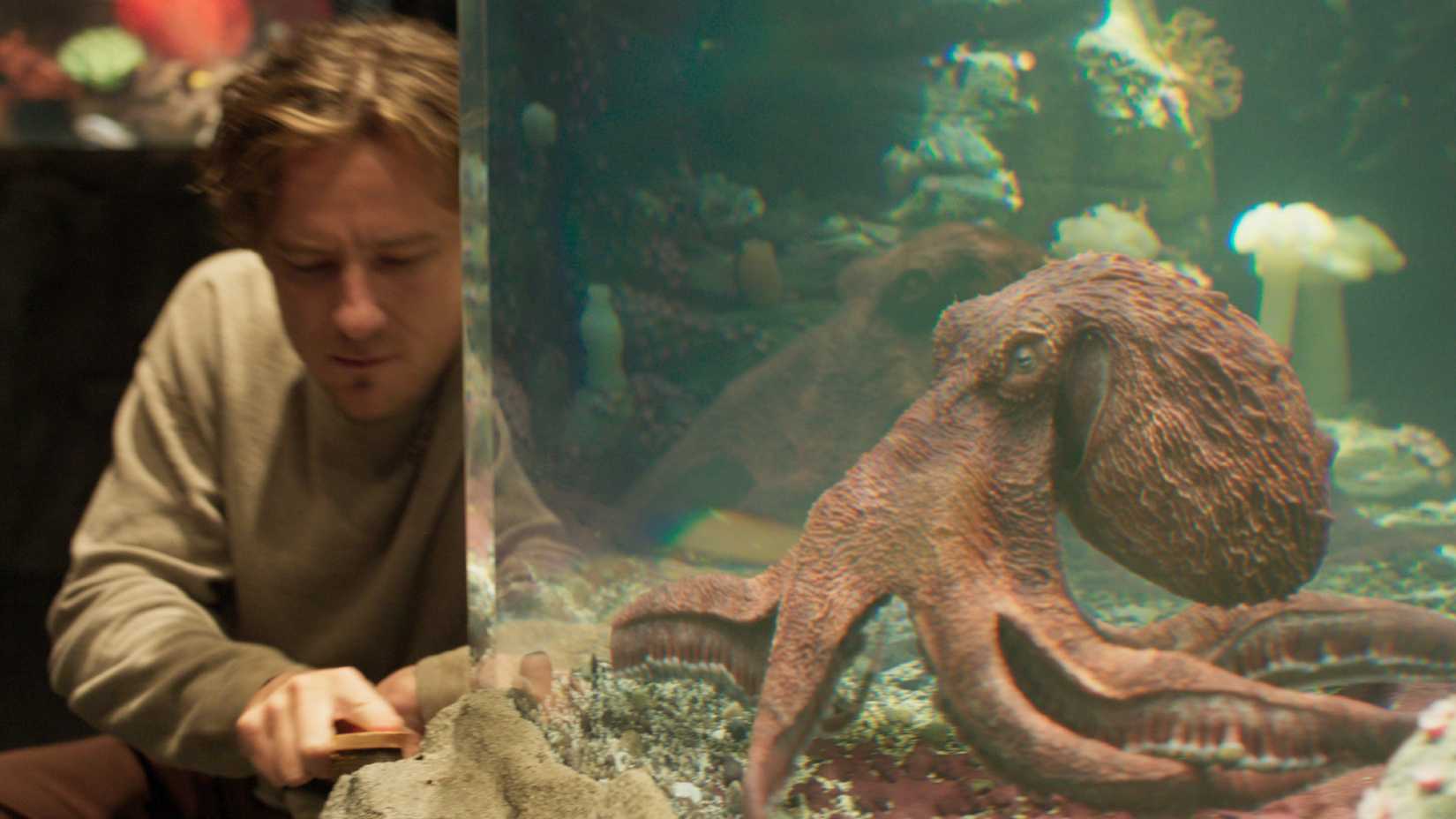
Creating such a believable character demanded months of research and preparation. Newman’s team quickly realised that training a real octopus was impossible — these creatures are far too intelligent and unpredictable. Instead, they committed to photorealistic CGI. Visual effects supervisor Chris Ritvo led the effort, spending hours filming a real Giant Pacific Octopus named Agnetha at the Vancouver Aquarium. Every movement, texture, and behaviour in the final film is rooted in actual octopus footage, whether from Agnetha or extensive reference material gathered online. “Nothing the octopus in our movie does is not something an octopus could do,” Newman emphasised.
The production built a practical aquarium set complete with real fish, seahorses, and eels to ensure seamless integration between live-action and CGI. Footage from the actual Vancouver Aquarium — including mesmerising jellyfish tanks and larger marine exhibits — was combined with custom underwater plates shot specifically for Marcellus’s ocean sequences. Underwater photographer John Roney contributed his extensive library of authentic footage, helping the team create environments that feel tangible rather than digitally fabricated. This meticulous grounding was essential to Newman, who wanted audiences to forget they were watching visual effects.
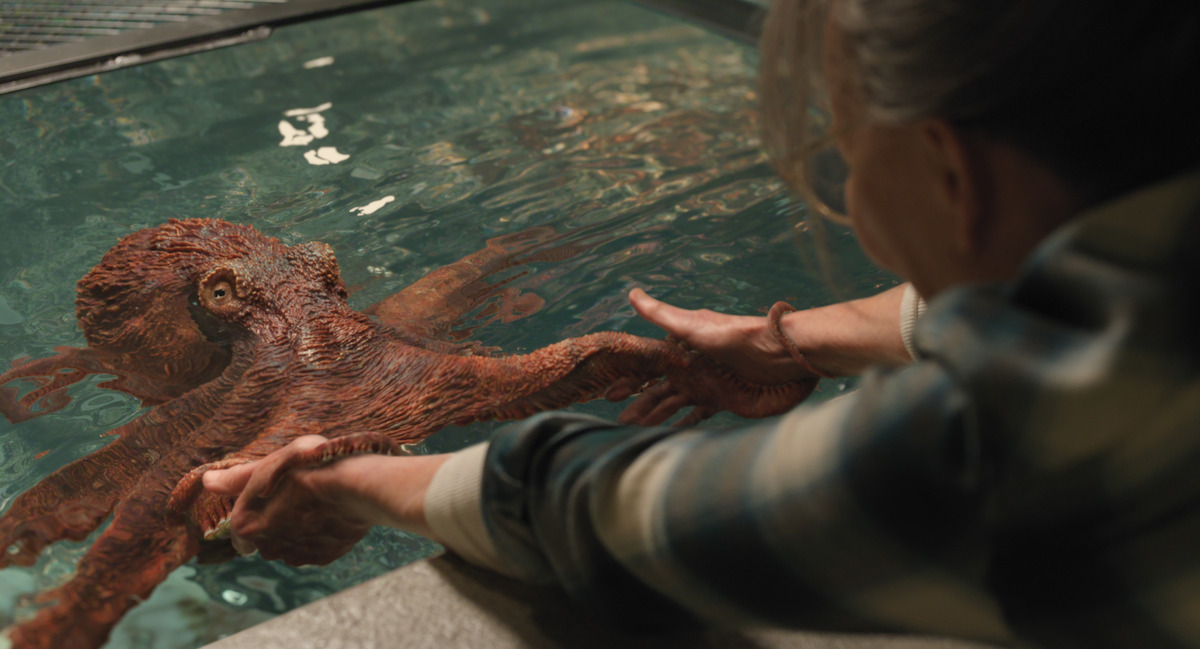
Voice casting proved equally crucial. Alfred Molina was chosen to narrate Marcellus after the film’s first cut was already assembled. Newman sought a voice that combined erudition with a Pacific Northwest sensibility — warm, vulnerable, and subtly snarky. “When we heard Alfred’s voice, we all had this sort of sigh of relief,” she recalled. Sally Field, who plays Tova, reportedly declared that it “couldn’t have been any other way.” Molina recorded his lines after principal photography, allowing the team to expand the character significantly in post-production.
Budget constraints during development initially reduced Marcellus’s screen time, but test audiences demanded more. The team responded by adding new scenes using existing plates and writing additional material. This iterative process helped refine the octopus’s full emotional arc before finalising the voice performance. Newman deliberately avoided listening to the audiobook narration by Michael Urie to keep her interpretation fresh, though she praised Urie’s work.

The film marks Newman’s second major literary adaptation following Where the Crawdads Sing. Her deep personal connection to nature — shaped by childhood adventures in the woods — drew her to stories where the natural world plays a central role. “Octopuses are the most fascinating creatures,” she said, citing inspiration from documentaries like My Octopus Teacher and books such as Sy Montgomery’s The Soul of an Octopus. Marcellus’s ability to change colour, solve problems, and display empathy became a rich source of both humour and poignancy.
Casting Lewis Pullman as Cameron, the drifter who bridges Tova and Marcellus’s worlds, was another highlight. His chemistry with Sally Field during auditions felt immediate and familial. Newman highlighted Pullman’s improvisational skills and emotional depth, noting how he could match Field’s sharp wit while accessing genuine vulnerability.
The director’s commitment to authenticity extended to smaller details, such as depicting blushing — both human and cephalopod. Subtle colour effects were added to convey Marcellus’s observations about human emotional displays, turning what could have been a whimsical moment into insightful commentary on perceived design flaws in our species.
Author Shelby Van Pelt served as an executive producer and provided valuable feedback on every script draft. She supported structural changes necessary for the screen while ensuring the emotional heart of the novel remained intact. Her insights helped preserve the spirit that resonated so strongly with readers.
Newman’s work on Remarkably Bright Creatures demonstrates how thoughtful filmmaking can elevate a CGI character into something profoundly moving. By rooting every element in real marine biology, practical sets, and genuine emotion, the director has created not just a technical achievement but a heartfelt story about connection across species. Marcellus emerges as one of cinema’s most memorable animal protagonists — wise, funny, and remarkably bright indeed.