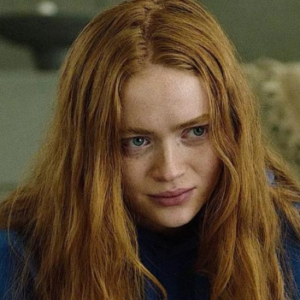
In the long catalogue of television’s formidable women, Beth Dutton still stands apart. Played with unnerving precision and an almost startling American authenticity by British actor Kelly Reilly, she is ruthless and vulnerable in the same breath—mesmerising and frightening at once. After six seasons of Yellowstone and a dramatic first season of the spin-off Dutton Ranch, the question lingers: is she the toughest woman on television?
Historically, strong female characters on screen have often occupied narrower lanes. Some were warriors by training, like Brienne of Tarth. Others were elegant manipulators in the mould of Alexis Carrington. They had dimension, yet frequently operated from a single dominant note. Beth Dutton is different. Consistency and contradiction live inside her simultaneously. She does not soften for the audience, nor does she perform toughness as spectacle. The result is a character who feels dangerous because she feels real.
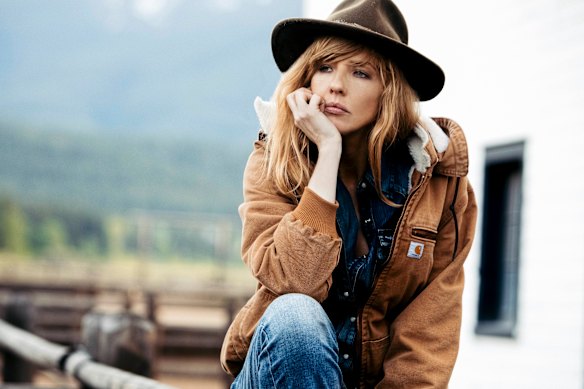
Guarding Against Caricature
Reilly has been deliberate about that balance. “I enjoy polarities and complexities and conundrums in people in my life, and I really enjoy them in writing and great characters,” she says, reflecting on the role as Dutton Ranch closed its first season. “Not letting her lean into caricature is really important to me. It would have been an easy thing to do.”
She approaches the part with seriousness and what she calls “truthful intention.” When the writing is strong, she trusts it enough to push the performance to its ceiling and then pull it back. The extremes—fierce destruction or fierce protection—must mean something. “It’s not just this random, crazy character. It’s because she feels like she’s fighting a war, and that’s certainly how she felt in six seasons of Yellowstone.”
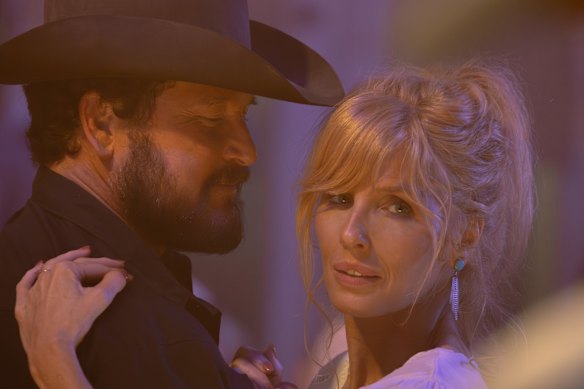
In the new series the weapons are, for a time, set down. The question becomes what Beth wants when the constant battle eases. “Honestly, the truth is him,” Reilly says, indicating her co-star Cole Hauser, who plays Rip Wheeler, Beth’s husband and the former enforcer of the Yellowstone ranch.
The Quiet Life That Never Stays Quiet
Viewers rarely saw Beth on the back foot across the original series. One of the most circulated scenes remains her defence of sister-in-law Monica against racial profiling and a false shoplifting accusation—an explosion of controlled rage that still loops across social media years later. That unrelenting forward momentum, Reilly suggests, makes the quieter ambitions of Dutton Ranch possible. “You don’t really see Beth on the back foot in any of Yellowstone, which enables her to maybe be left alone in this moment of just trying to live a quiet, simple life that she dreams of with her family. I think that is what her dream is. Not to own a piece of land that everybody wants to take chunks out of. She doesn’t want to fight.”
The warrior instinct, however, remains close to the surface. The season-one finale of Dutton Ranch made that plain. Beth and Rip discover that their new partner, ranch owner Beulah Jackson (Annette Bening), has entangled them with the mob. The consequences include a shootout and the abduction of their son, Carter (Finn Little). “There’s that essence of like, well, if she has to, she’s gonna,” Reilly says. Building toward the moment when something precious might be taken from her allowed the character to step back into warrior mode. “It was fun for me to remember that that was still there. And actually, that is such an engine in her.”
A New Ship, Same Soul
Leaving the established world of Yellowstone to begin a parallel story was less disorienting than it might have appeared. “We knew what this was, we knew where we were going, we had an audience that were with us,” Reilly says. “There was a sense of a ship that we knew how to sail.” Dutton Ranch felt different: a new creative endeavour with the expected mixture of excitement and uncertainty. The central challenge was maintaining the soul of the original while exploring fresh territory for the characters.
Hauser describes a similar adjustment. He feels confident inside Rip’s skin after years in the role, yet the practical conditions changed. Taylor Sheridan was less present. New writers and directors arrived. “Everything had changed. The only kind of normality that we had whatsoever was Carter, and Christina [Alexandra Voros, a producer]. It certainly was a challenge. We worked our arses off this year.”
The shadow of Yellowstone is long. Sheridan’s original series has expanded into a universe that now includes 1883, 1923, Marshals and Dutton Ranch. Sheridan himself remains relatively elusive, rarely cultivating the public producer persona that attaches to some multi-show creators. Reilly feels the responsibility that comes with that legacy. “I do feel the weight of it. I feel so proud of what we accomplished on Yellowstone. And because there are so many fans of the show who really are invested over all these years, there is a responsibility… you don’t want to get it this far and then mess it up. I didn’t want to drop the ball. I really wanted to honour the world. I wanted to honour the soul of it.”
A Love Story in Harsh Country
She and Hauser function as a working team as much as on-screen partners. They lean on each other, seek advice from one another, and share the load of carrying two of the franchise’s most watched characters. The first season, she says, was the hardest—getting the new show out of the gate and defining what it would be. Ideas for a second season are already forming.
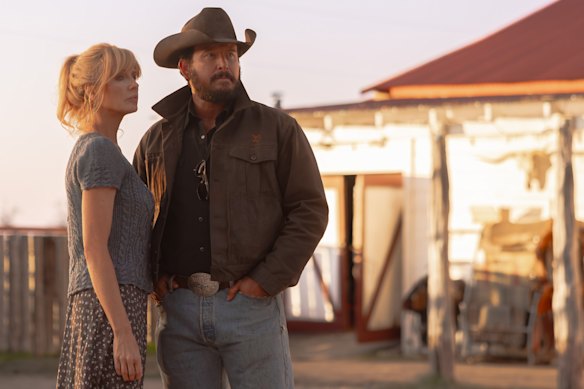
Despite the unforgiving landscape and the brutality that periodically erupts, both actors frame Dutton Ranch as a love story at its core. “They’re each other’s only love,” Reilly says. “They loved each other when they were 15. They’ve never loved another person. They’ve never been romantic with another person. They are each other’s other half. So, in a strange way, it almost feels it’s a love story out of another time. There’s a romance about them. And there is a sense of I’ve got your back. And this mirror image of either, like, he is one side of the coin and she is the other.”
Sheridan spent six seasons writing Beth and Rip with evident care. When they are together the armour drops and the audience is allowed to see their hearts. That vulnerability, Reilly believes, is a large part of why viewers remain invested. Protecting and expanding that dynamic is now the task. “She’s so vulnerable with him. And he’s vulnerable with her. And I think people love to see that.”
Beth Dutton may still be the toughest woman on television. The claim rests less on volume or violence than on the coherence of her contradictions—and on an actor determined not to smooth them away. Dutton Ranch is streaming on Paramount+.