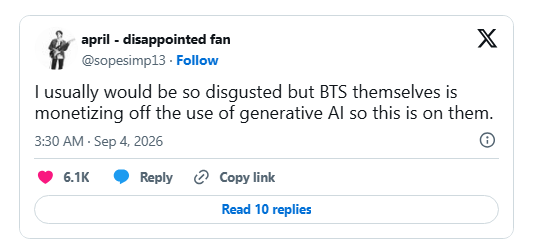
BTS are facing backlash that is less about one embarrassing AI video than about a contradiction between celebrity branding, fan expectations, and generative technology. The controversy began after a TikTok user circulated an AI-generated fictional series featuring Jimin falling in love with a fan at a concert. Many fans mocked the clip as cringey, while others blamed BTS for accepting a promotional relationship with Google’s Gemini AI assistant. That criticism is especially pointed because some BTS members have previously expressed discomfort with generative AI, creating an apparent gap between personal attitudes and commercial decisions. Koreaboo reports that the endorsement triggered criticism from sections of their fandom, with fans questioning whether BTS can object to AI content involving their likenesses. The dispute therefore asks whether celebrities can profit from technology while rejecting its invasive consequences.
The viral Jimin video is not presented as an official BTS project, but as part of a fictional TikTok series created by a fan. That distinction matters because online outrage can blur the boundary between something an artist authorized and something strangers generated using the artist’s image. The storyline plays directly into parasocial fantasies surrounding major idols. AI simply makes those fantasies faster, cheaper, and visually convincing enough to circulate as entertainment. For critics, the issue is that a real person’s recognizable identity becomes raw material for fiction. The backlash therefore reflects anxiety about whether powerful AI tools are erasing the line between admiration, appropriation, and exploitation.
Some of the harshest reactions are coming from fans who use BTS’s commercial choices as an argument against them. Their basic point is that the group cannot promote AI and then expect everyone else to respect boundaries around its use. Celebrity endorsement does not mean an artist surrenders every right over their likeness or consent. Still, fans often judge public figures through actions rather than corporate explanations. If BTS members have voiced reservations about generative AI, a major endorsement naturally invites questions about where those principles went when a lucrative partnership appeared. The controversy therefore becomes a credibility issue, because audiences tolerate complicated decisions more easily when celebrities explain apparent contradictions clearly.

There is also a wider environmental argument underneath the fandom fight. Several reactions highlighted resource demands associated with AI infrastructure, particularly concerns about energy and water consumption by data centers. AI criticism is no longer limited to authenticity or copyright. Musicians and rights holders are increasingly challenging AI companies over creative work, names, images, likenesses, and styles, while artists debate whether these systems help creativity or threaten it. Recent legal action by musicians against Suno over alleged misuse of artists’ identities shows how quickly cultural arguments are moving into formal rights disputes. BTS’s endorsement therefore enters a larger debate over who benefits and who pays.
BTS are not the only celebrities caught in this transition. Entertainment is entering a period where AI is sold as the future while also being criticized as a mechanism for copying the people who make entertainment valuable. A recent controversy involving Mary J. Blige and Suno showed how easily an AI advertisement can create the impression that an artist supports generated music, even when that representation is disputed and the campaign is pulled. That episode explains why audiences are increasingly sensitive to the difference between authentic endorsement and technological exploitation. BTS’s situation is different because the reported partnership is real, while the viral fan video is not an official BTS creation. Both cases show how quickly AI and celebrity likeness can blur authorization.

For BTS, the timing makes the situation especially delicate because their return to major public activity has placed them under an intense microscope. Every endorsement or social-media post can become evidence in competing narratives about what the group supposedly believes. Their fandom is also not culturally uniform, meaning there is no single BTS position on AI, environmental issues, artistic ownership, or corporate partnerships. Some fans will prioritize the members’ right to experiment with new technology, while others will see generative AI as incompatible with human artistry. Others may care less about AI itself than whether BTS appears hypocritical after previously discussing the technology critically. That fragmentation explains the conflicting reactions.
The controversy also reveals the strange economics of modern fandom. Fans can feel invested in protecting idols while celebrities operate inside commercial ecosystems seeking their influence. An AI endorsement can feel like betrayal to fans protecting BTS’s authenticity. At the same time, companies such as Google understand that associating emerging technology with entertainers can make unfamiliar products feel aspirational and mainstream. BTS can make a product feel accessible. The backlash shows the downside of that strategy: when promoted technology is used in ways fans dislike, the celebrity becomes part of the argument whether or not the artist created the offending material.

There is another important distinction between criticism and misinformation. The existence of an AI-generated Jimin video is one claim, while assumptions about what every BTS member personally believes about AI are another. The same applies to accusations surrounding V’s deleted Instagram video, with fans disputing whether AI or privacy explained it. Those competing interpretations demonstrate how quickly online fandoms can transform incomplete information into confident narratives. BTS have also continued pursuing legal action against malicious posts and defamatory material, showing that their management treats harmful online claims seriously. Fans can criticize commercial decisions without turning speculation into fact. That distinction becomes even more important when AI makes fabricated media increasingly convincing.
Ultimately, the backlash is less a referendum on whether BTS should ever use AI than a warning about how complicated that relationship has become. Their Gemini partnership raises questions about consent, likeness, artistic integrity, environmental impact, and responsibility. Meanwhile, the viral Jimin video demonstrates the kind of uncanny fan-made content that can flourish once generative tools become normalized. The deeper issue is that AI can turn a celebrity’s identity into reusable creative material without meaningful participation from the person depicted. BTS therefore find themselves caught between technological progress and the authenticity that helped make them influential. If they want fans to understand their position, the strongest response may not be another marketing message, but a clearer explanation of where they believe responsible AI use should actually end.