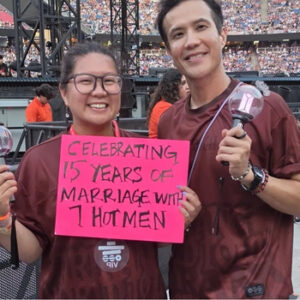
The Chris Brown controversy that started with RM and J-Hope has now pulled V and Jungkook into the same conversation, and the fandom is drawing a very clear line between the two situations. RM and J-Hope attended Chris Brown’s concert in Toronto, shared stories from the show, and later appeared in photos with the singer. That decision triggered widespread anger given Brown’s history of violence, including his 2009 guilty plea for assaulting Rihanna and his more recent 2026 guilty plea in a London nightclub case. Into that already heated atmosphere, a clip surfaced from a recent V and Jungkook livestream in which a Chris Brown song played from their playlist. Some accounts immediately tried to fold the two moments into one scandal. A large portion of the response refused.
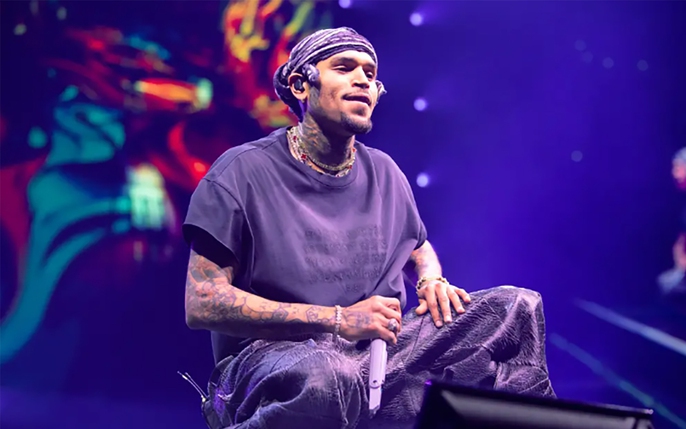
The distinction fans keep repeating is straightforward. Listening to a song that comes up on a playlist during a casual live is not the same as buying tickets, traveling to another country, documenting the night on Instagram, and posing for pictures with the artist afterward. One is passive and low-stakes. The other is active, public, and harder to wave away as pure musical appreciation. Defenders of V and Jungkook pointed out that playlists are full of tracks people have known for years; hearing “New Flame” or similar while chatting on live does not equal endorsement of the man’s entire personal record. The concert-and-meetup version, by contrast, required planning, money, and a willingness to be seen associating with Brown in real time.

That difference in agency is what the debate keeps returning to. RM and J-Hope’s choice landed as tone-deaf to a majority-female fanbase that has spent years watching Brown’s legal issues cycle through the news. The photos made it impossible to frame the night as purely about the music or about supporting Usher, who was also on the bill. Once the images circulated, the “they’re just there for the songs” defense lost most of its remaining oxygen. V and Jungkook’s livestream moment never reached that threshold. No one claimed they sought Brown out. The song appeared, they continued the live, and the clip only became controversial because it arrived in the middle of the larger storm.

The attempt to equate the two still reveals something about how these cycles work. When one or two members step into a sensitive association, the entire group’s past listening habits suddenly become fair game for scrutiny. Old lives, old playlists, old covers get re-examined for consistency. In this case the examination produced a split verdict rather than a pile-on. Many fans who were sharply critical of the concert still rejected the idea that casually playing a track on live deserved the same level of condemnation. The proportionality argument won more ground than usual.

There is also the practical reality of how music consumption works inside the industry. Idols of BTS’s generation grew up on the same R&B and hip-hop records that dominated global charts in the late 2000s and 2010s. Chris Brown’s catalog is part of that shared soundtrack whether anyone likes the personal history attached to it or not. Pretending every member must now perform public dissociation from every problematic artist they once enjoyed is a standard almost no one in the industry could meet. What fans appear to be enforcing instead is a higher bar for active, visible association—especially when that association includes photos and social-media documentation.
The broader context does not help. The group is already navigating other recent flashpoints, including the resurfaced comments about CORTIS members’ weights. Each new controversy arrives with less patience and a longer memory of previous ones. In that climate, any link to Chris Brown was always going to be explosive. The fact that V and Jungkook’s link was thinner and more incidental is the reason a significant part of the fandom is refusing to treat it as equivalent.
None of this resolves the original anger at RM and J-Hope’s decisions. Attending the show and taking the photos remains the core issue for most critics. What the secondary debate has clarified is where many fans currently draw the boundary: private or casual listening sits in one category; public, documented proximity sits in another. V and Jungkook’s livestream fell on the first side of that line. The attempt to drag them across it has mostly been met with pushback rather than agreement. In a fandom that rarely agrees on anything for long, that level of consensus is itself notable. The concert photos are still the problem. The playlist song, for most people watching, is not