Despite facing criticism from industry analysts and controversy surrounding the removal of Monica Dutton’s character, the Yellowstone spin-off series Marshals has become one of CBS and Paramount+’s biggest recent successes. The series achieved remarkable viewership numbers, broke network records, and earned a second-season renewal only 12 days after its premiere. CBS has now placed the show in its important fall prime-time schedule, showing strong confidence in its future. The unusual contrast between its huge audience numbers and its disappointing critical reception reveals a carefully calculated strategy behind the show’s success.

When Marshals premiered on March 1, 2026, almost 10 million viewers tuned in to see Kayce Dutton leave behind the family ranch and begin a new chapter as part of an elite U.S. Marshals unit in Montana. The debut attracted 9.52 million live viewers, making it CBS’s strongest scripted premiere without a football lead-in since 2018. The show immediately became a major ratings event, proving that the Yellowstone brand still had enormous power despite concerns about whether a new spin-off could attract the same level of attention.
The success continued beyond traditional television ratings. According to Nielsen’s 28-day measurement combining Big Data and Panel results, the premiere episode expanded to 26.5 million viewers across broadcast and streaming platforms. The episode also became the most-streamed premiere episode ever on Paramount+, giving CBS another major achievement in its streaming strategy. These numbers quickly convinced the network that Marshals was not just a temporary curiosity but a valuable new franchise.
However, the reaction from critics and many fans created a completely different picture. While millions of people watched the series, reviews were far less enthusiastic. The show received only around 48% to 50% approval from critics on Rotten Tomatoes, while audience scores remained even lower, ranging from 28% to 47%. Those numbers placed Marshals among the weakest-rated entries in the Yellowstone universe, creating a strange situation where a widely watched series was also one of the most criticized.

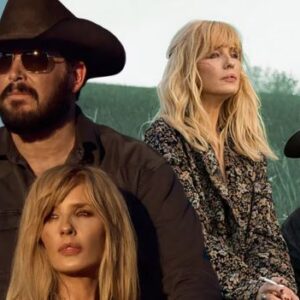
Much of the criticism focused on the show’s creative choices, especially the handling of Monica Dutton’s death in the premiere episode. Some viewers felt that the character’s exit was rushed and lacked emotional impact. Kelly Reilly, who played Beth Dutton in Yellowstone, also described the decision as a “missed opportunity,” suggesting that the storyline could have been handled in a more meaningful way. Other critics argued that Marshals felt too similar to a standard CBS procedural rather than a bold continuation of the Yellowstone legacy.
Despite the negative reviews, CBS moved forward quickly with a second-season renewal. Only 12 days after the premiere, and after just two episodes had aired, the network officially ordered another season. CBS Entertainment president Amy Reisenbach praised the series for its “breakout performance,” highlighting its ability to attract a massive audience across multiple platforms. The rapid renewal demonstrated that strong viewership numbers mattered more to the network than critical approval.
The decision also showed CBS’s broader strategy of using recognizable franchises to attract viewers in a competitive television market. By connecting Marshals to the popular Yellowstone universe while giving Kayce Dutton a new role and environment, producers created a series that appealed to existing fans while reaching a wider audience. The show’s commercial performance suggests that audience loyalty and franchise recognition can sometimes outweigh negative reviews from critics.

Season 2 of Marshals will continue with Luke Grimes returning as Kayce Dutton, alongside Logan Marshall-Green as Pete Calvin. The new season is scheduled to premiere on October 4, 2026, at 8:30 p.m. ET, moving from a midseason release into CBS’s fall schedule. That scheduling decision reflects the network’s confidence that the series can remain a major ratings performer. Ultimately, Marshals has become television’s most unusual hit: a show that many people watch, few critics celebrate, yet one that CBS clearly believes has a powerful future.