When Dutton Ranch first premiered, it immediately set up what looked like a major confrontation brewing between established characters Rip Wheeler, played by Cole Hauser, and Beth Dutton, played by Kelly Reilly, and a new chaotic presence introduced into the story: Rob-Will Jackson, portrayed by Jai Courtney. From the beginning, Rob-Will was positioned as an unstable and dangerous force within the narrative. As the son of Beulah Jackson, the matriarch of the 10 Petal Ranch, played by Annette Bening, he arrived on screen already carrying a reputation for violence and unpredictability. Early in the season, he shocked both characters and audiences by murdering his own ranch’s foreman, an act that immediately established him as someone operating outside any moral or social boundaries. Not long after this, he crossed paths with Rip Wheeler outside a gas station, setting the stage for what seemed to be an inevitable and explosive conflict between the two men. However, instead of escalating further, Rob-Will’s storyline took an unexpected turn when he disappeared from the main action, having been sent to rehab by his mother in an attempt to regain some control over his increasingly destructive behavior.
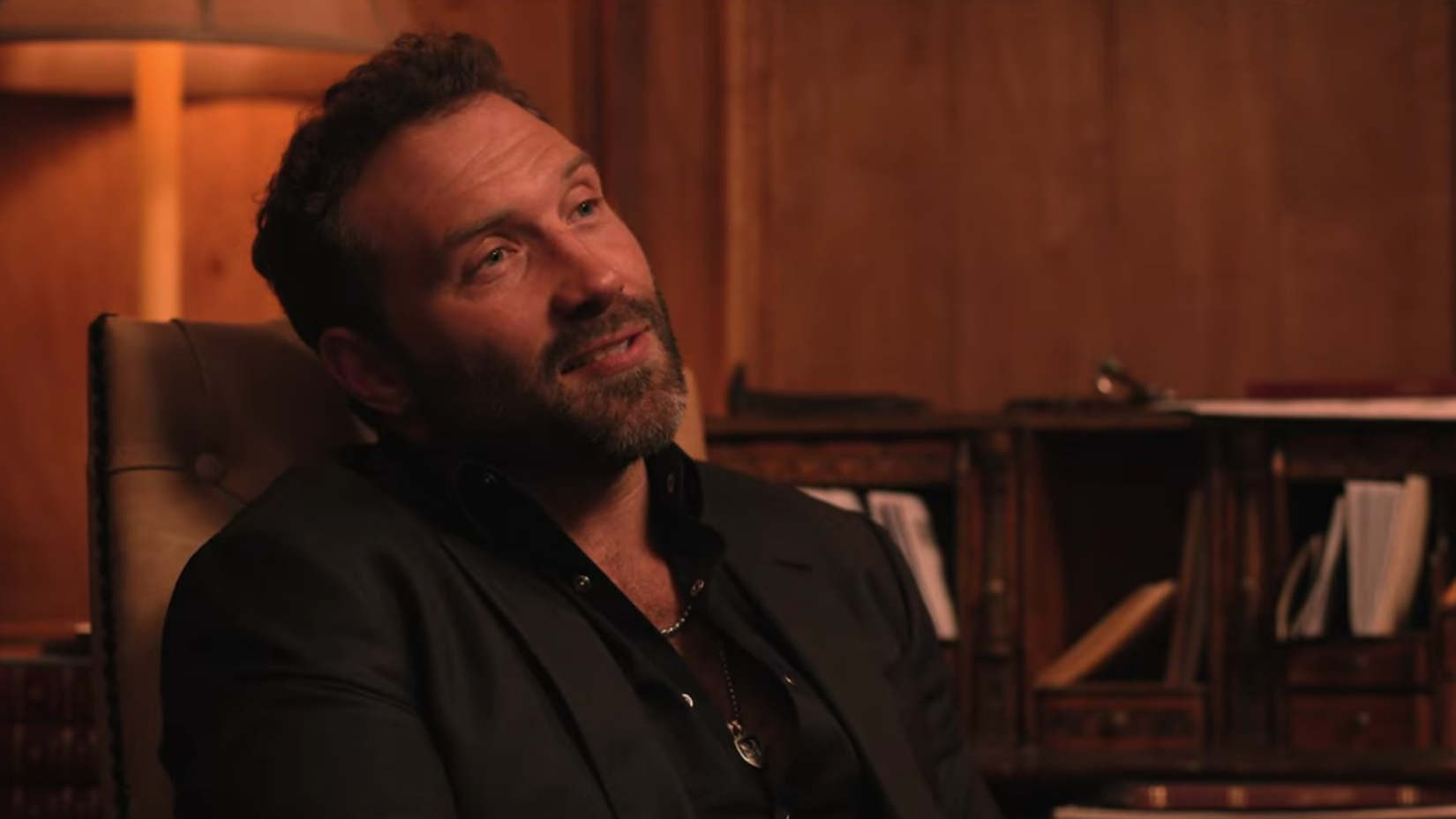
When Rob-Will later returned in Episode 5, the reaction from viewers was surprisingly enthusiastic. Despite his history of violence, drug addiction, and generally destructive tendencies, audiences seemed genuinely excited to see him back on screen. This raised an interesting question about character appeal: why would a figure who is, by all conventional standards, a murderous and deeply flawed antagonist become so compelling to watch? According to Jai Courtney, the answer lies not in making the character morally acceptable, but in making him engaging, unpredictable, and, most importantly, fun to watch.
Courtney has explained in interviews that the key to playing antagonistic roles like Rob-Will Jackson is ensuring that the character brings energy and enjoyment to every scene. He has emphasized that even when a character is fundamentally unlikable, audiences will still remain engaged if the performance carries a sense of presence and enthusiasm. In his view, if an actor appears to be enjoying the role, that energy transfers to the audience, making even the most morally questionable characters compelling rather than repulsive. For Courtney, this approach is not new. Throughout his career, he has often portrayed morally ambiguous or outright villainous characters, and he has consistently leaned into the idea that such roles should not be treated as one-dimensional embodiments of evil.
Courtney’s career trajectory adds another layer of context to his performance as Rob-Will Jackson. In the 2010s, he was widely seen as an emerging Hollywood leading man, with expectations that he would become a major star. However, the back-to-back releases of “Terminator Genisys” in 2015 and “Suicide Squad” in 2016 appeared to stall that momentum, even though the latter was commercially successful. Rather than disappearing from the industry, Courtney continued to work steadily, often in smaller or less mainstream projects. One notable example of his post-“Suicide Squad” work includes his role in the comedy-drama Buffaloed, where he played a corrupt debt collector. His performance in that film was praised for its dark humor and what critic Sheila O’Malley described as “gorgeous sinister sleaze,” highlighting his ability to bring charisma and nuance to morally questionable characters.
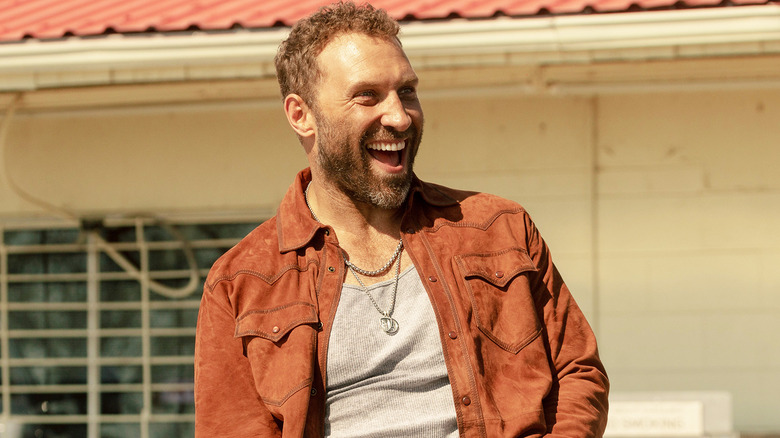
That same energy is evident in his portrayal of Rob-Will Jackson. On Dutton Ranch, Rob-Will is written as a volatile and destructive presence, yet Courtney’s performance injects a sense of unpredictability and entertainment that prevents the character from becoming purely off-putting. Instead, he becomes someone viewers anticipate seeing again, even if they are aware of how dangerous he is. This duality—being both repellent in actions and compelling in presence—is a large part of what makes the character resonate with audiences.
Fans of the show have also responded strongly to this dynamic. Online discussions, including Reddit threads such as “Rob Will is back!! Anyone else happy to see him?” reflect a broader audience fascination with the character. Many viewers acknowledge that Rob-Will is morally indefensible, yet they still find themselves entertained by his return. Part of this appeal lies in the anticipation of conflict, particularly the expectation that Rip Wheeler may eventually confront him directly and deliver justice. At the same time, viewers are drawn to the fact that Courtney appears to be fully committed to the role, embracing the chaos of the character rather than toning it down. This combination of narrative tension and performance charisma contributes significantly to Rob-Will’s popularity.
In interviews, Courtney has also spoken about his general philosophy when it comes to playing villains. During a conversation with Men’s Journal, he explained that antagonistic roles work best when they are not treated as purely evil caricatures. Instead, he believes actors should find something enjoyable or human within the character, even if that character’s actions are deeply immoral. He has said that he avoids judging his characters too harshly and instead looks for ways to “humanize” them, making them feel more layered and believable. This approach allows him to bring depth to roles that might otherwise be written off as simple villains.
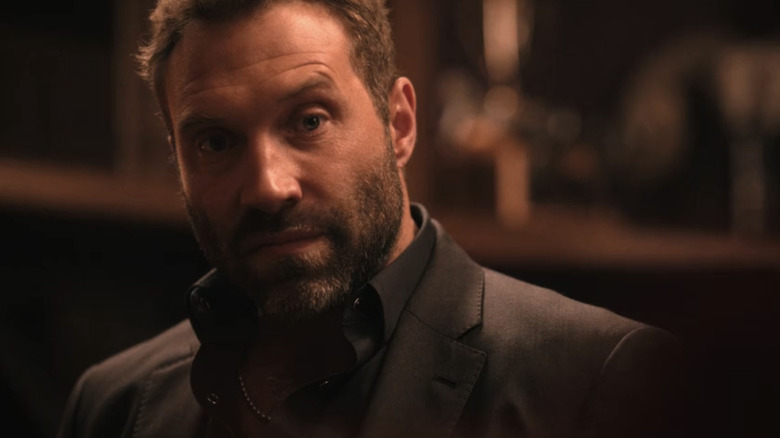
This perspective is further supported by his comments in earlier interviews, including discussions around his role in The Terminal List, where he played tech billionaire Steve Horn. In those conversations, Courtney noted that reducing villains to predictable or one-dimensional traits makes them less interesting both to play and to watch. He has consistently argued that complexity, even in antagonists, is what keeps audiences engaged.
Dutton Ranch Episode 7 added even more depth to Rob-Will Jackson’s character through flashbacks that explored his origin story. It is revealed that he was conceived as a result of sexual assault, a traumatic event that profoundly affected his mother, Beulah Jackson. In response to this trauma, she later took revenge by killing the man responsible. The psychological and emotional consequences of this history suggest a deeply troubled family dynamic, one that likely contributed to Rob-Will’s development into a violent and self-destructive individual. The implication is that his descent into drug use and destructive behavior is not simply random, but rooted in a legacy of trauma and resentment within his family.
By the end of Episode 7, Rob-Will has assumed control of the 10 Petal Ranch, positioning him as the central antagonist moving forward in the series. This shift in power suggests that his role in the story is only becoming more significant. However, given the nature of his character and the established narrative tension with figures like Rip Wheeler, it seems likely that his arc is moving toward an eventual downfall. The remaining question is how the writers will balance his clear antagonism with the unexpected audience appreciation he has generated.
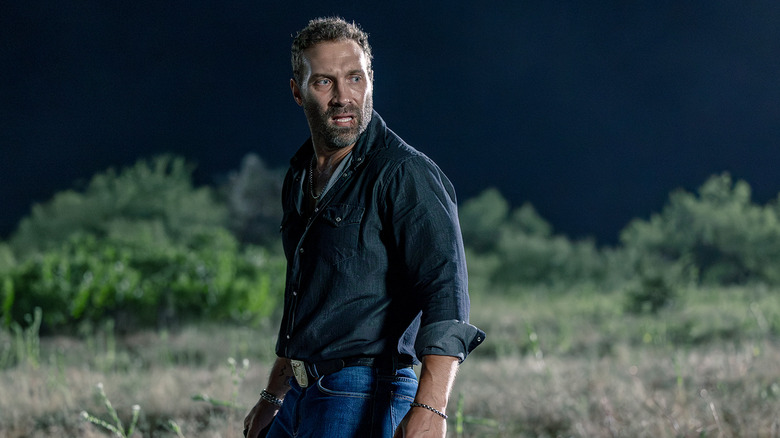
Ultimately, Rob-Will Jackson stands out as a character who challenges the usual boundaries of villainy on television. He is violent, unstable, and morally corrupt, yet he remains compelling because of the energy brought to him by Jai Courtney and the layered approach to his characterization. The audience may not support his actions, but they are clearly invested in his presence, which is precisely what makes him such an effective and memorable antagonist.