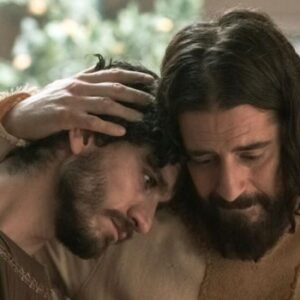
The scene of Jesus washing Judas’ feet never fails to wreck me, even on a rewatch. There’s something so raw and heavy about it that it stays with you long after the screen fades. In that upper room moment, Jesus kneels down with this unmistakable love shining in His eyes as He looks up at Judas. It’s pure, steady, and heartbreakingly gentle. At the same time, Judas sits there carrying the crushing weight of guilt and shame in his own gaze. He knows exactly what he’s about to do—betray the One who’s showing him such tender care. The emotional clash between that unconditional love and Judas’s inner torment feels almost too much to take in.
What makes it hit harder is the insight into Judas’s mindset. As Peter points out in one charged exchange, Judas was so wrapped up in his own ideas that he shut down real belief. He believed *in* Jesus—recognized the power, the miracles, the charisma—but he never fully trusted Him. Instead, Judas thought he knew better. He had his own vision for how the revolution should go down, how the kingdom should look, and when Jesus didn’t follow that script, doubt turned into disillusionment. That gap between belief and trust is dangerously real. It’s the kind of thing that sneaks up on anyone who wants God to operate on their timeline and terms.
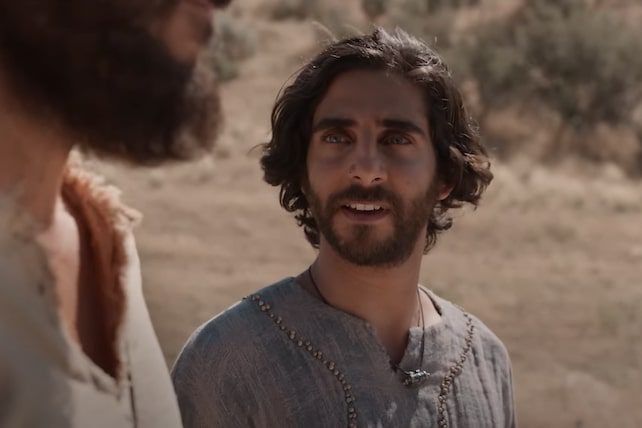
Judas’s story feels tragically human. He wasn’t some cartoon villain twirling a mustache from day one. He walked with Jesus, saw the blind see and the dead rise, shared meals and late-night conversations. Yet somewhere along the way, his ambitions and fears took the driver’s seat. The show captures that weakness so honestly—how vulnerability left a door open for darker influences to slip in. Scripture says Satan entered him, and you can feel the weight of that spiritual unraveling. One moment of choosing self over surrender, and it spirals. His name, Iscariot, became forever linked with betrayal, a cautionary echo that still stings centuries later.
At the same time, the scene forces you to sit with the mystery of God’s bigger plan. From the beginning of time, this path was woven in. Someone had to play that role in the story of redemption. The betrayal wasn’t a surprise to Heaven—it was part of the cost. That doesn’t erase Judas’s responsibility or the sorrow of his choices, but it adds this layered complexity: human freedom and divine sovereignty dancing together in painful harmony. It makes you wrestle with how God can work through even our worst failures to accomplish something beautiful and rescuing.

The final gut-punch comes in that last look between them. When Jesus looks straight at Judas and calls him “my friend,” it shatters something inside. Not anger, not condemnation—just this aching affection. In the middle of knowing the knife was coming, Jesus still extends friendship. That single word carries oceans of sorrow and love. It’s the kind of moment that makes your chest tighten because it reveals the depth of divine love: it doesn’t flinch even when it’s being rejected. Jesus knew the pain heading His way, yet He washed those feet, dried them, and spoke with tenderness anyway.

Season 5 as a whole feels drenched in this heartbreak. Every episode layers on the tension of what’s coming—the misunderstandings, the growing opposition, the inner circle fraying at the edges. You watch these characters you’ve grown to love walk closer to the cross, and it stirs up all kinds of emotions. Grief for what Jesus endured, empathy for the disciples’ confusion, and this strange compassion even for Judas. His story becomes a mirror reflecting our own tendencies to drift when things don’t go according to our plans.
There’s a powerful lesson woven through the tears. Real trust isn’t just believing God exists or that He’s powerful. It’s surrendering your ideas of how He should move and choosing to follow even when the path looks nothing like you imagined. Judas’s tragedy wasn’t a lack of knowledge—it was a lack of surrender. He couldn’t release control, and that grip ultimately broke him.
Jesus’s love in that foot-washing scene stands in stark contrast. It’s not based on performance or loyalty scores. It’s steady, seeing the worst in someone and still kneeling to serve. That kind of love challenges us to examine our own hearts. Where are we holding back trust because God isn’t meeting our expectations? Where are we letting personal agendas crowd out simple obedience? The scene whispers that even in our weakest, most shameful moments, that same loving gaze is still turned toward us.
Rewatching it reminds me how the gospel flips the script on betrayal and failure. While Judas’s name lives on as a warning, Jesus’s name lives on as hope. The cross that resulted from that betrayal became the ultimate proof that no darkness is too deep for redemption to reach. It doesn’t excuse poor choices, but it does mean that even the most broken stories can point back to grace—if we let it.
So yeah, the tears make sense. This isn’t just good storytelling. It’s a soul-stirring invitation to trade our limited vision for deeper trust, to let love win even when it costs everything. In a world full of half-belief and self-directed plans, Jesus still kneels with that same look in His eyes—calling us friend, offering cleansing, and inviting us to choose surrender over shame. That’s the kind of love worth crying over, and worth living for.