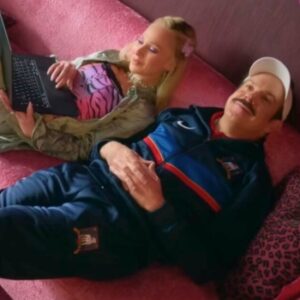
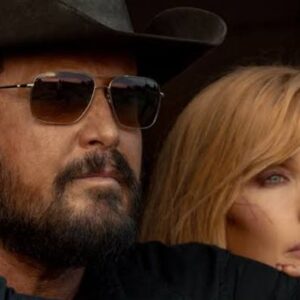
The Chosen has grown from a niche streaming project into a global sensation, attracting a fan base that spans celebrities, devoted viewers, and even couples seeking life-changing encounters with the series’ portrayal of Jesus. Country star Blake Shelton recently tweeted, “Just finished season 3 of The Chosen and I absolutely love it,” while Gwen Stefani added, “Obsessed!” The show’s growing cultural footprint is reflected in its fan convention, ChosenCon, returning for its second year this September and expected to draw 5,000 attendees. Beyond the conventions, an online merchandise line, including the cheekily named “Binge Jesus” T-shirt, has capitalized on fan enthusiasm. Earlier this year, Fathom Events brought Season 4 to theaters, a move that reinforced the show’s expanding audience. “That was the first time we really got confirmation that we had a tiger by the tail here,” Fathom CEO Ray Nutt recalls. “The audience reaction was spectacular.”
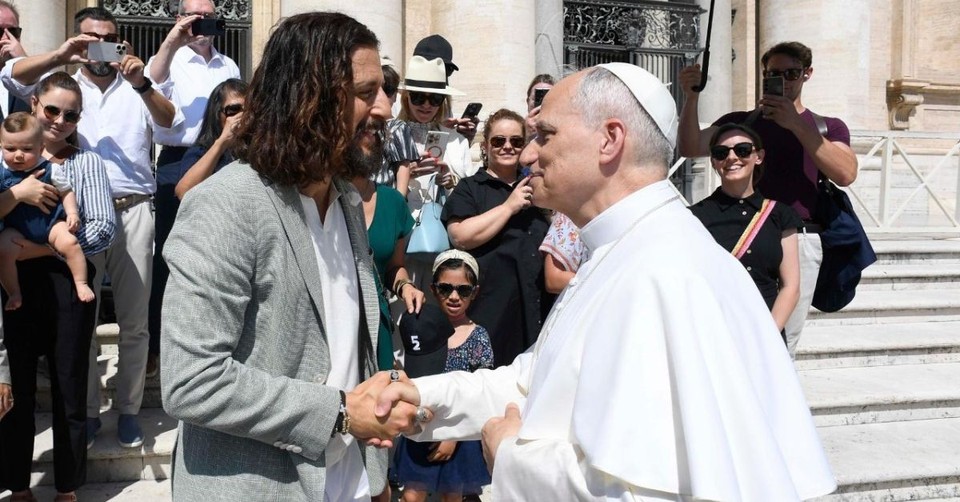
For Jonathan Roumie, who portrays Jesus, fan encounters extend far beyond simple photographs. “It’s not the ordinary kind of celebrity encounters,” Roumie explains. Fans sometimes ask him to officiate weddings, reach out to touch him, or even treat him as a figure capable of healing. “It’s like people have things deep within their heart that they want to share with you, or they say the show has changed their lives — they haven’t been to church in 20 years and now they have a relationship with God. I’m a bit of an introvert, so I start to get a little anxiety.”
The creative evolution of The Chosen has mirrored Dallas Jenkins’ growth as a director. He has helmed every episode, continuously pushing the show’s technical boundaries. A standout moment in Season 2 features a 13-minute continuous shot of the disciples navigating a crowd awaiting Jesus’ healing, executed with precision just as daylight faded. Jenkins recalls, “You can actually see the sun going down during the shot. At the end of the take, we ran out of light, and I burst into tears because there had been so much pressure.”

Jenkins also experienced personal pride when The Chosen appeared on Prime Video’s most-watched list alongside titles like Cocaine Bear. “If that’s not getting Christ into the cultural mainstream, what is?” he says. Yet, despite the accolades, the label “faith-based” still unsettles him. “I’m not ashamed that I’m an evangelical,” Jenkins explains. “I’m not ashamed that it’s a show about Jesus. But we really do believe the show can be watched by anybody, and we just don’t want people turning it off before they watch it because of a label. I’m not trying to, through the art, convert anybody or preach anything. It’s a historical drama.” Indeed, internal surveys reveal that only about half of viewers identify as practicing Christians.
Financially, the show operates in an unusual intersection of faith and business. It’s remarkable, for instance, that 12,000 fans volunteered as extras at a Salvation Army camp over three days, creating their own costumes and even paying $1,000 each for the opportunity—a rare model where production earns from its participants. Early seasons were funded via Angel Studios’ Pay It Forward crowdfunding platform, a method later mirrored by the controversial film Sound of Freedom. Angel took a portion of contributions, with less than half reaching the creators, and distributed the show exclusively through its app, which The Chosen LLC president Brad Pelo called “very, very confining.”

In 2022, the series parted ways with Angel Studios over contractual disputes and replaced Pay It Forward with the nonprofit Come & See. Jenkins encourages fans to make tax-deductible donations to this ministry, framing support as a global missionary effort to share Jesus’ message. The ministry also facilitates screenings in prisons, churches, and translated versions in 50 languages, aiming for 600 eventually. One fan wrote on the show’s subreddit, “I tithe a portion of my paycheck to help fund the series. I get little thank you notes from all over the globe. It’s honestly incredible.”
Despite widespread streaming and growing popularity, Jenkins insists fan contributions remain critical. Season 4 cost $40 million, with Season 5 only partially funded, and the ministry helped finance a $50 million production backlot, including two full-size soundstages. “All of the funding for the production currently comes from Come & See; the license agreements we have with the streamers are not big,” he says. “It’s not a lot of money because they didn’t have exclusive rights to it. Until there’s an exclusive arrangement, or until somebody gets the first window, we absolutely still have to rely on donations.” On the same day this story was reported, an arbitrator ruled in favor of The Chosen in its ongoing dispute with Angel Studios, though the company has appealed.

Jenkins compares his situation to that of another Texan showrunner, Taylor Sheridan. “Taylor Sheridan has [MTV Entertainment Studios and 101 Studios] financing his stuff and probably doesn’t have his own company of 65 employees,” he observes. “We have to generate our own profits. We are one of the most watched shows in the world, and yet even successful TV shows aren’t profitable for the first few years. Normally, a studio will say, ‘Let’s pump money into this show that we have made from our other projects.’ We don’t have that.”
Looking ahead, Jenkins envisions expanding The Chosen universe with stories drawn from the Book of Acts, a Ruth and Boaz adaptation, and even a children’s animated series set in the same world. On the idea of a Young Jesus series, he says, “Not that. But we’re talking about a lot of Old Testament shows and spinoffs; we’ve already laid some Easter eggs for them — no pun intended. I don’t think the Old Testament is any trickier to do than The Crown or Rome or Vikings. We think we’re close to another tipping point.”
The Chosen demonstrates a new model for faith-based storytelling in the streaming era: blending cultural relevance, audience engagement, and financial ingenuity while keeping the heart of the message intact. Jenkins’ strategy unveils not just a hit series, but a movement—a show that thrives because viewers invest their faith, time, and even money into bringing it to life.