More than two decades after its release, Kevin Costner’s Open Range is receiving renewed attention as audiences reassess a Western that never received the same cultural status as Dances with Wolves or the later Yellowstone phenomenon. Released in 2003, the film arrived at a time when traditional Westerns were no longer considered major theatrical events, yet Costner deliberately embraced the genre rather than attempting to modernize it beyond recognition. Twenty-three years later, that decision looks increasingly significant, with Open Range standing as a reminder that a Western could still be intimate, character-driven and visually spectacular without relying on excessive mythology or nostalgia.
Directed by Costner and starring him alongside Robert Duvall, Annette Bening and Michael Gambon, Open Range follows a group of free-grazing cattlemen whose peaceful existence is threatened by a powerful rancher determined to control the territory. At the center of the story is Charley Waite, played by Costner, a former gunfighter attempting to leave his violent past behind. The character immediately establishes one of the film’s defining ideas: the West is not presented as a playground for legendary gunslingers, but as a place where men carrying the consequences of violence are trying to decide whether they can escape them.
That approach helped distinguish Open Range from many traditional Westerns. Costner was not interested in creating another simplistic battle between heroes and villains. Instead, the movie gradually builds tension by showing how ordinary conflicts over land, cattle and personal freedom can become deadly when one side possesses enough wealth and power to believe that everyone else must submit. The rancher Duncan, portrayed by Michael Gambon, represents precisely that kind of unchecked authority. His influence extends beyond his property, creating an environment in which intimidation becomes a substitute for law.
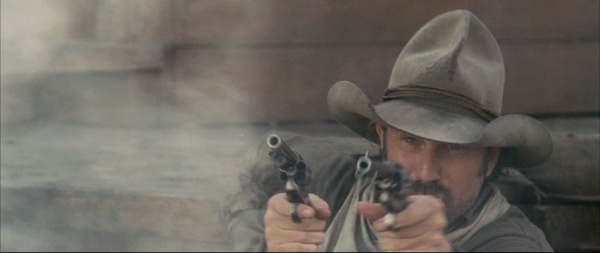
The film’s central conflict therefore feels surprisingly contemporary. At its core, Open Range is about what happens when powerful individuals believe that ownership gives them the right to control everyone around them. The free-grazers refuse to accept that logic, and the resulting confrontation becomes inevitable. This gives the film more substance than a conventional revenge Western because the characters are not fighting simply for pride. They are fighting over whether independence can survive when someone powerful enough decides to eliminate it.
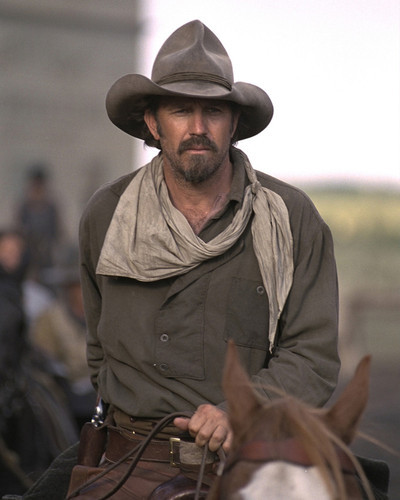
Costner’s performance is equally important. Charley is not written as the swaggering cowboy archetype audiences might expect from a Western star. He is deliberately restrained, often quiet and visibly uncomfortable with the violence that once defined his life. That restraint makes the eventual transformation far more effective. The audience understands that Charley is capable of extraordinary violence, but the film spends much of its running time showing why he does not want to return to that part of himself.

That internal conflict gives the climactic violence greater emotional weight. When Charley finally chooses to fight, the decision does not feel like a hero discovering his destiny. It feels like a man reluctantly accepting that violence may be unavoidable if he wants to protect the people around him. The distinction is subtle but essential, and it is one of the reasons the movie has aged better than many Westerns built primarily around gunplay.
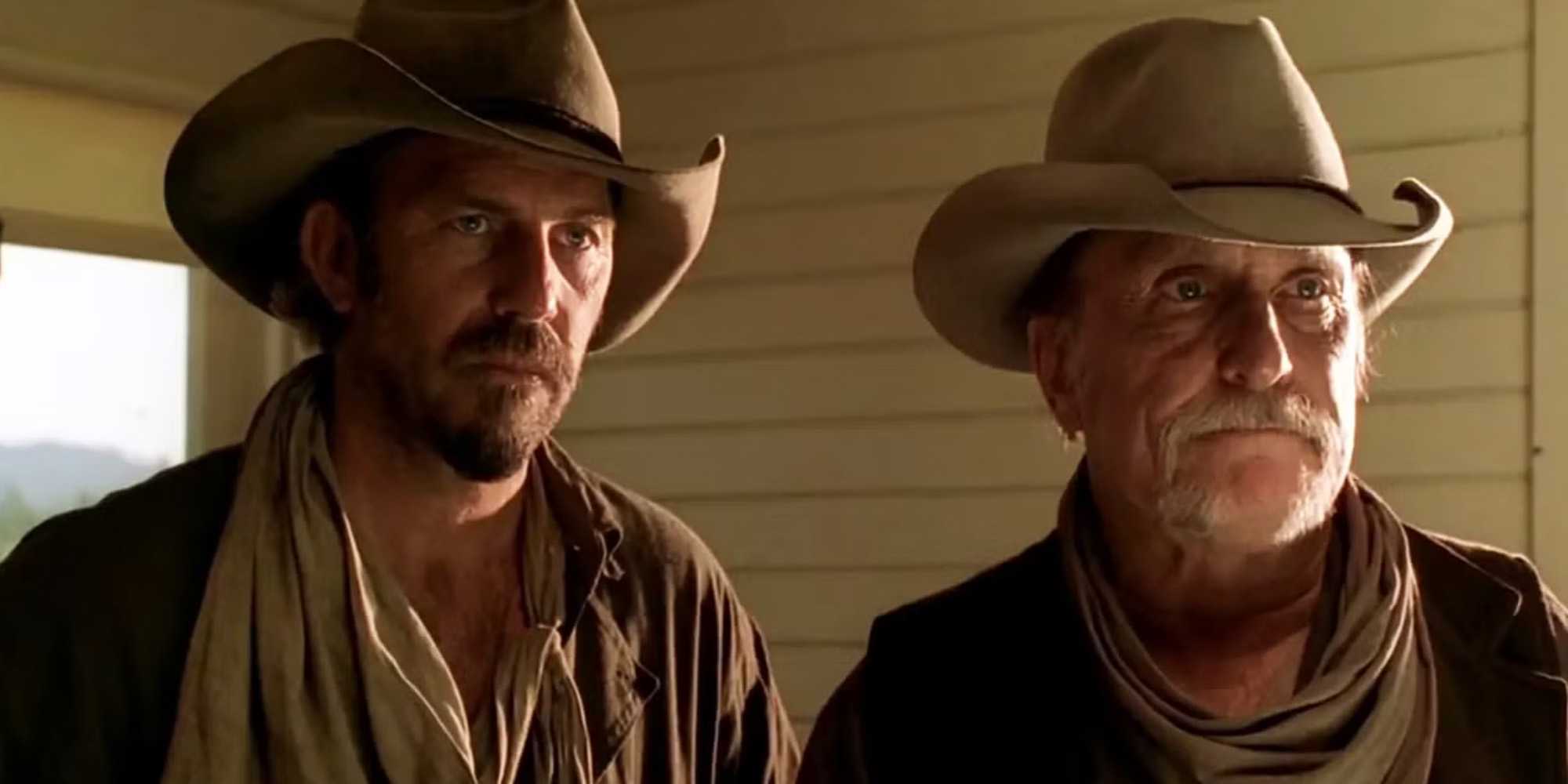
Robert Duvall provides another major reason the film remains memorable. His Boss Spearman is rough, experienced and immediately charismatic, but he is not portrayed as an untouchable legend. Instead, Boss serves as the practical center of the group, someone who understands the realities of life on the frontier and recognizes Charley’s potential before Charley is willing to acknowledge it himself. Duvall’s presence gives the movie warmth and humor while grounding its more dramatic moments.
The relationship between Boss and Charley also gives Open Range an unusually strong emotional foundation. Their partnership is based less on sentimental declarations than on mutual respect. Boss understands that Charley has a violent history, but he does not define him entirely by it. Charley, meanwhile, gradually finds a sense of belonging among people who allow him to imagine a different future.
Annette Bening’s Sue Barlow adds another important dimension. Rather than functioning simply as a romantic prize for the protagonist, Sue represents the possibility of a life that exists beyond violence. Her relationship with Charley develops slowly, and the restraint is intentional. The romance is less important as a conventional love story than as a symbol of the future Charley could have if he succeeds in leaving his past behind.
This emphasis on character was particularly notable in 2003 because Western filmmaking had already become increasingly rare in mainstream Hollywood. Costner had famously demonstrated his commitment to the genre with Dances with Wolves, which won the Academy Award for Best Picture and Best Director in 1991. By choosing to direct another traditional Western more than a decade later, he was taking a significant creative risk at a time when the genre was no longer guaranteed to attract mainstream audiences.
Open Range consequently arrived with relatively modest expectations compared with the enormous cultural impact of Dances with Wolves. Yet its reputation has gradually grown. The film’s supporters have increasingly pointed to its atmosphere, performances, cinematography and carefully constructed action sequences as evidence that it deserves to be considered among Costner’s strongest directorial efforts.
One of the most frequently remembered elements is the climactic gunfight. Rather than turning the confrontation into an exaggerated action spectacle, Costner stages it with an emphasis on distance, uncertainty and brutality. The gunfire feels frightening because the characters do not simply absorb bullets and continue fighting. Violence has consequences, and the sequence repeatedly reminds the viewer that the people involved are vulnerable.
That realism is central to the movie’s identity. The gunfight does not exist merely to provide an exciting finale; it completes Charley’s emotional journey. The man who spent much of the film trying to suppress his violent instincts is finally forced to confront the part of himself he wanted to bury. His victory therefore carries an element of tragedy. He survives, but he cannot completely escape the person he once was.
The film’s visual style also contributes significantly to its longevity. Vast landscapes, dusty roads, open grasslands and small frontier settlements are photographed with a sense of scale without overwhelming the characters. Costner understands that the landscape should reflect the story rather than merely provide attractive scenery. The openness of the environment contrasts with the increasingly confined choices available to the characters as Duncan’s pressure grows.
That contrast helps explain why Open Range feels different from some modern Western productions. Contemporary Westerns often use the genre to examine America through a highly stylized or revisionist lens. Open Range is more traditional, but it is not simplistic. It respects the conventions of the Western while using them to explore violence, loyalty, freedom and redemption.
Its rediscovery is also timely because Kevin Costner’s career has once again become closely associated with Western storytelling. His work on Yellowstone introduced his particular version of the American West to a new generation, while his ambitious Horizon: An American Saga demonstrated that his fascination with the genre remained as strong as ever. Seen from that perspective, Open Range now looks less like an isolated experiment and more like an important chapter in a career-long commitment to Western cinema.
There is an intriguing irony here. When Open Range was released, some audiences may have viewed it as a filmmaker returning to an old-fashioned genre. More than twenty years later, that very traditionalism has become part of its appeal. In an era dominated by increasingly complicated franchises and heavily digitized productions, the film offers something comparatively straightforward: strong characters, beautiful landscapes, moral conflict and a story that takes its time.
That simplicity should not be mistaken for a lack of ambition. Costner’s film is carefully constructed around the idea that freedom has a price. The cattlemen want to live without interference, but their independence becomes impossible when another man decides that the land belongs exclusively to him. Charley wants peace, but his history makes peace difficult. Boss wants to protect his people, but doing so means eventually confronting a force larger than himself.
The movie therefore works because its central conflicts remain understandable even when the setting is more than a century removed from modern life. The question of whether people can remain free when confronted by concentrated power is not exclusively a Western question. Neither is the question of whether someone who has committed violence can genuinely reinvent himself.
That may be the real reason Open Range continues to attract attention 23 years later. It is not simply a nostalgic cowboy movie. It is a film about people trying to determine what kind of lives they want to live—and what they are willing to sacrifice to preserve those choices.
Costner’s decision to make the film now looks increasingly prescient. His later career would continue returning to the same themes: land, family, legacy, masculinity, violence and the mythology of the American frontier. Yellowstone would eventually bring those subjects into a modern setting, while Horizon would expand his interest in the Western into a much larger historical canvas. Open Range sits comfortably between those projects, demonstrating the foundation upon which much of his later Western storytelling was built.
Twenty-three years on, then, Open Range deserves more than a nostalgic anniversary mention. It deserves recognition as one of the films that helped preserve the traditional Western at a time when Hollywood had largely moved away from it. Its greatest strength is not the gunfight, the scenery or even the star power—it is the understanding that the most compelling Western heroes are not men who love violence, but men who know exactly what violence costs and fight only when they believe they have no other choice.