For some viewers, Yellowstone was the door into a modern West of land fights, legacy, and moral compromise. For others, the door only locked shut when Taylor Sheridan sent the story backward—to mud, wagons, and a frontier that killed without speechifying. 1883 is that door. It is the origin of the Montana Duttons, and it contains, in one stretch of Elsa Dutton’s narration, the line that still cuts deeper than most of the franchise’s later monologues about ranch, blood, and belonging.
The episode is “River.” The wagon train, pushing from Fort Worth toward a dreamed-of Oregon, reaches its first major crossing. On screen there is still motion, still a kind of terrible hope. Over it, Isabel May’s Elsa speaks with the clarity of someone who has already learned what the journey costs:
“I didn’t know enough to know how cruel and uncaring this world can be. The world doesn’t care if you die. It won’t listen to your screams. If you bleed on the ground, the ground will drink it. It doesn’t care that you’re cut.”
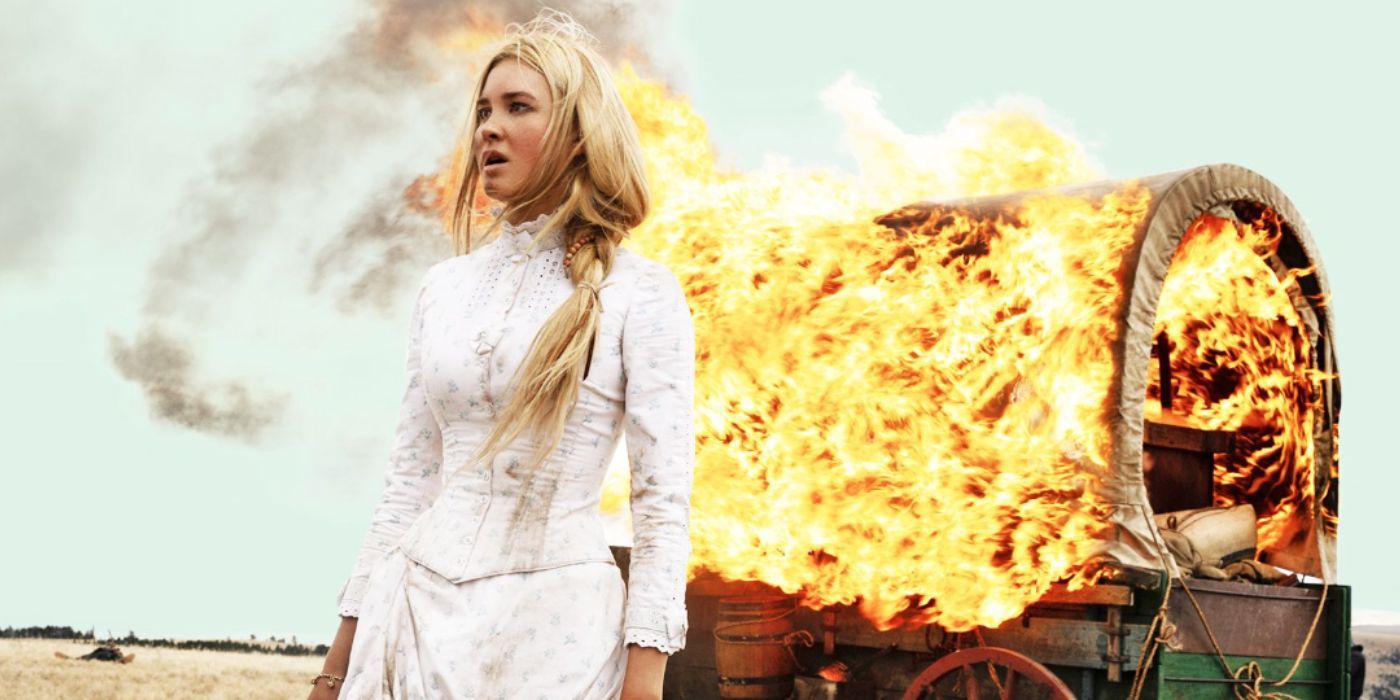
That is not a slogan about toughness. It is a thesis about indifference. The land will take the body. It will not return meaning. In a franchise obsessed with who owns the ground, Elsa insists the ground does not love its owners back.
What the line does inside 1883
1883 is structured as ordeal. Few of the travelers reach any prosperity worth the word. The Duttons who will seed Montana’s future do so through attrition, not destiny cosplay. Elsa’s narration has always worked on two clocks at once: the young woman discovering the trail, and the voice that already knows the ending. By the time the series closes on her death, the “River” passage reads less like mood and more like prophecy she was writing for herself.
She wonders, elsewhere in her reflection, why a world “wasn’t made for us,” why tornadoes and other destructions exist. The theological unease matters. But the sentences about blood and dirt are the ones that travel. They strip the pioneer myth of its bargain. You may love the land. You may name it, fence it, kill for it. The land’s only reply is absorption.
How the same cold runs through the rest of the universe
Sheridan’s wider map—1923, Yellowstone, Dutton Ranch, Marshals—keeps replaying variations of Elsa’s claim even when her name is not spoken.
In the flagship series, the Duttons treat the ranch as sacred inheritance and political battlefield. People die in its defense and in its orbit anyway. Lee Dutton is killed early, in violence tied to the land’s contested edges. Monica’s story binds her to place and suffering in ways that never sentimentalize the soil as healer. Colby dies in the work of the ranch itself—a reminder that “maintaining” the dream can be as fatal as fighting for it. John Dutton’s end is entangled with the same preservation logic that defined his life: keep the land from becoming someone else’s development, and pay whatever the fight extracts. The earth does not attend the funeral. It receives the body with the same neutrality Elsa described decades of story earlier.
1923 extends the pattern into another century of weather, poverty, and institutional cruelty. Survival is never framed as the land’s gratitude. Dutton Ranch and Marshals move the conflict into Texas range wars and federal law, but the emotional contract is familiar: family bleeds for ground and order; the ground remains unmoved.

Elsa as bookend
Elsa is not only a tragic pioneer daughter. She is the franchise’s ghost of continuity. She narrates 1883 after death in the series’ logic; traces of her spirit and memory surface in 1923 and in Yellowstone, including the long shadow over the original show’s closing meditation on what a life on that land was worth. In the finale terrain of “Life Is a Promise,” the series is still arguing with the idea she named in “River”: that meaning is something people invent on top of dirt that will not invent it for them.
She stands for two opposing truths at once. She is the Dutton appetite for motion, risk, and fierce living—the pioneer voltage her descendants keep trying to industrialize into a ranch empire. She is also pure interrupted potential, a life stopped on the threshold of the future she was riding toward. Fate parks the family in Montana through her dying geography; the dynasty begins where her trail ends. That is as close as Sheridan gets to a creation myth, and it is deliberately unsentimental. The origin is not a flag planting. It is a young woman bleeding into ground that does not care.
Why the quote still wins
The Yellowstone universe is crowded with memorable talk—Beth’s razors, John’s sermons, cowboys philosophizing at golden hour. Much of it is about loyalty, power, and the moral superiority of those who “work the land.” Elsa’s lines refuse the compliment the franchise sometimes pays itself. They say the work does not redeem you to the earth. The earth is not a character who chooses favorites. It is a fact.
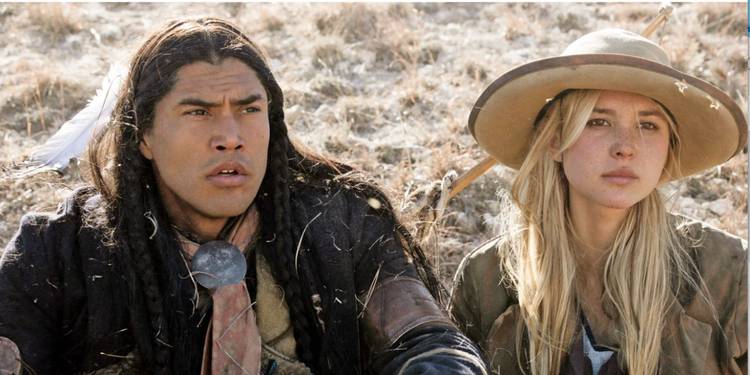
That hardness is why the passage remains the most devastating single stretch for many viewers. It does not ask whether the Duttons are right to fight. It asks what the fight is for if the prize cannot love you, mourn you, or remember you. Legacy, in Sheridan’s world, is then revealed as a human argument conducted on indifferent soil—family against developers, family against government, family against itself—while the dirt keeps its own counsel.
1883 made that counsel audible early, in a voice soft enough to sound like diary and final enough to sound like verdict. Everything after—every ranch gate, every funeral, every sequel about starting over in Texas or pinning on a marshals’ badge—still moves in the echo of those sentences. The world does not care if you die. The ground will drink what you spill. The Duttons keep pouring anyway. That is the tragedy, and in Sheridan’s telling, it may also be the only honesty the West will allow.