Mark Lee’s comeback announcement was supposed to be a straightforward piece of good news, but the internet immediately found a wildly unexpected way to make it about Charlie Kirk. The former NCT member recently unveiled a music video teaser for his upcoming single “My Friend,” scheduled for release on September 10. Almost instantly, some netizens noticed that the release date coincides with the anniversary of Charlie Kirk’s death and began joking that the song must somehow be connected to him. The speculation was clearly fueled by irony and online trolling rather than any evidence that Mark Lee had intended such a connection. Yet because the idol has already faced several controversies in recent months, the jokes quickly found an audience willing to take the bizarre theory further.
Mark Lee announced “My Friend” through a teaser that would normally trigger the familiar excitement surrounding a major idol comeback. Instead, social media users fixated on one oddly specific detail: September 10. Rather than discussing the concept, visuals, music, or what kind of sound Mark Lee might explore next, some commenters immediately connected the date to Charlie Kirk. Posts joking that Mark had somehow chosen the date specifically for Kirk spread across social media, turning an ordinary promotional announcement into a strange internet spectacle. Some users even joked that Mark was attempting to “resurrect” Kirk, while others sarcastically described Kirk as Mark’s “role model” or “ult bias.” The absurdity was precisely what made the speculation travel, because online fandom culture often rewards the most unhinged interpretation with the most attention.
At face value, there is no evidence presented in the report that “My Friend” has anything to do with Charlie Kirk. The song’s title alone does not identify a particular person, and a September 10 release date does not establish a connection to anyone’s death anniversary. This is an important distinction because social media jokes can quickly become detached from the playful context in which they originally appeared. Once enough people repeat the same theory, even an obviously ridiculous claim can start looking like a genuine allegation to casual observers. That dynamic is especially risky when the subject is a celebrity who has already become a target of online criticism. In Mark Lee’s case, the Charlie Kirk jokes gained traction because they were layered on top of existing narratives about his image rather than appearing in a vacuum.

The reason some netizens were willing to entertain the theory, however ridiculous it sounds, is connected to controversies that have surrounded Mark Lee in recent months. According to Koreaboo, the idol has faced allegations involving racism as well as speculation about his alleged association with a religious cult. These controversies have contributed to a portion of the online community questioning his personal values and worldview. That does not establish that Mark Lee actually shares Charlie Kirk’s political beliefs, nor does it prove any ideological relationship between them. Instead, the existing controversies appear to have created an environment where people are more willing to interpret neutral actions through a suspicious lens. Once that perception takes hold, even something as mundane as a release date can become ammunition for another round of speculation.
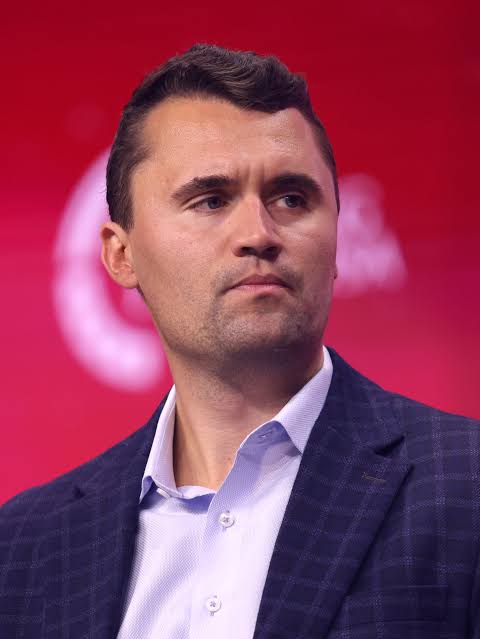
Charlie Kirk’s name also carries a very different cultural meaning from Mark Lee’s usual entertainment environment. Kirk was an American right-wing political activist and influencer whose public identity was deeply tied to conservative politics and political debate. Mark Lee, meanwhile, built his career through NCT and the K-pop industry, where music, performance, fashion, and fandom typically dominate the conversation around him. Connecting the two therefore creates an intentionally jarring contrast that makes the joke instantly recognizable online. The humor depends less on an actual relationship and more on the sheer improbability of the pairing. In classic internet fashion, the more random the connection appears, the more entertaining it can become to people participating in the meme.
There is also something revealing about the title “My Friend” becoming part of the speculation. A simple title can be transformed into a supposed clue once fans or antis decide that a particular narrative exists underneath it. Suddenly, “friend” is no longer just a creative phrase but becomes something users can attach to an unrelated public figure. This is how conspiracy-style fandom speculation often operates, with ordinary details being retroactively treated as intentional signals. The interpretation does not need to be logical to gain traction; it only needs to be memorable enough for people to repeat. Mark Lee’s comeback therefore became less about what the teaser actually revealed and more about what the internet imagined it was secretly revealing.
The episode also highlights how difficult it has become for idols to control the meaning of their own promotional material. K-pop agencies can carefully construct teaser schedules, visual concepts, captions, and release strategies, but they cannot control how millions of users reinterpret those details. A date chosen for logistical, strategic, or completely ordinary reasons can acquire an entirely different meaning once it enters the social media ecosystem. This is particularly intense for high-profile idols such as Mark Lee, whose every public move can attract both dedicated fans and highly critical observers. The moment a comeback teaser goes online, it becomes raw material for memes, theories, criticism, and fan discourse. In that environment, the artist’s original intention can become almost secondary to the narrative that gains the most momentum.

At the same time, the Charlie Kirk speculation says something about the current relationship between K-pop fandom and political discourse. K-pop has become increasingly global, meaning idols are constantly exposed to political conversations, cultural conflicts, and ideological debates that originate outside South Korea. International fans may interpret an idol’s behavior through their own political frameworks, even when the artist has made no political statement. That can produce misunderstandings because cultural context, humor, and celebrity branding do not always translate cleanly across borders. Mark Lee’s situation is a particularly chaotic example because the supposed political connection appears to be based almost entirely on a coincidental date. Nevertheless, the speed with which the theory spread demonstrates how easily K-pop discourse can intersect with broader internet politics.
There is another layer worth decoding: the jokes may not really be about Charlie Kirk at all. For some users, invoking Kirk is simply a way to mock Mark Lee by referencing controversies that have already made him vulnerable to criticism. In other words, the target of the joke may be the idol’s perceived image rather than any actual political affiliation. This distinction matters because online commentary frequently blurs satire, criticism, misinformation, and genuine belief. A sarcastic post can be screenshotted without context, reposted by another account, and eventually interpreted literally by someone unfamiliar with the original joke. That process can turn a ridiculous meme into a misleading narrative surprisingly fast.
Ultimately, Mark Lee’s “My Friend” announcement demonstrates how K-pop comebacks can become viral stories before fans even hear the song. The September 10 release date gave netizens a tiny coincidence, and the internet did what it does best by turning that coincidence into an elaborate joke involving Charlie Kirk. There is no evidence in the reported information that Mark Lee created the song as a tribute to Kirk or that the two share the political connection some commenters sarcastically implied. What the incident does reveal is how existing controversies can reshape the way an idol’s every move is perceived, making even neutral details vulnerable to suspicion and ridicule. It also shows why modern celebrity narratives are increasingly shaped by audiences rather than agencies, because fans and critics can manufacture an entire storyline from one date, one title, and a few viral posts. For Mark Lee, the real test will be whether “My Friend” can eventually move the conversation away from the bizarre speculation and back toward the music itself.