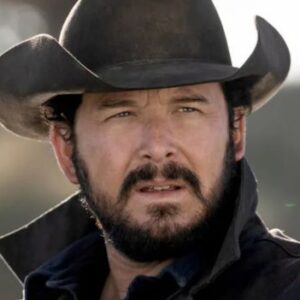
Long before the black hat, the brand, and the Dutton Ranch foreman’s silence that said more than most characters’ monologues, Cole Hauser spent three decades proving he could be the threat in the room, the loyal friend in the booth, or the authority figure nobody wanted to disappoint.
Yellowstone made him a household name as Rip Wheeler. It did not invent him. From early-’90s ensemble dramas to franchise villains and cable antiheroes, Hauser’s pre-Rip résumé is a map of the skills Taylor Sheridan later weaponized: physical menace without cartoonishness, loyalty that feels dangerous, and a face that can switch from brotherly to lethal in a single cut.
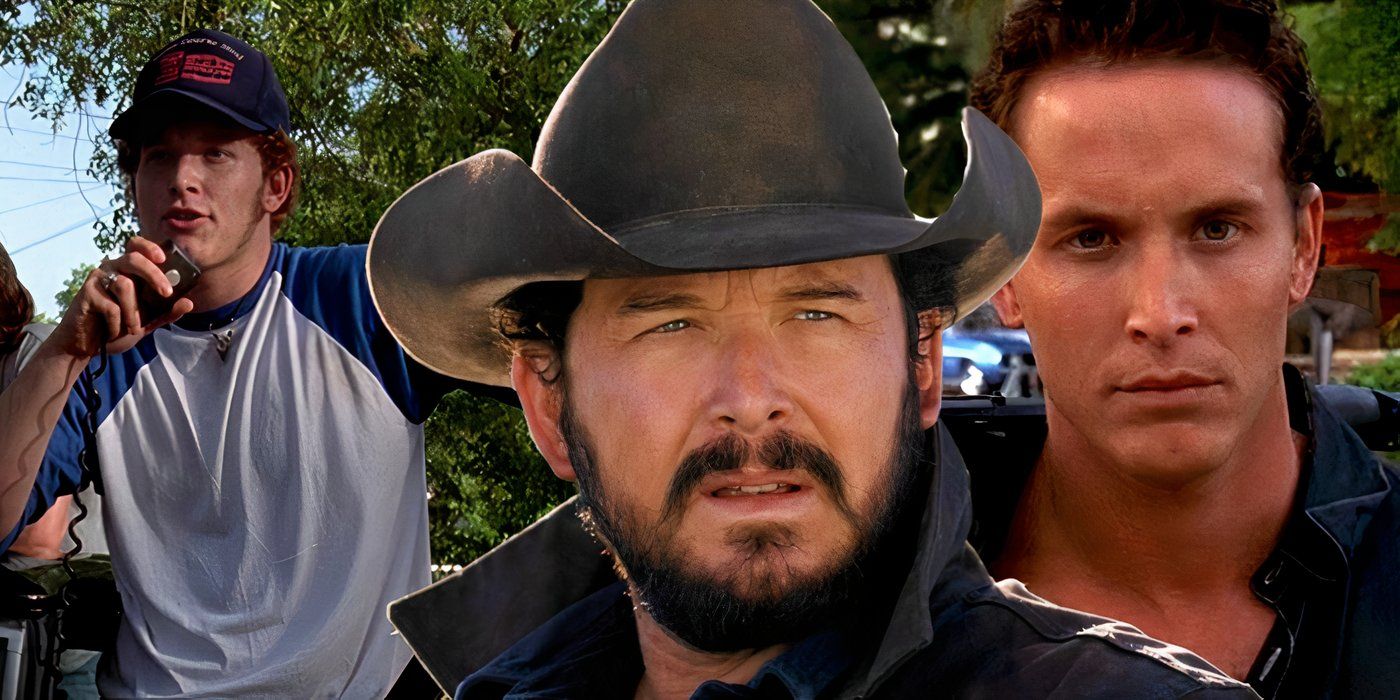
Acting was already in the bloodline. Hauser’s great-grandfather was Warner Bros. co-founder Harry Warner; his father, Wings Hauser, worked steadily in film and television. What Cole built, starting in his teens, was less inheritance than apprenticeship—scene by scene, often beside people who were about to become the defining stars of their generation.
Here are the roles that still hold up when you try, briefly, to forget Rip.
Benny O’Donnell — Dazed and Confused (1993)
At eighteen, in Richard Linklater’s last-day-of-school haze, Hauser is red-haired, loud, and already practiced at intimidation. Benny O’Donnell is one of the seniors who treat freshman paddling as civic duty. The screen time is not huge. The temperature is.
His megaphone warning to the incoming class remains a small classic of high-school terrorism: show up and take your licks, or run and live in open season all summer. Linklater’s film is ensemble democracy—McConaughey, Affleck, Posey, London, and a dozen others sharing the frame—but Hauser’s Benny is pure concentrated threat, the kind of upperclassman who makes the myth of “harmless hazing” feel like a lie told by the people holding the paddle.
Asked years later how Benny might fare on a ranch, Hauser did not soften him: he would probably be an enforcer. The line from 1976 Texas football culture to Montana ranch law is shorter than it looks.
Billy McBride — Good Will Hunting (1997)
Hauser had already shared sets with Matt Damon and Ben Affleck on School Ties. Good Will Hunting reunited the friends in Gus Van Sant’s South Boston story, with Hauser as Billy—one of Will’s bar-booth loyalists, the kind of friend who will back you in a fight and not understand why you need a different life.
It is not a showy part. That is the point. The Oscar-winning film needs the gravity of a real crew around Damon’s Will; Hauser supplies unshowy belonging. Offscreen, the three men’s bond went back to the early ’90s, including years of the particular insult-comedy that young actors use as affection. Onscreen, Billy is proof Hauser could disappear into ordinary male loyalty without reaching for the villain’s cape.
Jack Connors — School Ties (1992)
Hauser’s feature debut landed him inside one of the decade’s accidental star factories. Brendan Fraser, Damon, Affleck, Chris O’Donnell—and a teenage Hauser as football player Jack Connors in a story about antisemitism at a New England prep school.
Connors is not the moral center; he is part of the pressure system around Fraser’s David Greene. For a first major film, it is a useful education: how to hold presence in a stacked cast, how to play privilege and group cruelty without winking at the camera. It also forged the Affleck–Damon friendship that would echo through Good Will Hunting and, decades later, through the industry lore around Hauser’s own longevity.
Carter Verone — 2 Fast 2 Furious (2003)
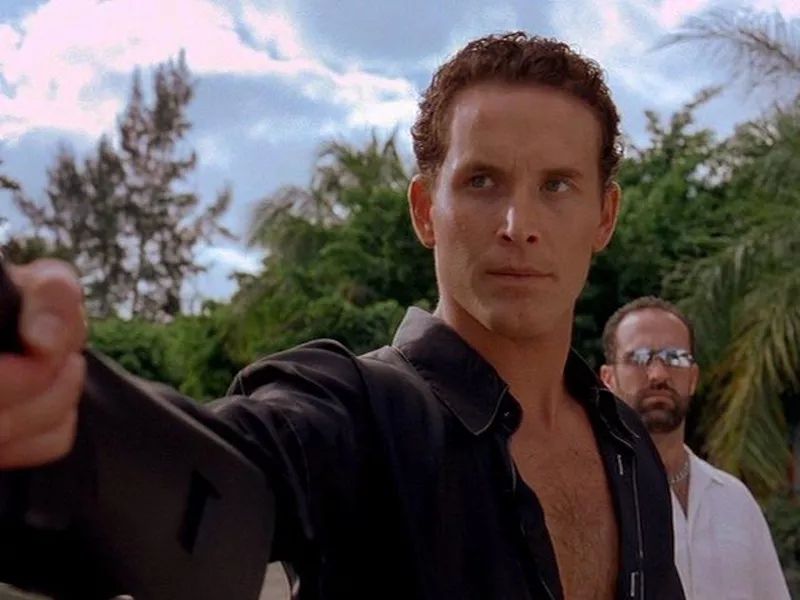
If Rip is controlled violence, Carter Verone is pleasure in power. As the Miami drug lord opposite Paul Walker and Tyrese Gibson, Hauser gets the suits, the calm, and the franchise’s permission to be rotten in style.
2 Fast 2 Furious is not the most respected entry in the Fast saga, and it does not need to be. Verone is one of Hauser’s cleanest demonstrations of villain charisma: soft-spoken, transactional, genuinely scary because he treats other people as inventory. He is the pre-Rip proof that Hauser can anchor a film’s threat even when the plot is mostly nitrous and neon.
William J. Johns — Pitch Black (2000)
In David Twohy’s lean sci-fi horror, Hauser plays Johns, the bounty hunter whose ethics flex with survival. Opposite Vin Diesel’s Riddick, Johns is neither pure hero nor pure monster; he is the professional who will negotiate with darkness until darkness stops negotiating.
The role sits in a useful middle register of Hauser’s career—tough, compromised, watchable. It also tied him, early, to the kind of genre masculinity that later made ranch enforcer feel like a natural dialect rather than a costume change.
Staff Sergeant Cota — Tigerland (2000)
Joel Schumacher’s raw Army-training drama gave Hauser authority of a different kind: the sergeant shaping men heading toward Vietnam, opposite a breakout Colin Farrell. Hauser received Independent Spirit Award attention in this era for the toughness and complexity he brought to military hierarchy—discipline as both structure and pressure.
Rip Wheeler’s leadership on the ranch is quieter and more feudal. Cota is the earlier sketch of a man whose job is to harden other men, whether or not the system deserves that hardness.
Other building blocks: from Higher Learning to cable leads
John Singleton’s Higher Learning (1995) cast Hauser as Scott Moss, tied to campus extremism—an ugly role played without softening. Hart’s War (2002) and Tears of the Sun (2003) put him repeatedly beside Bruce Willis in war and POW pressure cookers. The Break-Up (2006) let him play comedy as Vince Vaughn’s womanizing brother Lupus, a reminder that the scowl was a choice, not a limitation. Action stretches in A Good Day to Die Hard and Olympus Has Fallen kept the physical toolkit sharp.

On television before Yellowstone, Chase (2010) made him U.S. Marshal Jimmy Godfrey, a co-lead in a short-lived NBC manhunt drama—practice at carrying episodes rather than stealing scenes. Rogue (2013–17) went further: as Ethan Kelly across multiple seasons, Hauser worked long-arc television, the kind of sustained character development that makes a later Sheridan role feel like continuity rather than reinvention.
What all of this has to do with Rip
Rip Wheeler feels inevitable only in hindsight. Watch the pre-Yellowstone work in order and the inevitability breaks apart into craft: the teen enforcer; the Boston loyalist; the prep-school football bully; the Miami kingpin; the compromised hunter; the training-camp sergeant; the marshal; the cable antihero.
Hauser did not arrive on the Dutton ranch as a blank tough guy. He arrived as an actor who had already played loyalty, cruelty, hierarchy, and charm from enough angles that Sheridan’s foreman could be silent without being empty. Fans who only know the cowboy are not wrong to love him. They are incomplete.
The roles before Yellowstone will not make anyone truly forget Rip—that is marketing language. They will do something better. They will show that Rip was not a lucky costume. He was the job application Hauser had been filling out, in different uniforms, for twenty-five years.