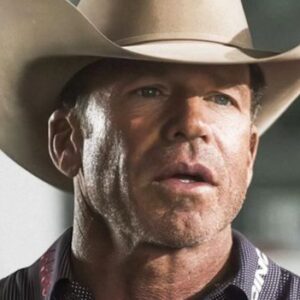
Taylor Sheridan’s worlds are full of men and women who understand chain of command, irreversible decisions, and the cost of coming home. Yellowstone, 1883, Landman, Lioness—again and again his stories borrow the emotional grammar of service even when the setting is a ranch, an oil field, or the open frontier.
That raises a fair question from viewers: which of the people on screen actually served? And did Sheridan himself?
The answers are more uneven than the shows’ confidence about duty might suggest—and more interesting for it.
Did Taylor Sheridan serve?

No. Despite military-adjacent plots and entire series built around operators and chain-of-command pressure, Sheridan did not serve in the armed forces.
Internet confusion sometimes attaches a different man’s biography to him. A Canadian veteran named Sheridan Taylor, who served in the Canadian Armed Forces, has been mixed up online with the Yellowstone creator. That Sheridan has spoken with pride about service—“I was a good soldier… Nothing I’ve ever done has been so rewarding, outside of watching my own children grow”—but he is not the screenwriter-producer behind the Dutton universe.
The American Taylor Sheridan’s authority on military feeling, such as it is, comes from research, collaborators, and craft, not from a service record.
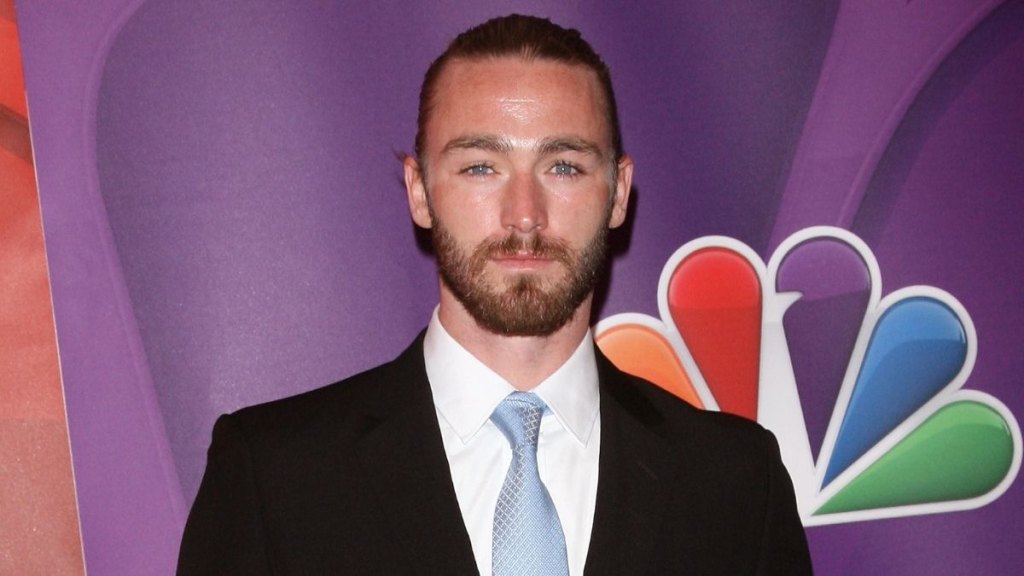
Jake McLaughlin — from Iraq to Yellowstone
Jake McLaughlin’s path is the most direct combat-to-camera arc in this group. Before his 2024 guest turn in two episodes of Yellowstone, he served four years as a U.S. Army infantryman. He deployed as part of Operation Iraqi Freedom and was critically injured twice—wounds that pushed him toward medical retirement and, eventually, acting.
His first major film was Paul Haggis’s In the Valley of Elah (2007), a story steeped in the moral wreckage of the Iraq War. The leap still strikes him as improbable.
“It’s pretty mind-boggling that I went from being in Iraq to doing concrete work to being in a major motion picture as my first film,” McLaughlin told the Coastal Courier. “I’m fortunate because I’m not the only Iraq veteran, but I was afforded the opportunity to make something good out of something bad. I was able to turn it around.”
In a Sheridan frame, that biography does more than decorate a credit list. It is the kind of lived discontinuity his fiction keeps chasing: violence, return, reinvention.
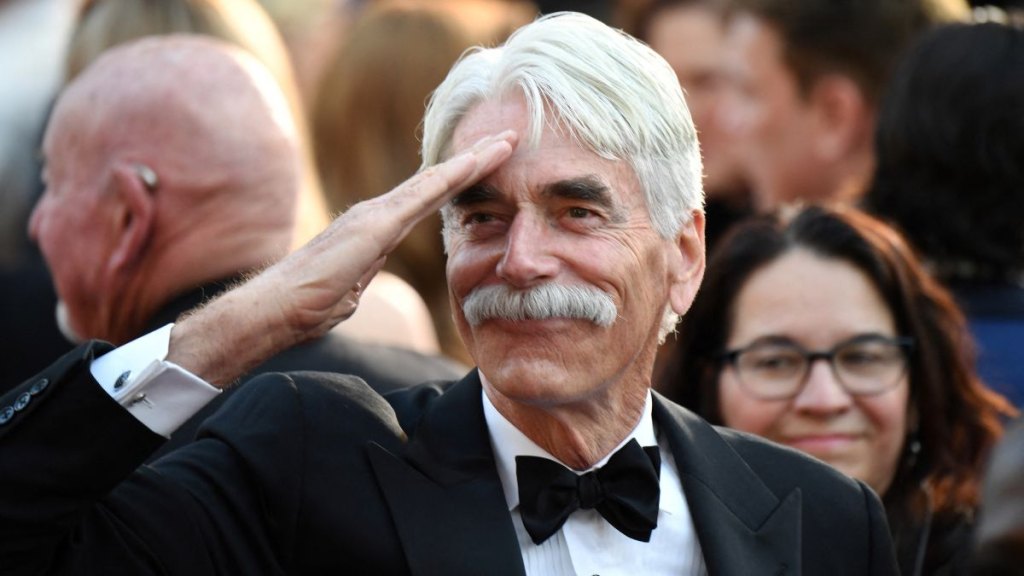
Sam Elliott — National Guard service, and a lifelong argument with guilt
Sam Elliott—who anchors emotional authority in 1883 and later appears in Sheridan’s orbit including Landman—served in the California Air National Guard’s 146th Airlift Wing in the 1960s. He was not deployed to Vietnam. That fact never fully settled in him as relief.
Elliott has spoken carefully about the difference between the men who were sent and the men who were not. The reception some Vietnam veterans received when they came home disgusted him; it also complicated his own feelings about having been “one of the lucky ones.”
“Those guys that signed up because they felt a call to duty… and then they came home and got spit on and all that sh-t, that put me off it,” he told Bang Showbiz in 2022. “But I always felt guilty about it, and then I got an opportunity to do a movie called We Were Soldiers. I played a guy who served in four different military conflicts… and then I got an opportunity to go see the [Vietnam Memorial] on the Fourth of July… I’ve always felt guilty about the fact that I didn’t go. I got into the National Guard, and I was one of the lucky ones.”
Elliott’s military chapter is short on combat narrative and long on moral residue—the sort of unfinished interior business Sheridan often writes into older male characters who carry themselves like men who have already paid something, even when the invoice is private.
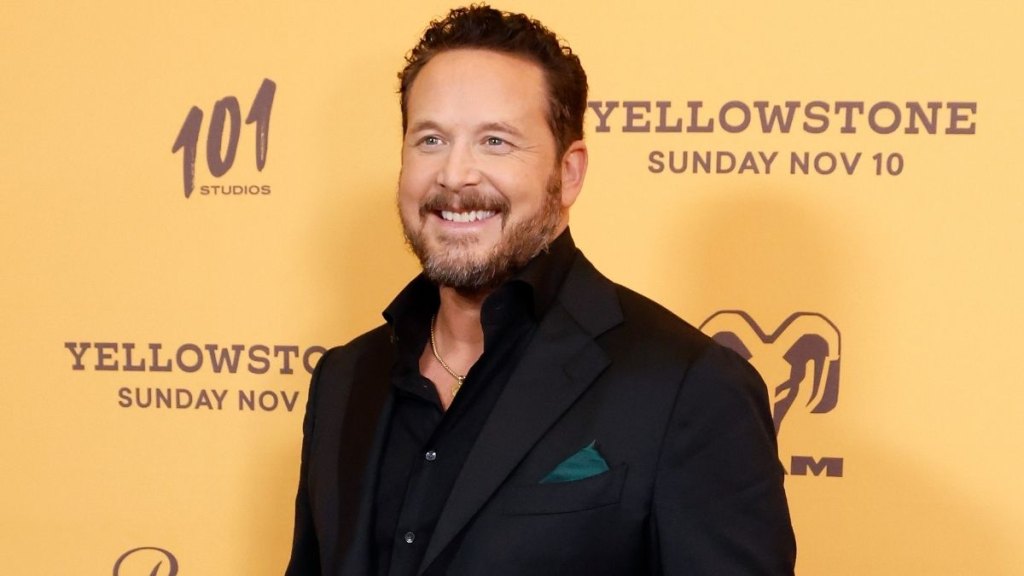
Cole Hauser — no service record, a public commitment to those who served
Cole Hauser did not serve in the military. Including him in this conversation is still coherent if the subject is Sheridan’s world and the people who staff it with respect for service.
Hauser has sat on the board of the Special Operations Warrior Foundation, participated in USO tours, and visited military hospitals. He traces the instinct to his grandfather, who took part in a war-bonds selling tour after World War II and died when Hauser was twelve—early enough to become permanent.
“My grandfather taught me profound respect for the military and service,” Hauser said in 2024, according to the Defense Visual Information Distribution Service. “Unfortunately, he died when I was 12, but he had a lifelong impact on me.”
“My goal is to be able to change lives, not just in the military but around the world. My legacy is my kids, and they care about the military and that is all that matters. Some get bigger houses, bigger cars. I think it is more important to give back.”
On Yellowstone, Rip Wheeler’s code is not a uniformed code. Hauser’s offscreen advocacy is one reason the posture does not feel like pure costume to the audience that cares about such distinctions.
Why this keeps coming up in Sheridan country
Sheridan’s shows return to themes service members recognize without requiring every actor to have enlisted: hierarchy, loyalty tests, the impossibility of explaining a closed world to outsiders, the way violence reorganizes a personality. Lioness makes that debt explicit. Yellowstone and 1883 translate it into ranch and frontier language. Landman finds it in extraction-industry danger and men who treat risk as employment.
Viewers who honor real service are right to ask who on screen has worn the uniform. McLaughlin’s injuries and Elliott’s Guard years are not marketing footnotes; they are biographies that change what certain scenes weigh. Hauser’s advocacy is a different category—civilian responsibility rather than service—but it belongs in the wider picture of how Sheridan’s company of actors relates to the military community that watches them.
The clean version of the ledger
- Taylor Sheridan: did not serve.
- Jake McLaughlin: U.S. Army infantry, Operation Iraqi Freedom, critically wounded, later Yellowstone.
- Sam Elliott: California Air National Guard in the 1960s; no deployment; enduring public honesty about guilt and respect.
- Cole Hauser: did not serve; sustained veteran-focused philanthropy and USO work.
Sheridan can write soldiers and soldier-shaped cowboys without having been one. What he cannot manufacture is the specific authority of people who lived the part before they played anything like it. In a television landscape that borrows military seriousness as aesthetic, the distinction between research and record still matters—and in his repertory company, that distinction has names.