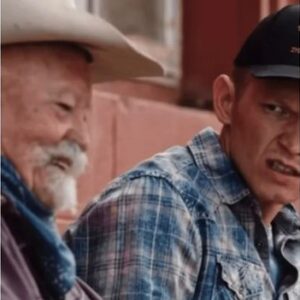
One of television’s most closely watched couples is back at work. Kelly Reilly and Cole Hauser have returned as Beth Dutton and Rip Wheeler in the Yellowstone spin-off Dutton Ranch, whose first episodes are now streaming on Paramount+. The series picks up six months after the couple’s modest Montana ranch burns down and follows them south to Texas, where they attempt a fresh start as ranchers alongside their adoptive son, Carter (Finn Little). In a place where they have no built-in power and cannot simply intimidate the town into compliance, complications arrive quickly—helped along by a heavyweight supporting cast that includes Jai Courtney, Ed Harris and Annette Bening.
In conversation with Variety, Reilly and Hauser discussed how they keep the on-screen relationship charged, how each finds their way back into character, and what it meant to rebuild the world in the Texas heat.
Chemistry that cannot be manufactured
Asked how they sustain the electric dynamic between Beth and Rip, Reilly rejected the idea that chemistry is something actors can simply construct. “I don’t think chemistry is something you create: You either have it or you don’t,” she said. Taylor Sheridan, she added, had seen something in them individually and together when they were first cast on Yellowstone. The relationship that followed became one of her favourite aspects of playing Beth. “I don’t know how we keep it going, but it’s just on screen. We’re great friends in real life, and we take care of each other.”
Hauser framed the same bond in terms of trust and preparation. “We work really hard at supporting each other, too, and I think chemistry comes from being able to trust one another.” Over the years, he said, they have learned to take risks together and to rely on each other. On the new series they talked constantly—between takes, after takes, about scenes scheduled for the next day—about how the characters were evolving and how they could push further. “When you trust a fellow actress and actor, and you’re in the war together to be great, it’s obvious we’re blessed to have each other in that way. So chemistry, I don’t know if that’s the right word, but it’s more of a trust and a support of each other.”
Reilly returned to the point with a more personal image: she is comfortable enough with Hauser that she can “bring Beth to him,” using him as a kind of mirror. “I don’t know what that magic quality is.”

Getting back into Rip’s skin
For Hauser, the return to Rip is physical and environmental before it is about costume. “It happens when you get on the horse for the first time in cowboy camp. That’s the tip-off point when I can start to get back into his skin.” Early mornings, time with the horsemen who have trained him for a decade, and a return to outdoor work flip the switch more reliably than putting on the hat, jacket or glasses. “It’s really getting on a horse again, getting back into nature… back to being on a horse and getting into the vibe again.”
Beth after the curse lifts
Reilly described Beth’s emotional starting point on Dutton Ranch as a rare moment of release. After John Dutton’s death and the return of the Yellowstone land to Native American ownership at the end of the original series, “it was almost like a curse had been lifted.” For years Beth and Rip had been servants of John Dutton’s dream, willing to risk everything to defend it. Suddenly they had the chance to discover who they were, what they wanted, and what might make them happy—answers that, the scripts had long hinted, would centre on each other and on Carter.
That opening is short-lived. Another loss strips them of what they have begun to build, forcing a literal and figurative restart. Reilly said she was guided by an internal question: without the constant fight, who is Beth now? What fills that space? Is a quieter, more reflective quality beginning to emerge? The season, as she sees it, is about creating a new home and a new business while the character, for the first time in a long while, is not defined solely by combat.

Montana to Texas: heat, distance, adaptation
The practical shift from Montana to Texas was as demanding as the narrative one. Hauser noted that a decade of filming in Montana had made that landscape feel like home. Texas was another world. Production began in July and August in extreme heat—“118 degrees, and you’re in all black, sitting on a horse.” Trailers were miles from the locations rather than a short walk away, so the cast and crew spent long stretches exposed to the elements. New cast, new crew, new terrain and a different style of ranch work all had to be absorbed at once. “Getting into that and being able to survive the first couple of months was a feat in itself… then [we] started to find our feet and get into the groove.”
Reilly observed that the discomfort served the story. The actors had to adapt; so did Beth and Rip. The production’s fish-out-of-water experience mirrored the characters’.
Sharing the frame with new (and legendary) faces
Only Reilly, Hauser and Finn Little carried over as regulars from Yellowstone. Rather than treating the newcomers as guests on an existing show, Reilly said the feeling was of starting a new story together. Because Beth and Rip are themselves outsiders in Texas, the dynamic ran the other way: “This is their home, and we’re coming into their place, their town, their ranch.” She felt no need to “welcome” anyone into something that already belonged to her; she was simply grateful they wanted to play.

Working with Ed Harris and Annette Bening carried a different weight. Hauser grew up with a short list of VHS tapes at home—The Godfather, Giant and The Right Stuff. Harris’s performance in the latter had made him want to be an astronaut as a child and left a lasting impression of what serious screen acting looked like. On the first day they shot a bar scene in which Beth introduces Rip to Harris’s character, Hauser admitted he took “probably a bit too much of a moment” to absorb that it was actually Ed Harris across from him. Scenes with Bening, including ones in which her character flirts with Rip, struck him as playful and alive; every take felt different. “It was just an honor to work with them, and I can’t wait for the audience to see their characters.”
Trust as the through-line
What emerges from the conversation is less a formula for on-screen heat than a description of a working partnership built over years. Reilly and Hauser do not claim to manufacture chemistry. They describe showing up prepared, protecting each other’s risks, talking through the work, and letting a long-established trust do the rest. Beth and Rip’s intensity has always depended on that off-camera foundation. On Dutton Ranch, in a new state and a new kind of fight, they are relying on it again—taking care of each other while the characters try to build a life that is finally their own.