Zoe Saldaña has a clear view of what keeps her returning to Lioness: Taylor Sheridan’s willingness to put her character, Joe McNamara, in situations where the myth of “doing it all” finally cracks. Speaking on the New York red carpet for Season 3 on 29 July, the Oscar winner described a storyline that challenges Joe at home and at work—and that asks the audience whether falling short is failure or simply being human.
A woman conditioned to carry everything
Saldaña frames Joe as someone shaped early by responsibility. “I think that [Joe] is a woman that was conditioned very early on in her life to take on a great deal of responsibility, and as long as she convinces herself with the woman that she stares at in the mirror, that she can do it all, she’s gonna be okay,” she told People.
The season, in her reading, is designed to test that conviction. “What Taylor does so beautiful is showing us, by challenging Joe with unexpected events in her personal life but also in her work life, that maybe she can’t [do it all]. And it makes you question whether or not that’s bad, if you can’t do it all.”
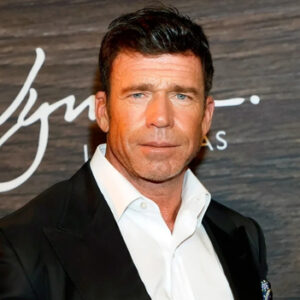
That emphasis—on the beauty of the challenge rather than on simple empowerment—is what Saldaña highlights as Sheridan’s contribution. Joe is not only sent on missions; she is forced to confront the gap between the competent face in the mirror and the limits of what one person can absorb.
Duty, home and a war that crosses the threshold
The official Season 3 logline tracks with her description. Hidden networks, foreign operatives and personal betrayals collide as Joe “walks the line between duty and home” while unseen forces circle her world. Patterns appear where they should not; names vanish; paths rearrange. Guided by Kaitlyn (Nicole Kidman) and Westfield (Michael Kelly), she confronts enemies in the shadows and must reckon with a conflict that reaches into every part of her life.
A preview clip underlines the shift toward disclosure at home. Joe begins to share more with her family about the job and the dangers attached to it. In the trailer, Kaitlyn tells her: “This isn’t the end of a fight. It’s the start of one. Are you up for it?” Joe answers: “I’m up for it.” The exchange sets a tone of continuation rather than closure—another round of pressure, not a final victory lap.
Saldaña has said the show’s appeal lies partly in how it depicts the cost of service. “It’s a show that I love because it really sheds light on the sacrifices that people who live to serve their country have to go through in order for them to keep us safe.” The complexity of the characters, and Sheridan’s interest in the balance between family and duty, are what keep her engaged.
A working mother’s parallel—carefully scaled
Saldaña, a mother of three, draws a limited parallel between her own life and Joe’s without equating them. The challenges of being a “working mom,” she says, are “incredibly different” from Joe’s, yet there are “similarities.”
“The only thing is that mine are much more diluted. I am going through, you know, a time when my kids are getting older and they’re really being vocal about how they wanna live and where they wanna live. And the life of an artist means it’s a nomadic life.” She added: “You’re here today, you’re somewhere else tomorrow. And it’s not necessarily for every family… I’m only dealing with, like, one decimal of what Joe has to deal with. I think that she handles it with so much grace.”
The comparison is precise. Saldaña’s nomadic career and her children’s growing opinions about place and lifestyle echo, in a softer register, Joe’s struggle to hold a household together while the job demands secrecy, absence and risk. She refuses to inflate her own pressures into Joe’s; she uses them only to explain why the character’s grace under far heavier strain resonates.
The company around her
Season 3 reunites Saldaña with Kidman and Kelly and brings back Morgan Freeman, James Jordan, LaMonica Garrett, Austin Hébert, Laysla De Oliveira, Genesis Rodriguez, Jill Wagner and others from the established ensemble. Yellowstone alum Ian Bohen joins as a series regular, extending Sheridan’s practice of moving actors across his slate of shows.
The continuity matters for the kind of story Saldaña describes. A season built on the erosion of Joe’s ability to compartmentalize depends on relationships—with Kaitlyn, with Westfield, with her family—that already carry history. New pressure lands harder when the audience has watched the same people absorb the last round.
What “beautiful” means here
Saldaña’s praise is specific. She does not only commend Sheridan for action or for patriotic framing. She praises him for writing Joe into corners where the self-image of total competence cannot hold, and for inviting the audience to ask whether that collapse is tragic or honest. In a genre that often treats its leads as inexhaustible, the choice to show the cost—and to call that choice beautiful—is the point she wants to underline.
Lioness Season 3 releases new episodes on Sundays on Paramount+. Joe has already said she is up for the fight. Saldaña’s comments suggest the season’s real subject is what happens when “up for it” is no longer the same as “can do it all”—and when the woman in the mirror has to live with the difference.