The unfolding situation surrounding the latest release from the global phenomenon BTS has ignited a firestorm of controversy across social media platforms, pitting a frustrated fanbase against the strategic decisions of their management agency. At the heart of the conflict is a specific, restricted release strategy involving Suga, a member renowned for his prolific production skills, and the upcoming special edition of the group’s newest album, ARIRANG.

The tension traces back to the announcement that the vinyl (LP) version of ARIRANG, scheduled for release on April 3, 2026, would feature a “hidden track” produced entirely by Suga. While hidden tracks are a long-standing tradition in the physical music industry, the point of contention here is exclusivity: BIGHIT MUSIC confirmed that this specific song would not be available on any digital streaming platforms like Spotify or Apple Music. It exists solely within the grooves of the physical vinyl record.
The narrative took a more emotional turn during a live broadcast on April 1, where Suga himself addressed the situation. With his trademark honesty, he revealed that he had been in a state of confusion and “disappointment” for two weeks prior to the announcement. He admitted to questioning why a track he had poured his effort into producing was missing from the official digital tracklist. It was only later that he was informed by the company that the song had been designated as a vinyl-only hidden track.
Suga’s vulnerability during the stream resonated deeply with fans, especially when he compared the song’s potential fate to “a second Take Two.” Within the context of the South Korean fandom, this comparison suggests a fear that the song will be sidelined or fail to reach the public consciousness. His concern is that by limiting the medium of delivery, the message and the artistry of the song will be buried, reaching only a fraction of the audience he intended to speak to.
The reaction from the ARMY, the group’s massive global fandom, was immediate and scathing. The criticism aimed at BIGHIT MUSIC and HYBE is multi-faceted, focusing on ethical, professional, and accessibility concerns.
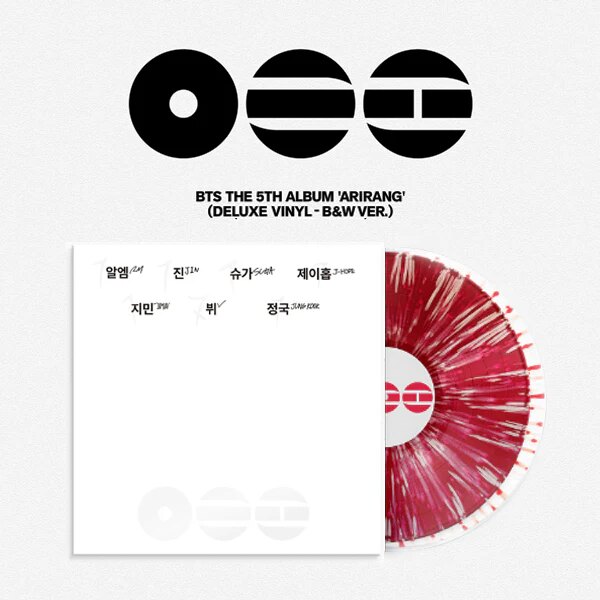
First and foremost is the allegation of a “cash grab.” Fans argue that the company is exploitatively using Suga’s prestigious “Prod. SUGA” credit as a high-stakes marketing tool. By locking a highly anticipated piece of music behind a premium, expensive physical product, the company is seen as leveraging fan loyalty to guarantee a sell-out of the vinyl edition. To many, this feels less like a creative choice and more like a calculated financial maneuver designed to inflate sales figures at the expense of the artist’s original intent.
Furthermore, there is a profound sense of injustice regarding the treatment of Suga as a creator. The fact that the producer himself was initially left in the dark about the distribution of his own work has struck a nerve. Fans feel that relegating a produced track to “hidden” status—effectively hiding it from the general public—undermines Suga’s hard work. If an artist creates music with the desire for it to be heard and shared, then forcing it into a niche, restricted format feels like a dismissal of that artist’s creative agency.
The third pillar of the fans’ outcry is the issue of accessibility. Vinyl records, while experiencing a resurgence, remain a luxury hobby. They require specialized, often expensive equipment to play, and the records themselves carry a much higher price tag than digital singles. By refusing to release the track on streaming services, the company has effectively created a “paywall” that excludes younger fans, those with limited financial means, or those living in regions where shipping physical goods is prohibitively expensive. In an era where BTS has championed inclusivity and global connection, this move is being viewed as a step backward into elitism.

The collective voice of the fandom is now demanding a change in policy. The prevailing sentiment is that while a hidden track can be a lovely “bonus” for collectors, it should not be the only way to experience an artist’s new work. Fans are calling for BIGHIT MUSIC to release the Suga-produced track on all digital platforms concurrently or shortly after the vinyl launch.
The ultimate goal of the protest is to ensure that Suga’s labor is recognized not as a mere sales incentive, but as a piece of art meant for the world. As the April 3 release date approaches, the tension remains high, serving as a significant case study in the modern music industry regarding the balance between physical product marketing and the digital-first expectations of a global audience. The ARMY’s message is clear: the value of music lies in it being heard, not just in it being sold.